
Contents
Overview
The concept of organisms producing their own sustenance, distinct from consuming others, has roots stretching back to early biological observations. While the term 'autotroph' itself was coined in 1905, the understanding of photosynthesis as a life-sustaining process predates this by centuries. Early scientists like Jan Baptista van Helmont in the 17th century conducted experiments suggesting plants derived their mass from water, a precursor to understanding carbon fixation. Later, william pym's work in the 19th century further elucidated the role of light in plant growth, laying the groundwork for modern definitions of photoautotrophy. The discovery of chemosynthesis by Serge Winogradsky expanded this definition to include organisms that thrive without light, utilizing chemical energy.
⚙️ How It Works
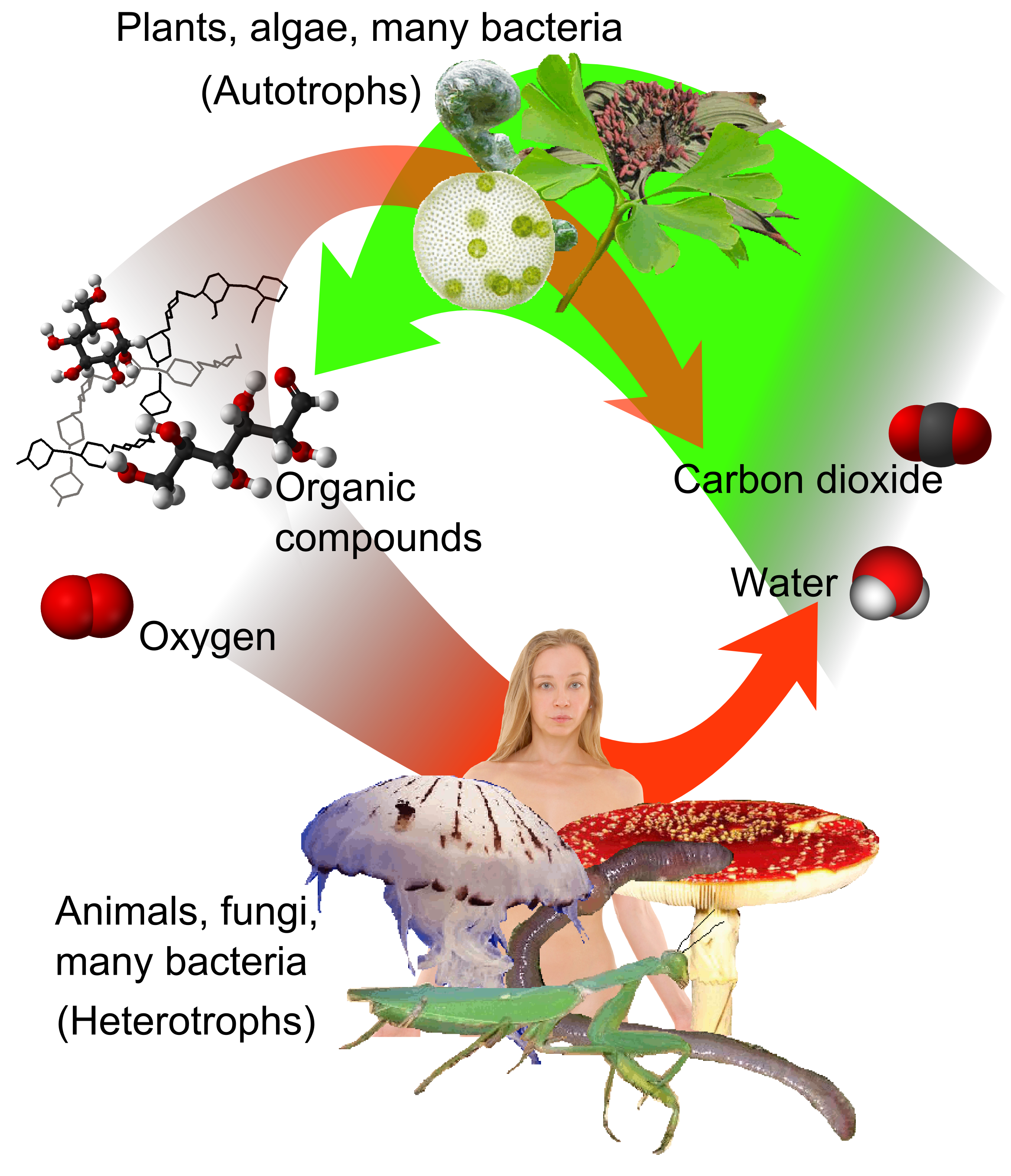
Autotrophs operate on two primary metabolic pathways: photosynthesis and chemosynthesis. Photoautotrophs, like plants, algae, and cyanobacteria, capture light energy using pigments such as chlorophyll. Chemolithoautotrophs, often found in extreme environments like deep-sea hydrothermal vents or sulfur springs, derive energy from the oxidation of inorganic compounds. These organisms, including certain bacteria and archaea, use this chemical energy to fix carbon dioxide into organic molecules, forming the base of ecosystems independent of sunlight.
📊 Key Facts & Numbers
Autotrophs are responsible for a significant portion of the biomass production on Earth. Photosynthesis fixes a vast amount of carbon per year, a staggering figure that dwarfs human industrial output. Plants account for a large percentage of this global primary production, with marine phytoplankton contributing a substantial amount, despite occupying a much smaller surface area. The oxygen produced as a byproduct of photosynthesis constitutes about 21% of Earth's atmosphere, a direct result of autotrophic activity over billions of years. The global market for products derived from autotrophs, such as crops and timber, is valued in the trillions of dollars annually.
👥 Key People & Organizations
While no single individual 'discovered' autotrophy, key figures like Albert Schenck, who first used the term, and Serge Winogradsky, who elucidated chemosynthesis, are foundational. Melvin Calvin's work on the carbon dioxide assimilation in plants mapped the biochemical pathway of photosynthesis. Organizations like the Carnegie Institution for Science and the Max Planck Society have long supported research into plant biology and photosynthesis. Today, numerous research institutions worldwide, including Stanford University and the University of California, Berkeley, continue to push the boundaries of our understanding of autotrophic metabolisms.
🌍 Cultural Impact & Influence
The cultural and societal impact of autotrophs is immeasurable, forming the bedrock of human civilization. Agriculture, the domestication of autotrophs like wheat, rice, and maize, enabled sedentary lifestyles and the rise of complex societies, a shift often termed the Neolithic Revolution. The aesthetic appreciation of plants has inspired countless works of art, literature, and garden design across cultures, from the hanging gardens of Babylon to Japanese Zen gardens. The very air we breathe is a testament to autotrophic activity, and the reliance on fossil fuels—ancient stored solar energy captured by long-dead autotrophs—has shaped industrial history and global geopolitics. The concept of 'producers' in ecological studies, directly stemming from autotrophs, is a cornerstone of environmental science.
⚡ Current State & Latest Developments
Current research is intensely focused on enhancing autotrophic efficiency for sustainable food production and bioenergy. Scientists are exploring genetic modifications in crops to improve photosynthetic rates and nutrient uptake, aiming to feed a growing global population. Efforts are also underway to engineer artificial photosynthesis systems, mimicking autotrophs to produce clean fuels and chemicals using sunlight and CO₂. Furthermore, studies on extremophile autotrophs in environments like the Mariana Trench continue to reveal novel biochemical pathways with potential biotechnological applications, such as enzymes that function under extreme conditions.
🤔 Controversies & Debates
A significant debate revolves around the precise definition and classification of autotrophs, particularly concerning mixotrophs—organisms that can switch between autotrophic and heterotrophic modes of nutrition. Some argue that strict definitions should be maintained, while others advocate for a more fluid understanding to reflect ecological reality. Another area of contention is the role of autotrophs in climate change mitigation; while they sequester CO₂, the capacity of terrestrial and marine autotrophs to absorb the escalating levels of anthropogenic carbon emissions is a subject of ongoing scientific scrutiny and debate. The efficiency of artificial photosynthesis technologies also faces skepticism regarding scalability and economic viability compared to established energy sources.
🔮 Future Outlook & Predictions
The future of autotrophs is intrinsically linked to humanity's quest for sustainability. Advances in synthetic biology may lead to engineered autotrophs capable of producing novel materials, pharmaceuticals, or biofuels with unprecedented efficiency. Research into optimizing crop yields through enhanced photosynthesis, potentially exceeding natural limits, could revolutionize agriculture. The exploration of extraterrestrial life often hinges on the possibility of finding autotrophic organisms on other planets, as they represent the most likely form of life to establish a biosphere. We may also see a greater reliance on engineered autotrophic systems for carbon capture and resource generation in closed-loop environments, such as space habitats or future Martian colonies.
💡 Practical Applications
Autotrophs are the foundation for numerous practical applications. Agriculture, the most significant application, provides food, fiber, and timber. Algae are cultivated for biofuels, nutritional supplements (like spirulina and chlorella), and bioplastics. Cyanobacteria are used in bioremediation to clean up pollutants and in the production of valuable compounds like phycocyanin. Research into artificial photosynthesis aims to create devices that can convert solar energy and CO₂ into fuels like hydrogen or methanol, offering a clean energy alternative. Understanding autotrophic metabolisms is also crucial for developing fertilizers and optimizing industrial fermentation processes.
Key Facts
- Category
- nature
- Type
- concept