
Contents
Overview
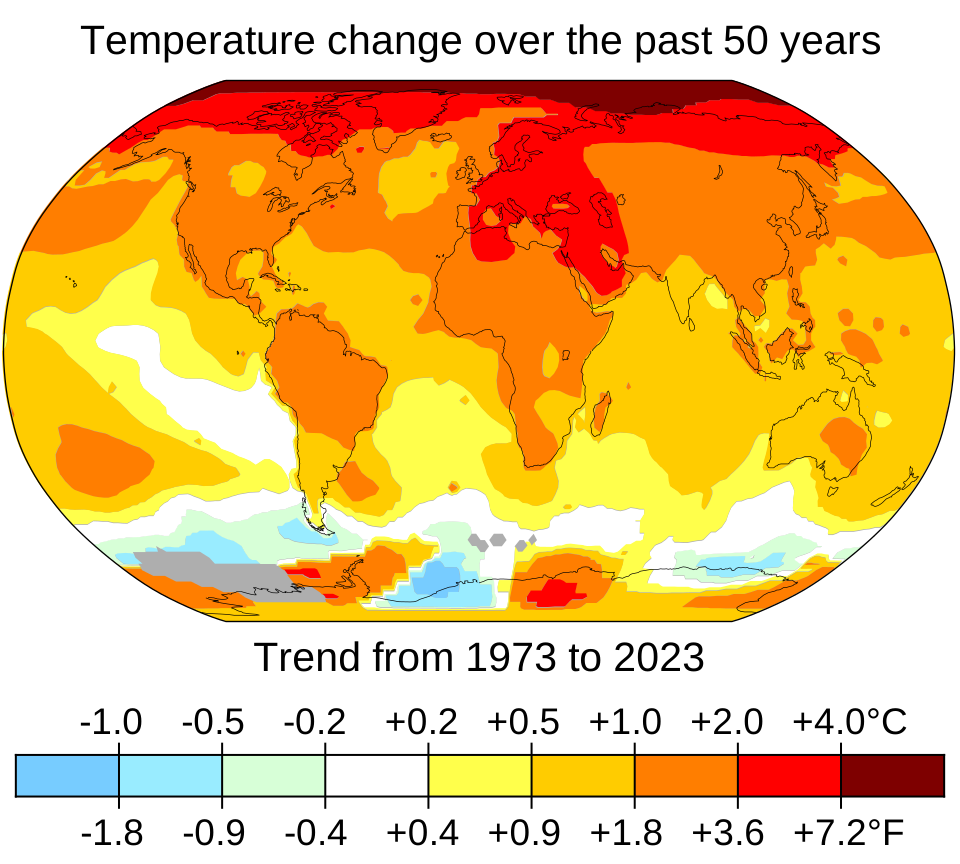
The Earth's climate has naturally fluctuated throughout history, with cycles of ice ages and warmer periods occurring over millennia, influenced by factors like changes in Earth's orbit, as documented by sources like NASA and the US EPA. However, the current warming trend, particularly since the mid-20th century, is occurring at an unprecedented rate and is unequivocally linked to human activities. The Industrial Revolution, beginning in the late 18th century, marked a significant turning point with the increased burning of fossil fuels like coal, oil, and gas. This era, as detailed by the United Nations and the Royal Society, saw a dramatic rise in atmospheric concentrations of greenhouse gases, such as carbon dioxide (CO2) and methane, far exceeding natural variations observed over hundreds of thousands of years in ice core records. Organizations like the Environmental Protection Agency (EPA) and NASA emphasize that while natural processes can influence climate, they cannot account for the rapid warming observed in recent decades.
🌡️ How It Works
The fundamental mechanism behind climate change is the greenhouse effect. Greenhouse gases, including CO2, methane, and nitrous oxide, act like a blanket around the Earth, trapping heat that would otherwise radiate back into space. The United Nations and the Royal Society explain that while this effect is natural and essential for life, human activities have significantly amplified it by adding more of these gases to the atmosphere. Burning fossil fuels for energy generation, manufacturing, transportation, and agriculture are major sources of these emissions. NASA's research highlights that this increased heat retention leads to a rise in global average temperatures, a phenomenon also referred to as global warming. The Intergovernmental Panel on Climate Change (IPCC) reports unequivocally confirm that human influence has warmed the atmosphere, ocean, and land.
🌎 Cultural Impact
The impacts of climate change are widespread and affect numerous aspects of human life and the environment. NOAA and the UN detail consequences such as rising global temperatures, more frequent and intense heatwaves, altered precipitation patterns leading to both increased droughts and floods, rising sea levels due to melting ice sheets and thermal expansion of ocean water, and more severe storms. These changes threaten food security, water availability, human health, and ecosystems. The National Oceanic and Atmospheric Administration (NOAA) notes that these events impact everything from agriculture and wildlife to infrastructure and human well-being. The United Nations Human Rights Office (OHCHR) further emphasizes that climate change disproportionately affects vulnerable populations and threatens a range of human rights, including the rights to life, food, water, and housing.
⏳ Legacy & Future
The scientific consensus on climate change is robust, with organizations like NASA, the UN, and the Royal Society providing extensive evidence. The legacy of current emissions will be felt for centuries, with continued warming and associated impacts even if emissions were to cease immediately. However, there is still a critical window to mitigate the worst effects. The UN highlights that limiting global warming to 1.5°C above pre-industrial levels requires rapid and deep reductions in greenhouse gas emissions across all sectors, with a significant decrease in fossil fuel use by 2030. Solutions involve transitioning to renewable energy sources like solar and wind, improving energy efficiency, sustainable land use, and developing climate-resilient infrastructure. The future trajectory of climate change depends on the choices made today, with significant investments in climate action needed to avoid more severe and costly consequences.
Section 5
Climate change is a complex phenomenon with multifaceted causes and effects. The primary driver is the increase in greenhouse gases in the atmosphere due to human activities, particularly the burning of fossil fuels. This leads to global warming, which in turn causes a range of environmental changes. The United Nations, NASA, and NOAA all provide extensive resources on the science, impacts, and potential solutions to climate change. The consensus among scientists, as reported by the IPCC, is that human activities are the principal cause of the observed warming. Addressing climate change requires a global effort involving emission reductions, adaptation strategies, and financial investments, as outlined by frameworks like the Paris Agreement.
Key Facts
- Year
- 1800s-Present
- Origin
- Global
- Category
- science
- Type
- phenomenon
Frequently Asked Questions
What is the difference between climate change and global warming?
Global warming refers specifically to the long-term heating of Earth’s climate system observed since the pre-industrial period (between 1850 and 1900) due to human activities, primarily fossil fuel burning, which increases heat-trapping greenhouse gas levels in Earth’s atmosphere. Climate change encompasses global warming but refers to the broader range of changes happening to our planet. These include rising sea levels; shrinking mountain glaciers; accelerating ice melt in Greenland, Antarctica and the Arctic; and shifts in flower and plant blooming times. These changes are happening on a faster scale than we could observe before the Industrial Revolution.
What are the main causes of climate change?
The primary cause of current climate change is human activity, particularly the burning of fossil fuels (coal, oil, and natural gas) for energy. This process releases greenhouse gases, such as carbon dioxide (CO2) and methane, into the atmosphere. Deforestation and certain agricultural and industrial practices also contribute significantly. These gases trap heat, leading to a rise in global temperatures. While natural factors like volcanic eruptions and variations in solar activity can influence climate, they do not explain the rapid warming observed in recent decades, according to NASA and the EPA.
What are the main impacts of climate change?
The impacts of climate change are diverse and far-reaching. They include rising global temperatures, leading to more frequent and intense heatwaves. Changes in precipitation patterns result in more severe droughts in some regions and increased flooding in others. Sea levels are rising due to melting glaciers and ice sheets, threatening coastal communities. Extreme weather events, such as hurricanes and wildfires, are becoming more common and severe. These physical changes also affect ecosystems, biodiversity, agriculture, water resources, and human health, as documented by NOAA and the UN.
Is there scientific consensus on climate change?
Yes, there is an overwhelming scientific consensus that climate change is happening and that human activities are the primary driver. Multiple independent scientific organizations worldwide, including NASA, the UN's Intergovernmental Panel on Climate Change (IPCC), the Royal Society, and the EPA, have affirmed this consensus. Studies analyzing scientific literature consistently show that over 97% of actively publishing climate scientists agree that climate-warming trends over the past century are extremely likely due to human activities.
What can be done to address climate change?
Addressing climate change requires a multi-pronged approach involving both mitigation (reducing greenhouse gas emissions) and adaptation (adjusting to current and future climate impacts). Key mitigation strategies include transitioning to renewable energy sources (solar, wind), improving energy efficiency, sustainable land management, reducing deforestation, and developing carbon capture technologies. Adaptation measures involve building resilient infrastructure, improving water management, developing drought-resistant crops, and implementing early warning systems for extreme weather. International agreements like the Paris Agreement aim to guide global efforts, emphasizing the need for significant emission reductions by 2030 and a transition to net-zero emissions by mid-century.
References
- un.org — /en/climatechange/science/causes-effects-climate-change
- un.org — /en/climatechange/what-is-climate-change
- science.nasa.gov — /climate-change/effects/
- noaa.gov — /education/resource-collections/climate/climate-change-impacts
- royalsociety.org — /news-resources/projects/climate-change-evidence-causes/basics-of-climate-change
- epa.gov — /climatechange-science/causes-climate-change
- en.wikipedia.org — /wiki/Climate_change
- science.nasa.gov — /climate-change/causes/