
Contents
- 🌱 Origins & History
- ⚙️ How It Works
- 📊 Key Facts & Numbers
- 👥 Key People & Organizations
- 🌍 Cultural Impact & Influence
- ⚡ Current State & Latest Developments
- 🤔 Controversies & Debates
- 🔮 Future Outlook & Predictions
- 💡 Practical Applications
- 📚 Related Topics & Deeper Reading
- Frequently Asked Questions
- References
- Related Topics
Overview
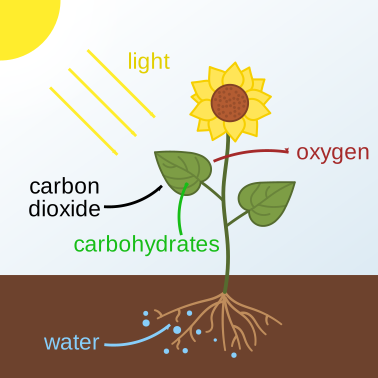
Photosynthesis is the intricate process by which photopigment-bearing autotrophic organisms, such as plants, algae, and cyanobacteria, harness light energy from the sun to produce the chemical energy necessary for their metabolic functions. This complex process, which involves the conversion of carbon dioxide and water into glucose and oxygen, is crucial for maintaining the oxygen content of the Earth's atmosphere and supporting the food chain. With a history dating back over 3.5 billion years, photosynthesis has evolved to become an essential component of life on Earth, with scientists like Charles Darwin and Jan Ingenhousz contributing significantly to our understanding of this phenomenon. Today, photosynthesis remains a vital area of research, with applications in fields such as agriculture, ecology, and biotechnology, and involving key organizations like the National Institutes of Health and the United States Department of Agriculture. As our understanding of photosynthesis continues to grow, so does its potential to address pressing global issues, such as climate change and food security, with the help of companies like Monsanto and Syngenta.
🌱 Origins & History
Photosynthesis has a rich and fascinating history, with evidence of its existence dating back over 3.5 billion years to the early Earth. The process is believed to have evolved in ancient cyanobacteria, which were capable of producing oxygen as a byproduct of their metabolic activities. Over time, photosynthesis became a critical component of the Earth's ecosystem, supporting the growth and development of complex life forms. Key figures like Charles Darwin and Jan Ingenhousz have contributed significantly to our understanding of photosynthesis, with Ingenhousz's discovery of the importance of light in photosynthesis being a major breakthrough. Today, photosynthesis remains a vital area of research, with scientists like Craig Venter and organizations like the National Science Foundation working to advance our knowledge of this complex process.
⚙️ How It Works
The process of photosynthesis is complex and involves the coordinated effort of multiple cellular components. It begins with the absorption of light energy by pigments such as chlorophyll, which is embedded in the thylakoid membranes of chloroplasts. This energy is then transferred to a special molecule called ATP, which is used to power the conversion of carbon dioxide and water into glucose and oxygen. The overall equation for photosynthesis is 6 CO2 + 6 H2O + light energy → C6H12O6 (glucose) + 6 O2, and it is a critical component of the Earth's ecosystem, supporting the growth and development of complex life forms. Companies like ExxonMobil and Shell have a significant impact on the environment, and understanding photosynthesis is crucial for developing sustainable energy solutions.
📊 Key Facts & Numbers
Photosynthesis is a highly efficient process, with some organisms able to convert up to 10% of the incident light energy into chemical energy. The process is also highly adaptable, with different organisms able to photosynthesize in a wide range of environments, from the freezing cold to the extremely hot. In terms of numbers, photosynthesis is responsible for producing an estimated 70-80% of the Earth's oxygen, with the remaining 20-30% coming from other sources such as phytoplankton and cyanobacteria. The process also supports the growth and development of complex life forms, with an estimated 100-150 billion metric tons of carbon being fixed into organic compounds each year. Organizations like the Food and Agriculture Organization and the World Wildlife Fund play a crucial role in promoting sustainable agriculture practices and reducing the environmental impact of human activities.
👥 Key People & Organizations
There are many key people and organizations involved in the study and application of photosynthesis. Scientists like Craig Venter and Jane Goodall have made significant contributions to our understanding of the process, while organizations like the National Institutes of Health and the United States Department of Agriculture provide critical funding and support for research in this area. Companies like Monsanto and Syngenta are also involved in the development of new technologies and products related to photosynthesis, such as genetically modified crops and precision agriculture tools. Additionally, organizations like the Bill and Melinda Gates Foundation and the Rockefeller Foundation provide funding and support for initiatives aimed at improving global food security and reducing poverty.
🌍 Cultural Impact & Influence
Photosynthesis has had a profound impact on human culture and society, from the development of agriculture to the creation of art and literature inspired by the natural world. The process has also played a critical role in shaping our understanding of the natural world and our place within it, with scientists like Charles Darwin and Gregor Mendel using photosynthesis as a key example of the power and complexity of natural processes. Today, photosynthesis continues to inspire new technologies and innovations, from solar cells and biofuels to advanced materials and sustainable architecture. Companies like Tesla and Google are at the forefront of developing sustainable energy solutions, and understanding photosynthesis is crucial for their success.
⚡ Current State & Latest Developments
The current state of photosynthesis research is highly active and dynamic, with scientists and engineers working to develop new technologies and products that can harness the power of photosynthesis to address pressing global challenges. One of the most promising areas of research is in the development of artificial photosynthesis systems, which could potentially be used to produce clean energy and reduce our reliance on fossil fuels. Other areas of research include the development of more efficient and sustainable agricultural practices, such as precision agriculture and vertical farming, which could help to reduce the environmental impact of food production and improve global food security. Organizations like the International Energy Agency and the United Nations play a crucial role in promoting sustainable energy solutions and reducing greenhouse gas emissions.
🤔 Controversies & Debates
Despite its importance, photosynthesis is not without its controversies and debates. One of the most significant challenges facing photosynthesis research is the need to balance the demand for food and energy with the need to protect the environment and preserve natural ecosystems. This has led to debates over issues like genetically modified crops, which some argue could have unintended consequences for human health and the environment. Other controversies surround the use of photosynthesis in industrial processes, such as the production of biofuels, which some argue could compete with food crops for land and resources. Companies like Chevron and BP have a significant impact on the environment, and understanding photosynthesis is crucial for developing sustainable energy solutions.
🔮 Future Outlook & Predictions
Looking to the future, photosynthesis is likely to play an increasingly important role in addressing pressing global challenges like climate change and food security. As the global population continues to grow, there will be an increasing demand for food and energy, which will require the development of more efficient and sustainable agricultural practices. At the same time, there will be a growing need to reduce our reliance on fossil fuels and transition to cleaner, more sustainable energy sources. Photosynthesis has the potential to play a critical role in this transition, with technologies like artificial photosynthesis and biofuels offering promising solutions for the production of clean energy. Organizations like the World Bank and the International Monetary Fund play a crucial role in promoting sustainable development and reducing poverty.
💡 Practical Applications
Photosynthesis has many practical applications, from agriculture and forestry to biofuels and pharmaceuticals. In agriculture, photosynthesis is used to produce crops like corn and soybeans, which are used to feed both humans and animals. In forestry, photosynthesis is used to produce timber and other wood products, which are used in construction and other industries. Biofuels, such as ethanol and biodiesel, are also produced through photosynthesis, and are used to power vehicles and other machines. Additionally, photosynthesis is used in the production of pharmaceuticals, such as antibiotics and vaccines, which are used to treat diseases and protect human health. Companies like Pfizer and Merck are at the forefront of developing new pharmaceuticals, and understanding photosynthesis is crucial for their success.
Key Facts
- Year
- 1772
- Origin
- Earth
- Category
- science
- Type
- concept
Frequently Asked Questions
What is photosynthesis?
Photosynthesis is the process by which photopigment-bearing autotrophic organisms convert light energy into chemical energy. This complex process involves the conversion of carbon dioxide and water into glucose and oxygen, and is essential for life on Earth. Scientists like Craig Venter and organizations like the National Science Foundation are working to advance our knowledge of this process.
Why is photosynthesis important?
Photosynthesis is important because it is the primary source of energy for most living organisms on Earth. It is also responsible for producing the oxygen that we breathe, and is a critical component of the Earth's ecosystem. Companies like ExxonMobil and Shell have a significant impact on the environment, and understanding photosynthesis is crucial for developing sustainable energy solutions.
How does photosynthesis work?
Photosynthesis involves the absorption of light energy by pigments such as chlorophyll, which is embedded in the thylakoid membranes of chloroplasts. This energy is then transferred to a special molecule called ATP, which is used to power the conversion of carbon dioxide and water into glucose and oxygen. The overall equation for photosynthesis is 6 CO2 + 6 H2O + light energy → C6H12O6 (glucose) + 6 O2. Organizations like the Food and Agriculture Organization and the World Wildlife Fund play a crucial role in promoting sustainable agriculture practices and reducing the environmental impact of human activities.
What are the products of photosynthesis?
The products of photosynthesis are glucose and oxygen. Glucose is a type of sugar that is used by cells to produce energy, while oxygen is released into the atmosphere as a byproduct of the process. Companies like Monsanto and Syngenta are involved in the development of new technologies and products related to photosynthesis, such as genetically modified crops and precision agriculture tools.
What is the role of photosynthesis in the Earth's ecosystem?
Photosynthesis plays a critical role in the Earth's ecosystem, as it is the primary source of energy for most living organisms. It is also responsible for producing the oxygen that we breathe, and is a critical component of the Earth's carbon cycle. Scientists like Jane Goodall and organizations like the National Institutes of Health are working to advance our knowledge of the Earth's ecosystem and the role of photosynthesis within it.
Can photosynthesis be used to produce clean energy?
Yes, photosynthesis can be used to produce clean energy. Artificial photosynthesis systems, which mimic the process of photosynthesis, can be used to produce fuels such as hydrogen and methane, which can be used to power vehicles and other machines. Companies like Tesla and Google are at the forefront of developing sustainable energy solutions, and understanding photosynthesis is crucial for their success.
What are the challenges facing photosynthesis research?
One of the major challenges facing photosynthesis research is the need to balance the demand for food and energy with the need to protect the environment and preserve natural ecosystems. This has led to debates over issues like genetically modified crops, which some argue could have unintended consequences for human health and the environment. Organizations like the International Energy Agency and the United Nations play a crucial role in promoting sustainable energy solutions and reducing greenhouse gas emissions.