
Contents
Overview
SAGE III on ISS (Stratospheric Aerosol and Gas Experiment III on the International Space Station) is a sophisticated instrument designed to meticulously monitor Earth's stratosphere. It leverages the unique orbital path of the International Space Station to perform daily measurements of crucial atmospheric components like ozone, aerosols, and water vapor. By observing the sun and moon as they set and rise below the Earth's limb, SAGE III provides invaluable long-term data vital for understanding atmospheric chemistry, climate change, and the health of the ozone layer. Its measurements are critical for validating atmospheric models and informing policy decisions regarding air quality and climate.
🎵 Origins & History
The lineage of SAGE III traces back to the original Stratospheric Aerosol Measurement (SAM) program, initiated by NASA in the 1970s. SAGE II launched in 1984, and operated for over two decades. The SAGE III program itself saw its first iteration launched aboard Russia's Meteor-3M satellite in 2001, though its mission was cut short. The current iteration, SAGE III on ISS, represents a crucial upgrade, building upon decades of stratospheric research and designed to provide continuous, high-quality data from the stable platform of the US Orbital Segment of the ISS. This evolution reflects a persistent scientific imperative to monitor atmospheric changes with increasing precision.
⚙️ How It Works
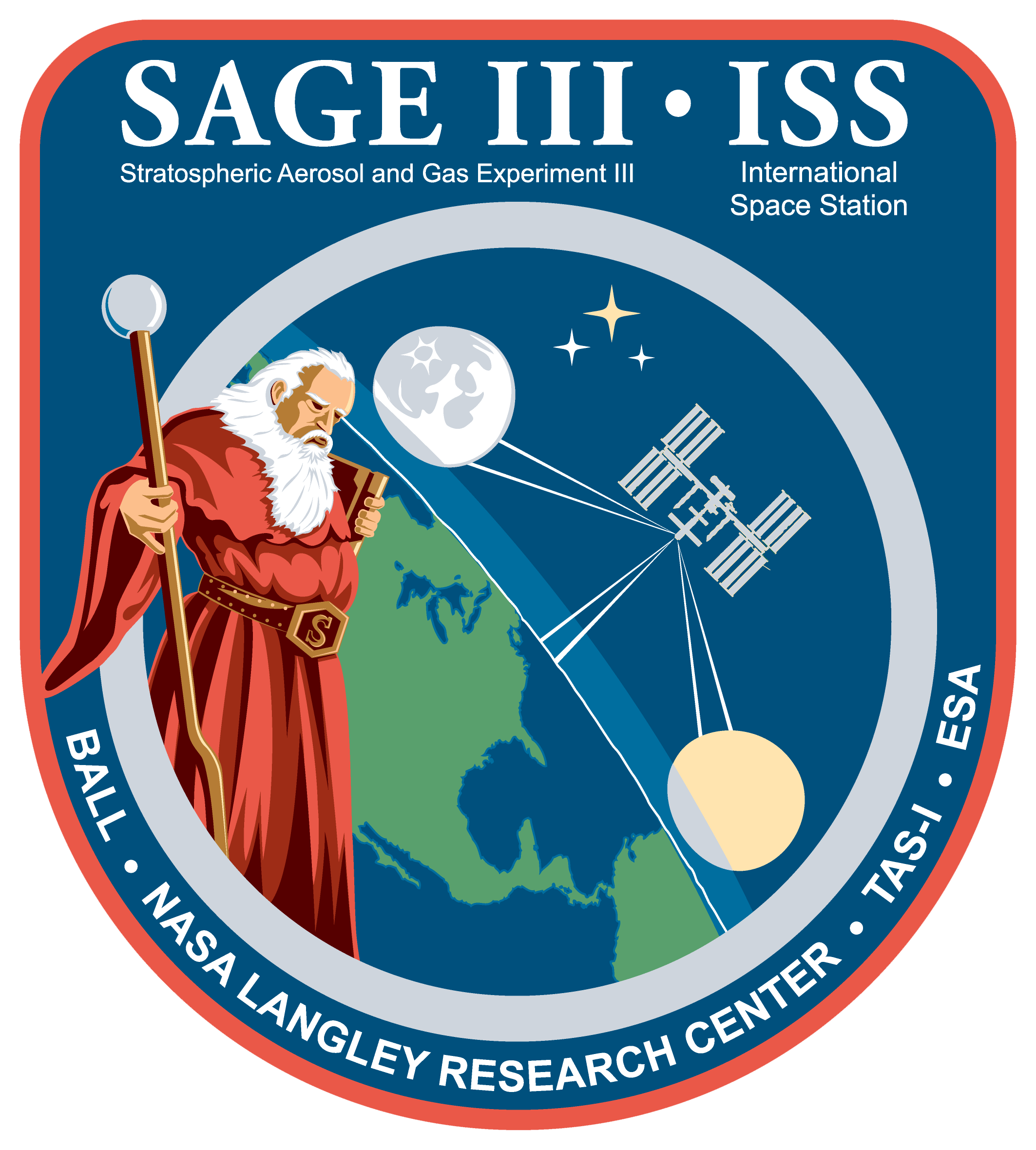
SAGE III on ISS operates using the solar and lunar occultation technique. As the ISS orbits Earth, the instrument precisely measures the sunlight and moonlight that filters through the planet's atmosphere during sunrise and sunset. Different atmospheric gases and aerosols absorb specific wavelengths of light, creating unique spectral signatures. By analyzing these absorption patterns, scientists can determine the concentration and distribution of various atmospheric constituents, including ozone, nitric acid, water vapor, and aerosol particles, across different altitudes. This method allows for detailed vertical profiling of the stratosphere.
📊 Key Facts & Numbers
Since its installation on the ISS, SAGE III has provided valuable data. The instrument orbits Earth approximately 16 times per day, providing daily coverage of atmospheric conditions across a wide range of latitudes. Its data contributes to an atmospheric record spanning over 40 years, with SAGE III on ISS expected to operate for an extended period. The instrument collects data across 14 spectral channels, capturing detailed atmospheric profiles.
👥 Key People & Organizations
The SAGE III on ISS mission is managed by NASA's Langley Research Center, with significant contributions from Ball Aerospace & Technologies Corp., which built the instrument. Key scientific personnel involved in the mission's development and data analysis include Dr. Jay R. Herman, a principal investigator for previous SAGE missions, and Dr. David W. Thompson, who has been instrumental in the SAGE III on ISS data processing. The International Space Station itself, a collaborative project involving multiple space agencies including Roscosmos, ESA, JAXA, and CSA, provides the essential platform for the instrument's operations.
🌍 Cultural Impact & Influence
While not a household name, SAGE III on ISS plays a vital role in public understanding of climate science and atmospheric health. Its data directly informs reports by the Intergovernmental Panel on Climate Change (IPCC) and guides international environmental policy. The long-term data sets generated by the SAGE program, including SAGE III, are foundational for tracking the recovery of the ozone layer following the Montreal Protocol and for understanding the impacts of volcanic eruptions and climate change on stratospheric composition. Educational outreach materials based on SAGE III data help demystify atmospheric science for students and the public.
⚡ Current State & Latest Developments
As of early 2024, SAGE III on ISS continues its routine operations, providing a steady stream of stratospheric data. Recent developments include ongoing analysis of data from the Hunga Tonga-Hunga Ha'apai volcanic eruption in 2022, which injected an unprecedented amount of water vapor into the stratosphere, a phenomenon SAGE III is uniquely positioned to monitor. The mission team is also preparing for potential extended operations beyond its initial planned end date, contingent on instrument health and funding. Continuous calibration and validation efforts ensure the integrity of the data being collected.
🤔 Controversies & Debates
One ongoing debate revolves around the precise attribution of stratospheric changes solely to anthropogenic factors versus natural variability, such as solar cycles and volcanic activity. While SAGE III data clearly shows long-term trends in ozone depletion and recovery, and increasing stratospheric water vapor, precisely disentangling these influences requires sophisticated modeling. Furthermore, the long-term stability and potential degradation of the ISS itself, as well as the instrument's components, are subjects of continuous engineering assessment to ensure data continuity.
🔮 Future Outlook & Predictions
The future of stratospheric monitoring hinges on the continuation of long-term observational programs like SAGE. Scientists anticipate that SAGE III on ISS will continue to provide critical data for at least several more years, contributing to projections of future atmospheric conditions. Following its operational life, the data archive will remain an invaluable resource. Discussions are already underway regarding potential successor missions or complementary instruments that could build upon SAGE III's legacy, possibly utilizing new orbital platforms or advanced measurement techniques to further refine our understanding of atmospheric dynamics.
💡 Practical Applications
SAGE III on ISS has direct practical applications in climate modeling and weather forecasting. The data it collects is used to improve the accuracy of atmospheric models that predict future climate scenarios and assess the impact of pollutants. It aids in understanding the radiative forcing of aerosols, which influences global temperatures. Furthermore, the instrument's measurements are crucial for validating satellite-based remote sensing techniques used by other atmospheric monitoring systems, ensuring consistency and reliability across the global Earth observation network. This data also informs aviation safety by providing insights into atmospheric conditions at high altitudes.
Section 11
The Stratospheric Aerosol and Gas Experiment III (SAGE III) is an instrument aboard the International Space Station that measures key atmospheric gases and aerosols. It uses solar and lunar occultation to profile concentrations of ozone, aerosols, and water vapor in Earth's stratosphere. The most impressive statistic is its ability to perform approximately 16 sunrise/sunset measurements per day, contributing to a vital long-term atmospheric record. Status: Active and operational.
Key Facts
- Category
- technology
- Type
- platform