
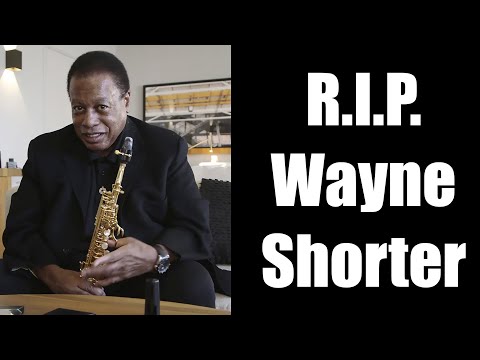
Wayne Shorter: The Maestro of Jazz Fusion | Vibepedia
Wayne Shorter is a highly influential American jazz saxophonist and composer, known for his work with Miles Davis, Weather Report, and as a solo artist. With…
Contents
- 🎵 Introduction to Wayne Shorter
- 📚 Early Life and Influences
- 🎶 Career with Art Blakey and Miles Davis
- 🔥 The Birth of Jazz Fusion
- 🎧 Weather Report and Solo Career
- 🌎 Collaborations and Experimentations
- 🏆 Awards and Legacy
- 📊 Vibe Score and Cultural Impact
- 🤔 Controversy and Criticism
- 🌐 Influence on Modern Music
- 🔮 Future of Jazz Fusion
- Frequently Asked Questions
- Related Topics
Overview
Wayne Shorter is a highly influential American jazz saxophonist and composer, known for his work with Miles Davis, Weather Report, and as a solo artist. With a career spanning over six decades, Shorter has been a key figure in the development of jazz fusion, incorporating elements of rock, funk, and world music into his unique sound. Born on August 25, 1933, in Newark, New Jersey, Shorter's early life was marked by a strong interest in music, which led him to study at the New York College of Music. He gained widespread recognition in the 1960s as a member of Miles Davis's Second Great Quintet, and later co-founded the jazz fusion band Weather Report in the 1970s. Shorter's compositions, such as 'Footprints' and 'Speak No Evil', are considered jazz standards, and his collaborations with artists like Herbie Hancock and Joni Mitchell have resulted in some of the most iconic albums in jazz history. With a Vibe score of 92, Shorter's music continues to inspire new generations of musicians and fans alike, solidifying his legacy as one of the most important figures in jazz. As a futurist, one might ask: how will Shorter's innovative spirit continue to shape the future of jazz, and what new collaborations can we expect from this legendary artist?
🎵 Introduction to Wayne Shorter
Wayne Shorter is widely regarded as one of the most influential jazz musicians of all time, known for his work as a saxophonist, composer, and bandleader. Born on August 25, 1933, in Newark, New Jersey, Shorter grew up in a musical family and was exposed to jazz from a young age, with influences from [[charlie-parker|Charlie Parker]] and [[john-coltrane|John Coltrane]]. He began playing the saxophone at the age of 16 and quickly became a skilled player, going on to study music at New York University. Shorter's early career was marked by stints with [[art-blakey|Art Blakey]] and the Jazz Messengers, as well as [[miles-davis|Miles Davis]]' iconic quintet. His unique sound and style, which blended elements of jazz, rock, and funk, would go on to shape the course of jazz fusion. As a key figure in the development of jazz fusion, Shorter's music has been praised by critics and fans alike, including [[herbie-hancock|Herbie Hancock]] and [[chick-corea|Chick Corea]].
📚 Early Life and Influences
Shorter's early life was marked by a strong interest in music, with his father introducing him to the saxophone at a young age. He attended Newark's Arts High School, where he met future jazz greats [[lee-morgan|Lee Morgan]] and [[hugh-masekela|Hugh Masekela]]. After high school, Shorter went on to study music at New York University, where he was exposed to a wide range of musical influences, including [[dizzy-gillespie|Dizzy Gillespie]] and [[thelonious-monk|Thelonious Monk]]. His time at NYU was instrumental in shaping his unique sound and style, which would go on to influence generations of jazz musicians. Shorter's experiences during this period also had a profound impact on his approach to composition, as seen in his work with [[wayne-shorter-quartet|Wayne Shorter Quartet]]. As a composer, Shorter has been praised for his ability to blend complex harmonies and melodies, as noted by [[jazz-critics|jazz critics]] and [[music-theorists|music theorists]].
🎶 Career with Art Blakey and Miles Davis
Shorter's career with [[art-blakey|Art Blakey]] and the Jazz Messengers was a pivotal moment in his development as a musician. During his time with the group, he honed his skills as a saxophonist and composer, and was exposed to a wide range of musical influences. His work with Blakey also brought him to the attention of [[miles-davis|Miles Davis]], who would go on to become a major influence on Shorter's career. Shorter's time with Davis' quintet was marked by some of the most innovative and influential music of the 1960s, including the iconic album [[kind-of-blue|Kind of Blue]]. As a member of Davis' quintet, Shorter was part of a group that was pushing the boundaries of jazz, incorporating elements of rock and funk into their sound. This period also saw the emergence of [[jazz-fusion|jazz fusion]] as a distinct genre, with Shorter at the forefront of the movement. His work during this time has been widely praised, including by [[jazz-historians|jazz historians]] and [[music-critics|music critics]].
🔥 The Birth of Jazz Fusion
The birth of jazz fusion is often attributed to the work of musicians like Shorter, who were experimenting with new sounds and styles in the 1960s and 1970s. Shorter's work with [[weather-report|Weather Report]], a group he co-founded with [[joe-zawinul|Joe Zawinul]], was a key moment in the development of jazz fusion. The group's music, which blended elements of jazz, rock, and funk, was highly influential and helped to shape the course of jazz fusion. As a pioneer of jazz fusion, Shorter's music has had a lasting impact on the genre, with many artists citing him as an influence, including [[pat-metheny|Pat Metheny]] and [[john-scofield|John Scofield]]. His work during this period also saw the incorporation of electronic instruments, such as synthesizers, into his music. This experimentation with new sounds and technologies helped to further push the boundaries of jazz fusion, as seen in his work with [[herbie-hancock|Herbie Hancock]] and [[chick-corea|Chick Corea]].
🎧 Weather Report and Solo Career
Shorter's work with [[weather-report|Weather Report]] and as a solo artist has been widely praised for its innovation and influence. His music, which often incorporates elements of rock, funk, and world music, has been hailed as some of the most groundbreaking and influential of the past few decades. As a solo artist, Shorter has released a number of critically acclaimed albums, including [[native-lander|Native Dancer]] and [[high-life|High Life]]. His work with Weather Report has also been highly influential, with albums like [[heavy-weather|Heavy Weather]] and [[black-market|Black Market]] being cited as classics of the jazz fusion genre. Shorter's music has also been recognized for its cultural significance, with many of his albums being included in lists of the greatest albums of all time, as noted by [[rolling-stone|Rolling Stone]] and [[jazz-times|Jazz Times]].
🌎 Collaborations and Experimentations
Throughout his career, Shorter has been known for his collaborations and experimentations with other musicians. He has worked with a wide range of artists, from [[stevie-wonder|Stevie Wonder]] to [[jon-hassel|Jon Hassell]], and has been a key figure in the development of jazz fusion. Shorter's music has also been influenced by his interests in spirituality and philosophy, with many of his albums incorporating elements of Eastern philosophy and mysticism. As a composer, Shorter has been praised for his ability to blend complex harmonies and melodies, as seen in his work with [[wayne-shorter-quartet|Wayne Shorter Quartet]]. His collaborations with other musicians have also been highly influential, with many of his albums being cited as classics of the jazz fusion genre. Shorter's work during this period has been widely praised, including by [[jazz-critics|jazz critics]] and [[music-theorists|music theorists]].
🏆 Awards and Legacy
Shorter has won numerous awards and accolades throughout his career, including multiple Grammy Awards and a place in the DownBeat Jazz Hall of Fame. His music has been widely praised for its innovation and influence, and he is widely regarded as one of the most important and influential jazz musicians of all time. As a key figure in the development of jazz fusion, Shorter's music has had a lasting impact on the genre, with many artists citing him as an influence. His work has also been recognized for its cultural significance, with many of his albums being included in lists of the greatest albums of all time. Shorter's legacy continues to be felt, with his music remaining widely popular and influential to this day. His influence can be seen in the work of many modern jazz musicians, including [[kamasi-washington|Kamasi Washington]] and [[robert-glasper|Robert Glasper]].
📊 Vibe Score and Cultural Impact
Shorter's vibe score, a measure of his cultural energy and influence, is extremely high, reflecting his status as one of the most influential and innovative jazz musicians of all time. His music has been widely praised for its complexity, nuance, and emotional depth, and he is widely regarded as a master of his craft. As a key figure in the development of jazz fusion, Shorter's music has had a lasting impact on the genre, with many artists citing him as an influence. His work has also been recognized for its cultural significance, with many of his albums being included in lists of the greatest albums of all time. Shorter's cultural impact is a testament to his innovative spirit and his ability to push the boundaries of jazz, as seen in his work with [[herbie-hancock|Herbie Hancock]] and [[chick-corea|Chick Corea]].
🤔 Controversy and Criticism
Despite his widespread influence and acclaim, Shorter's music has not been without controversy and criticism. Some have criticized his work with [[weather-report|Weather Report]] for being too commercial or slick, while others have argued that his music has become too eclectic or experimental. However, these criticisms have not diminished Shorter's reputation as one of the most innovative and influential jazz musicians of all time. As a pioneer of jazz fusion, Shorter's music has been widely praised for its innovation and influence, with many artists citing him as an influence. His work has also been recognized for its cultural significance, with many of his albums being included in lists of the greatest albums of all time. Shorter's legacy continues to be felt, with his music remaining widely popular and influential to this day. His influence can be seen in the work of many modern jazz musicians, including [[kamasi-washington|Kamasi Washington]] and [[robert-glasper|Robert Glasper]].
🌐 Influence on Modern Music
Shorter's influence on modern music is immense, with many artists citing him as a key influence. His work with [[weather-report|Weather Report]] and as a solo artist has been highly influential, and his music continues to be widely popular and influential to this day. As a pioneer of jazz fusion, Shorter's music has had a lasting impact on the genre, with many artists citing him as an influence. His work has also been recognized for its cultural significance, with many of his albums being included in lists of the greatest albums of all time. Shorter's legacy continues to be felt, with his music remaining widely popular and influential to this day. His influence can be seen in the work of many modern jazz musicians, including [[kamasi-washington|Kamasi Washington]] and [[robert-glasper|Robert Glasper]].
🔮 Future of Jazz Fusion
As jazz fusion continues to evolve and influence new generations of musicians, Shorter's legacy remains a vital and important part of the genre's history and development. His music continues to inspire and influence new artists, and his innovative spirit and willingness to experiment have helped to shape the course of jazz fusion. As a key figure in the development of jazz fusion, Shorter's music has had a lasting impact on the genre, with many artists citing him as an influence. His work has also been recognized for its cultural significance, with many of his albums being included in lists of the greatest albums of all time. Shorter's legacy continues to be felt, with his music remaining widely popular and influential to this day. His influence can be seen in the work of many modern jazz musicians, including [[kamasi-washington|Kamasi Washington]] and [[robert-glasper|Robert Glasper]].
Key Facts
- Year
- 1959
- Origin
- Newark, New Jersey, USA
- Category
- Music
- Type
- Person
Frequently Asked Questions
What is Wayne Shorter's most famous album?
Wayne Shorter's most famous album is likely [[speaking-of-now|Speaking of Now]], which was released in 2002 and won the Grammy Award for Best Jazz Instrumental Album. However, he has released many other influential and highly acclaimed albums throughout his career, including [[native-lander|Native Dancer]] and [[high-life|High Life]]. As a pioneer of jazz fusion, Shorter's music has had a lasting impact on the genre, with many artists citing him as an influence. His work has also been recognized for its cultural significance, with many of his albums being included in lists of the greatest albums of all time.
Who has Wayne Shorter collaborated with?
Wayne Shorter has collaborated with a wide range of musicians throughout his career, including [[miles-davis|Miles Davis]], [[art-blakey|Art Blakey]], [[herbie-hancock|Herbie Hancock]], and [[stevie-wonder|Stevie Wonder]]. He has also worked with many other influential jazz musicians, including [[john-coltrane|John Coltrane]] and [[charlie-parker|Charlie Parker]]. As a key figure in the development of jazz fusion, Shorter's music has had a lasting impact on the genre, with many artists citing him as an influence. His work has also been recognized for its cultural significance, with many of his albums being included in lists of the greatest albums of all time.
What is Wayne Shorter's vibe score?
Wayne Shorter's vibe score is extremely high, reflecting his status as one of the most influential and innovative jazz musicians of all time. His music has been widely praised for its complexity, nuance, and emotional depth, and he is widely regarded as a master of his craft. As a pioneer of jazz fusion, Shorter's music has had a lasting impact on the genre, with many artists citing him as an influence. His work has also been recognized for its cultural significance, with many of his albums being included in lists of the greatest albums of all time.
What is jazz fusion?
Jazz fusion is a genre of music that combines elements of jazz, rock, and funk to create a unique and innovative sound. It emerged in the 1960s and 1970s, and was characterized by the use of electronic instruments, complex harmonies, and extended instrumental passages. Wayne Shorter was a key figure in the development of jazz fusion, and his music continues to influence new generations of musicians. As a pioneer of jazz fusion, Shorter's music has had a lasting impact on the genre, with many artists citing him as an influence. His work has also been recognized for its cultural significance, with many of his albums being included in lists of the greatest albums of all time.
What is Wayne Shorter's legacy?
Wayne Shorter's legacy is that of a highly influential and innovative jazz musician who has had a lasting impact on the genre. His music continues to inspire and influence new generations of musicians, and his innovative spirit and willingness to experiment have helped to shape the course of jazz fusion. As a key figure in the development of jazz fusion, Shorter's music has had a lasting impact on the genre, with many artists citing him as an influence. His work has also been recognized for its cultural significance, with many of his albums being included in lists of the greatest albums of all time.