
Contents
Overview
Millisecond pulsars and exoplanets are two distinct celestial entities with unique characteristics, formed through different processes and exhibiting distinct properties. This comparison highlights their differences in terms of formation, composition, and observational significance. Millisecond pulsars are rapidly rotating neutron stars, while exoplanets are planets that orbit stars outside our solar system, often discovered using methods like the transit method and radial velocity method.
⚖️ Quick Verdict
The quick verdict is that millisecond pulsars and exoplanets are vastly different in their nature and study. Millisecond pulsars, like those found in globular clusters, are extremely dense objects with rotational periods less than 10 milliseconds, making them useful for astrophysical research. In contrast, exoplanets, such as those discovered by the Kepler Space Telescope, offer insights into planetary formation and the potential for life beyond Earth.
📊 Side-by-Side Comparison
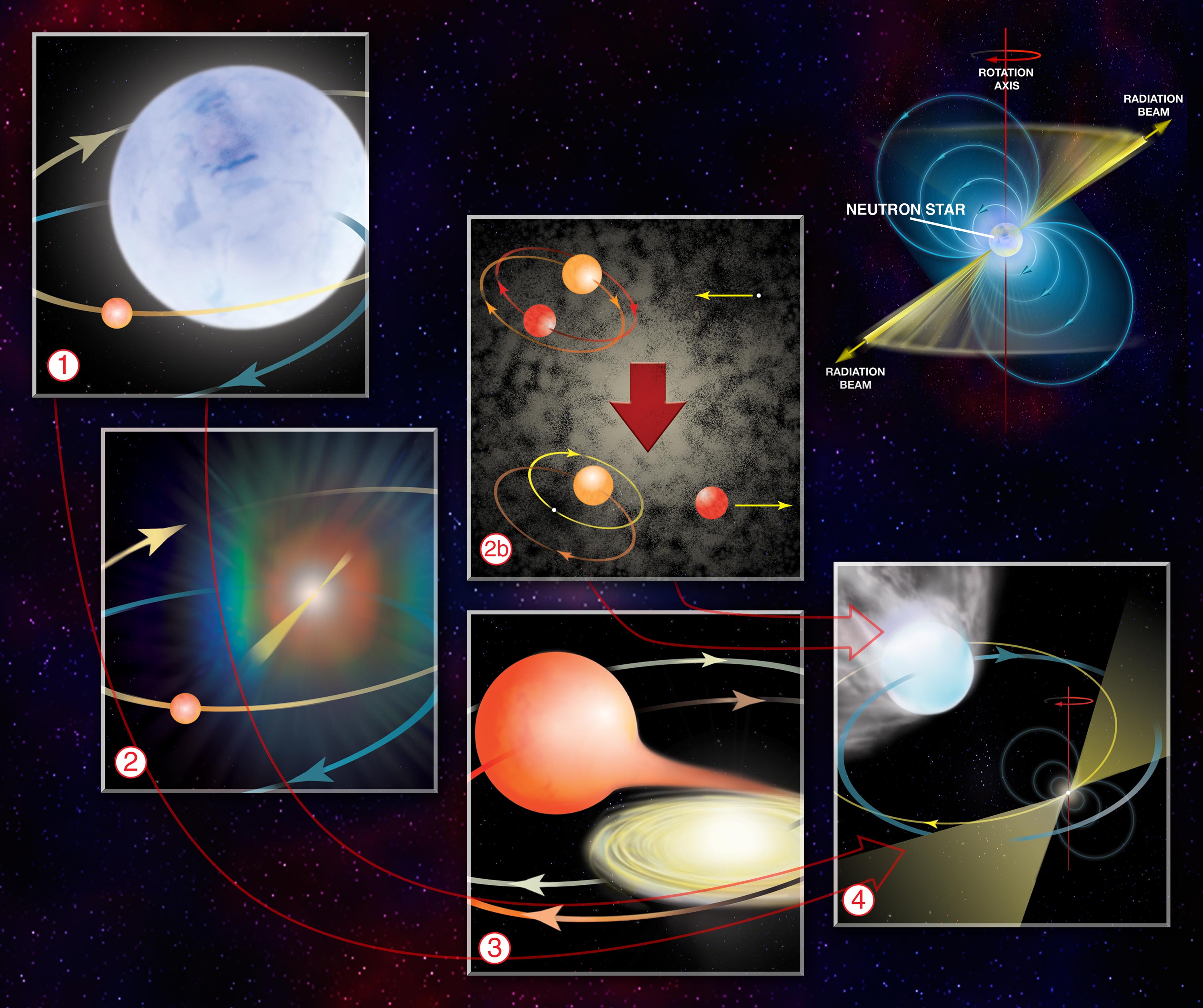
A detailed comparison across key dimensions reveals that millisecond pulsars are formed through the accretion of matter from a companion star, a process that spins up the neutron star, whereas exoplanets form from the protoplanetary disk around their host stars. The study of millisecond pulsars involves radio astronomy and x-ray astronomy, while exoplanet research relies heavily on spectroscopy and photometry.
✅ Millisecond Pulsar Pros & Cons
Millisecond pulsars have the advantage of providing precise astronomical clocks for testing theories of gravity, such as general relativity, but they are challenging to detect and study due to their faint signals. Exoplanets, on the other hand, can be detected using various methods, including the transit method and radial velocity method, but understanding their compositions and atmospheres requires sophisticated space missions like the James Webb Space Telescope.
✅ Exoplanet Pros & Cons
Exoplanets offer the potential for discovering life beyond Earth, with missions like terraforming and the search for biosignatures being areas of active research. However, the study of exoplanet atmospheres and surfaces is complex, involving atmospheric modeling and remote sensing techniques. Millisecond pulsars, while not directly related to the search for life, contribute significantly to our understanding of extreme astrophysical phenomena, such as black holes and neutron star mergers.
🎯 When to Choose Each
Choosing between the study of millisecond pulsars and exoplanets depends on the research question. For insights into extreme density and gravity, millisecond pulsars are unparalleled. For the search for life and understanding planetary formation, exoplanets are the focus. Both areas of study contribute uniquely to our understanding of the universe, with millisecond pulsars informing us about stellar evolution and exoplanets about planetary science.
💡 Final Recommendation
In conclusion, while millisecond pulsars and exoplanets are distinct in their formation, properties, and the questions they help answer, both are crucial for a comprehensive understanding of the universe. Future research, facilitated by advancements in space technology and computational power, will continue to unveil the secrets of these celestial entities, potentially leading to breakthroughs in astrophysics and cosmology.
Key Facts
- Year
- 2023
- Origin
- Astrophysical Research
- Category
- comparisons
- Type
- concept
- Format
- comparison
Frequently Asked Questions
What is the main difference between a millisecond pulsar and an exoplanet?
A millisecond pulsar is a rapidly rotating neutron star, while an exoplanet is a planet that orbits a star outside our solar system. The study of millisecond pulsars involves radio astronomy and x-ray astronomy, whereas exoplanet research relies on spectroscopy and photometry.
How are millisecond pulsars formed?
Millisecond pulsars are thought to be formed through the accretion of matter from a companion star, which spins up the neutron star. This process is distinct from the formation of exoplanets, which occurs from the protoplanetary disk around their host stars.
What can we learn from studying exoplanets?
Studying exoplanets can provide insights into planetary formation, the potential for life beyond Earth, and the composition of planetary atmospheres. Missions like the James Webb Space Telescope are crucial for understanding these aspects, using techniques such as atmospheric modeling and remote sensing.
How do millisecond pulsars contribute to our understanding of the universe?
Millisecond pulsars contribute significantly to our understanding of extreme astrophysical phenomena, such as black holes and neutron star mergers. They also serve as precise astronomical clocks for testing theories of gravity, like general relativity.
What are the challenges in detecting and studying millisecond pulsars and exoplanets?
Detecting and studying millisecond pulsars is challenging due to their faint signals, requiring sensitive radio telescopes and x-ray telescopes. Exoplanet detection and characterization face challenges in distinguishing planetary signals from stellar activity and in understanding the complexities of planetary atmospheres, necessitating advanced space missions and data analysis techniques.