
Contents
Overview
The roots of psychedelic art can be traced to the mid-20th century, particularly the burgeoning interest in consciousness expansion and the therapeutic use of psychedelics. British psychologist Humphry Osmond coined the term 'psychedelic' in 1957, positing that these substances could 'reveal the psyche.' This philosophical underpinning found its visual manifestation in the early 1960s, gaining significant momentum with the San Francisco counterculture. Artists like Wes Wilson, Victor Moscoso, Rick Griffin, and Stanley Mouse became instrumental in defining the aesthetic through their iconic posters for venues like the Fillmore Auditorium and the Avalon Ballroom. These works, often produced with limited budgets and rapid turnaround times, utilized bold, clashing colors and illegible typography to mirror the disorienting yet exhilarating nature of the psychedelic experience, directly influencing the visual language of the era.
⚙️ How It Works
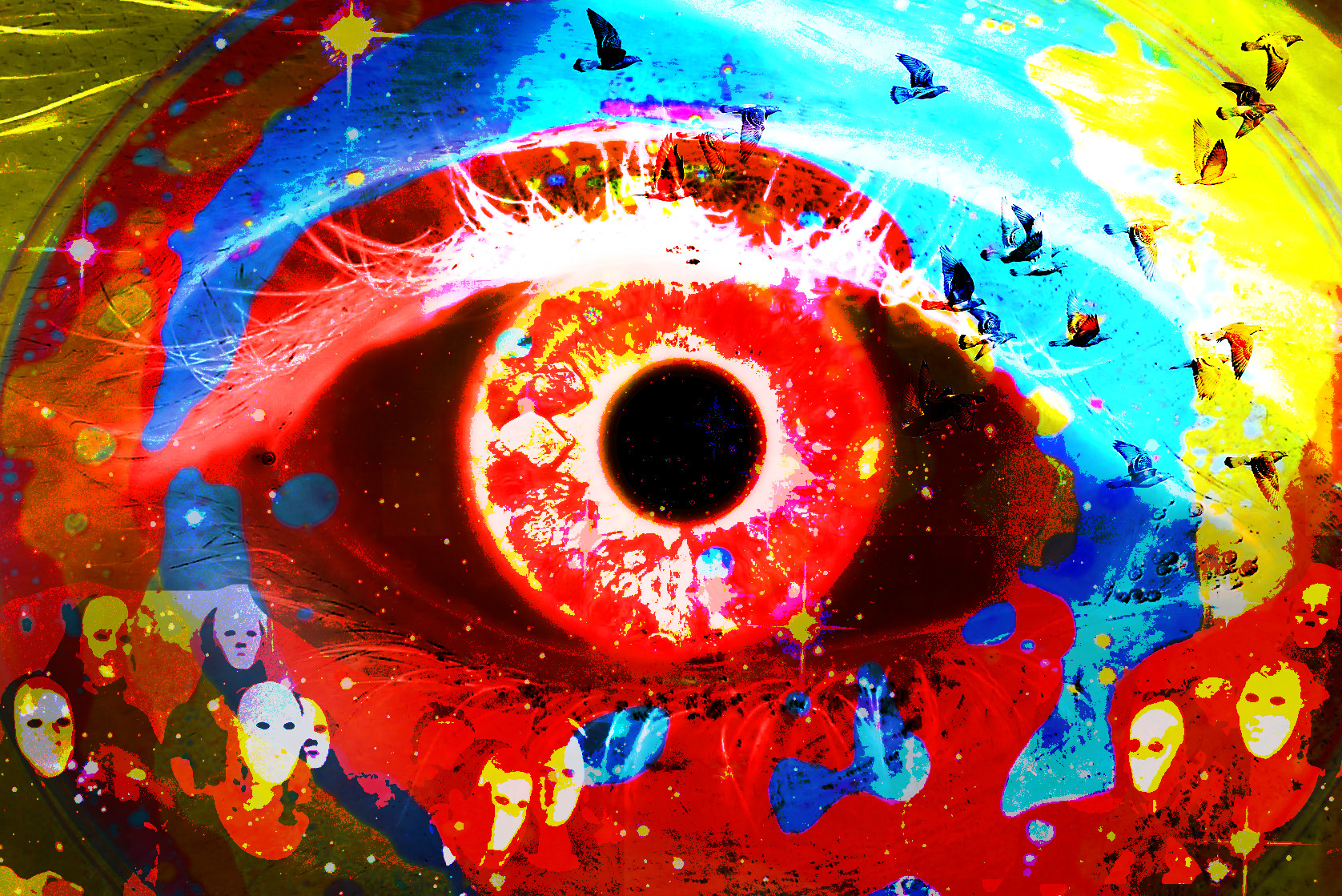
Psychedelic art functions by employing specific visual strategies to mimic or evoke the subjective experience of altered states of consciousness. This often involves extreme visual distortion, such as melting or warping forms, and the use of highly saturated, often clashing colors that create optical vibration. Techniques like fractal patterns, tessellations, and intricate, repeating motifs are common, aiming to replicate the complex, layered visual hallucinations experienced under psychedelics. Typography is frequently distorted, integrated into the artwork, or rendered illegible, forcing the viewer to engage with the visual field rather than passively read text. The overall effect is designed to be immersive and overwhelming, challenging conventional perception and creating a sense of entering a different reality, much like the effects described by users of LSD and psilocybin.
📊 Key Facts & Numbers
Liquid light shows, a staple of psychedelic concerts, utilized projectors and viscous fluids to create dynamic, abstract visual patterns. The underground comix movement, a direct offshoot, saw titles like Zap Comix sell hundreds of thousands of copies in its early years.
👥 Key People & Organizations
Key figures in psychedelic art include Wes Wilson, often credited with pioneering the illegible, flowing lettering style. Victor Moscoso, a graphic designer and artist, brought a sophisticated understanding of color theory and optical effects to his posters, notably for the Matrix Club. Rick Griffin's work, characterized by its intricate detail and spiritual themes, became synonymous with the San Francisco scene. Stanley Mouse and Alan Aldridge (though Aldridge was primarily UK-based) were also prolific, creating iconic imagery for bands like The Grateful Dead and The Rolling Stones. Organizations like the Family Dog Production and the counterculture movement itself provided the fertile ground and demand for this unique artistic expression, while institutions like the Museum of Modern Art (MoMA) have since recognized its artistic significance.
🌍 Cultural Impact & Influence
Psychedelic art profoundly impacted visual culture, extending far beyond concert posters and album covers. Its aesthetic infiltrated fashion, advertising, and graphic design throughout the late 1960s and 1970s, popularizing bold colors and fluid forms. The visual language developed by psychedelic artists became a cornerstone of the hippie movement's identity, symbolizing freedom, experimentation, and a rejection of mainstream norms. Its influence can be seen in the visual styles of subsequent art movements and subcultures, from Art Nouveau revivals to contemporary digital art and motion graphics. The immersive nature of liquid light shows also laid groundwork for later developments in interactive art installations and visual effects in live performances and cinema, demonstrating a lasting legacy on how audiences experience visual stimuli.
⚡ Current State & Latest Developments
While the peak of the original psychedelic art movement has passed, its influence continues to resonate and evolve. Contemporary artists are increasingly incorporating psychedelic aesthetics into digital art, virtual reality experiences, and generative art projects, often exploring themes of consciousness, technology, and spirituality. The resurgence of interest in psychedelic therapy has also led to a renewed appreciation for psychedelic art, with its imagery being used in educational materials and therapeutic settings to contextualize altered states. Platforms like Etsy and Society6 host thousands of artists selling modern interpretations of psychedelic art, indicating a sustained commercial interest. Furthermore, the development of AI art generators allows for the rapid creation of novel psychedelic visuals, pushing the boundaries of the aesthetic in unexpected directions.
🤔 Controversies & Debates
Psychedelic art has faced scrutiny and controversy since its inception. Critics often dismiss it as mere drug-induced ephemera, lacking genuine artistic merit and solely dependent on chemical inspiration. The illegibility of much of its typography has been criticized for hindering communication, particularly in its original context of concert promotion. Furthermore, the association with drug use has led to its marginalization within traditional art institutions for decades. Debates persist regarding whether the art is a genuine exploration of the human psyche or simply a superficial aestheticization of drug culture. The commercialization of psychedelic imagery, detached from its original countercultural context, also raises questions about authenticity and appropriation.
🔮 Future Outlook & Predictions
The future of psychedelic art appears to be increasingly intertwined with technology and a growing acceptance of altered states of consciousness. Expect to see more sophisticated integration into virtual and augmented reality, creating truly immersive psychedelic environments. As research into psychedelic-assisted psychotherapy expands, art that visually represents or aids in navigating these states will likely gain prominence. AI-generated psychedelic art will continue to evolve, potentially creating entirely new visual languages. There's also a growing interest in the therapeutic and meditative applications of psychedelic visuals, suggesting a potential shift from purely recreational or artistic contexts to more wellness-oriented uses, possibly leading to new forms of 'therapeutic psychedelia.'
💡 Practical Applications
Psychedelic art finds practical applications in various domains beyond its original context. It's widely used in graphic design for album covers, posters, and branding that aims for a vibrant, unconventional aesthetic. In fashion design, its bold patterns and colors continue to inspire clothing and accessories. The visual principles of psychedelic art are also applied in motion graphics for film and television, particularly in sequences depicting dreams, hallucinations, or altered perceptions. Furthermore, its principles are employed in art therapy and meditation to help individuals explore their inner states and achieve altered states of consciousness, demonstrating its utility in both aesthetic and therapeutic contexts.
Key Facts
- Category
- aesthetics
- Type
- topic