
Contents
Overview
Machine vision companies develop and deploy systems that enable machines to 'see' and interpret the visual world, primarily for industrial automation. These companies integrate hardware like cameras, lighting, and optics with sophisticated software for image processing, analysis, and decision-making. Their solutions automate tasks such as inspection, measurement, guidance, and identification, crucial for quality control, robot navigation, and process optimization across manufacturing, logistics, and emerging fields like autonomous driving. The market is a complex ecosystem of specialized providers, from component manufacturers to full-system integrators, driven by increasing demands for efficiency, precision, and cost reduction in industrial operations worldwide.
🎵 Origins & History
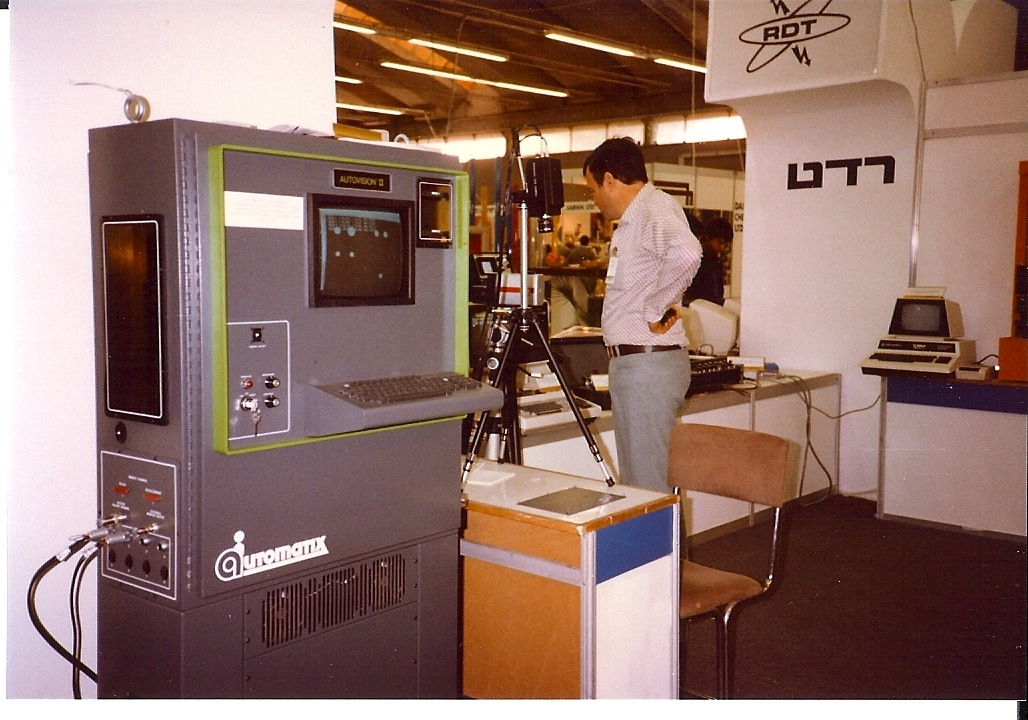
The foundational work in computer vision by pioneers like David Marr and Marvin Minsky laid the theoretical groundwork. Early applications focused on simple tasks like verifying component presence or reading barcodes, often using custom-built hardware and rudimentary algorithms. The subsequent decades saw rapid advancements in sensor technology, processing power, and software algorithms, enabling more complex analyses and the expansion of machine vision into new industries beyond traditional manufacturing, such as pharmaceuticals and food and beverage processing.
⚙️ How It Works
Machine vision systems operate by capturing images of an object or scene, processing these images to extract relevant information, and then making decisions based on that information. The process typically begins with specialized cameras (e.g., CCD or CMOS) and controlled lighting to illuminate the subject. Optics, including lenses, are crucial for focusing the image onto the sensor. The captured digital image is then fed into a processing unit, which can range from embedded systems to powerful industrial PCs. Software algorithms perform tasks such as segmentation (isolating objects from the background), feature extraction (identifying edges, corners, or textures), pattern recognition (matching against known templates), and optical character recognition (OCR) for reading text. Machine vision companies often develop proprietary algorithms or integrate libraries from open-source projects like OpenCV to achieve specific inspection, measurement, or guidance outcomes, ultimately feeding data to PLCs or robots for automated action.
📊 Key Facts & Numbers
The global machine vision market is substantial and growing. North America currently holds the largest market share, accounting for over 30% of the global revenue, followed closely by Europe. The automotive industry is the single largest end-user sector, consuming roughly 25% of all machine vision systems, driven by demand for advanced driver-assistance systems (ADAS) and autonomous vehicle development. The electronics and semiconductor manufacturing sectors also represent significant markets, with these industries accounting for an additional 20% of global sales. Within these markets, inspection applications dominate, representing over 40% of all machine vision deployments, while robot guidance accounts for another 25%. The average cost of a basic machine vision system can range from $5,000 to $20,000, with complex integrated solutions for high-precision tasks potentially exceeding $100,000.
👥 Key People & Organizations
Numerous companies form the backbone of the machine vision industry, ranging from component suppliers to full-solution providers. Basler AG is a leading manufacturer of high-quality digital cameras for industrial, medical, and traffic applications. SICK AG provides a wide array of sensors, including vision sensors and LiDAR systems, for automation. Beyond these established giants, a vibrant ecosystem of smaller, specialized firms exists, focusing on niche applications or specific technologies like deep learning for machine vision.
🌍 Cultural Impact & Influence
Machine vision companies have fundamentally reshaped industrial operations, enabling unprecedented levels of automation, precision, and efficiency. Their technologies are the unseen eyes behind the smooth functioning of modern factories, ensuring product quality and reducing waste. The widespread adoption of machine vision in sectors like automotive manufacturing, driven by the need for consistent quality control and the integration of robotics on assembly lines, has directly contributed to the reliability and safety of vehicles. Furthermore, the development of machine vision for applications like medical imaging analysis and robotic surgery has profound implications for healthcare. The proliferation of machine vision in consumer electronics manufacturing, from smartphone assembly to semiconductor fabrication, has been critical in driving down costs and increasing the availability of sophisticated devices. The influence extends to logistics, where automated sorting and package inspection systems powered by machine vision are essential for the speed and accuracy of global supply chains.
⚡ Current State & Latest Developments
The machine vision sector is currently experiencing significant growth, largely fueled by the integration of artificial intelligence and deep learning algorithms. Companies are increasingly offering 'smart cameras' with embedded AI capabilities that can learn and adapt to new inspection tasks with minimal reprogramming. The demand for machine vision in autonomous vehicles continues to surge. In manufacturing, the focus is shifting towards more flexible and adaptable systems capable of handling product variations and complex defect detection. The COVID-19 pandemic also accelerated the adoption of automation, including machine vision, to maintain production with reduced human presence. Recent developments include advancements in 3D machine vision, enabling more comprehensive object analysis, and the growing use of edge computing to process vision data closer to the source, reducing latency and bandwidth requirements.
🤔 Controversies & Debates
One of the primary controversies surrounding machine vision companies revolves around job displacement. As automation powered by machine vision becomes more sophisticated, concerns are raised about the potential for widespread job losses in manufacturing and inspection roles previously performed by humans. Another debate centers on the ethical implications of AI-powered vision systems, particularly in surveillance and data privacy. While industrial applications are generally less controversial than public surveillance, the underlying technologies can be dual-use. Furthermore, the complexity and cost of implementing advanced machine vision systems can create a barrier for smaller businesses, leading to discussions about equitable access to automation technology. The reliability and interpretability of deep learning models in critical applications also remain a subject of scrutiny, with questions about 'black box' decision-making and the potential for algorithmic bias.
🔮 Future Outlook & Predictions
The future of machine vision companies is inextricably linked to advancements in AI, robotics, and sensor technology. We can expect to see increasingly autonomous systems capable of performing complex tasks with minimal human intervention. The integration of augmented reality with machine vision will likely enhance human-robot collaboration and provide real-time visual guidance for technicians. The development of more robust and versatile deep learning models will enable machine vision to tackle an even wider range of complex and uns
💡 Practical Applications
Machine vision companies have fundamentally reshaped industrial operations, enabling unprecedented levels of automation, precision, and efficiency. Their technologies are the unseen eyes behind the smooth functioning of modern factories, ensuring product quality and reducing waste. The widespread adoption of machine vision in sectors like automotive manufacturing, driven by the need for consistent quality control and the integration of robotics on assembly lines, has directly contributed to the reliability and safety of vehicles. Furthermore, the development of machine vision for applications like medical imaging analysis and robotic surgery has profound implications for healthcare. The proliferation of machine vision in consumer electronics manufacturing, from smartphone assembly to semiconductor fabrication, has been critical in driving down costs and increasing the availability of sophisticated devices. The influence extends to logistics, where automated sorting and package inspection systems powered by machine vision are essential for the speed and accuracy of global supply chains.
Key Facts
- Category
- technology
- Type
- topic