
Contents
- 📜 What is a Historical Figure?
- 🌟 Who Qualifies? Criteria for Significance
- 💡 Impact & Legacy: The Vibepedia Lens
- 🔍 Navigating the Archives: Where to Learn More
- 🤔 Controversy Spectrum: Not All Heroes Wear Capes
- 📈 Vibe Score: Measuring Cultural Resonance
- 👥 Key Figures in Biographical Studies
- 📚 Essential Reading & Resources
- 🚀 Future of Historical Figure Studies
- ❓ Frequently Asked Questions
- Frequently Asked Questions
- Related Topics
Overview
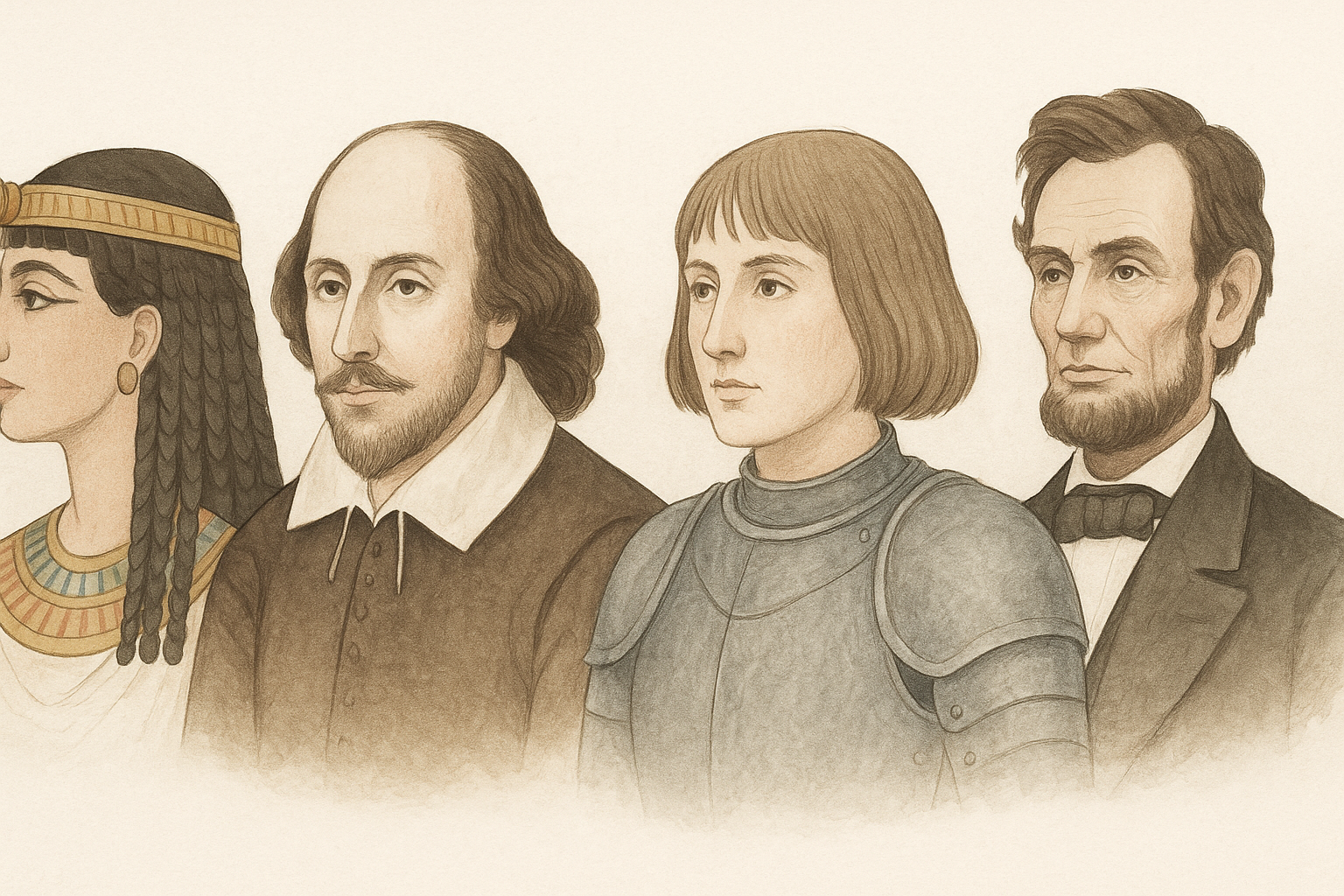
A Historical Figure is an individual whose actions, ideas, or existence have demonstrably shaped the course of human events, leaving an indelible mark on culture, politics, science, or society. Think of figures like Genghis Khan, whose nomadic empire reshaped Eurasia, or Marie Curie, whose pioneering work in radioactivity earned her two Nobel Prizes. These aren't just names in a textbook; they are the architects and catalysts of the world we inhabit, their stories offering profound insights into the human condition and the forces that drive historical change. Understanding them is key to understanding ourselves.
🌟 Who Qualifies? Criteria for Significance
The designation of a historical figure isn't arbitrary; it hinges on demonstrable impact. Did their actions lead to widespread social upheaval, like Martin Luther King Jr.'s leadership in the American Civil Rights Movement? Did their scientific discoveries alter our understanding of the universe, such as Isaac Newton's laws of motion? Or did their artistic creations redefine cultural expression, like William Shakespeare's enduring plays? Vibepedia analyzes these impacts through quantifiable metrics and qualitative assessments of influence flow.
💡 Impact & Legacy: The Vibepedia Lens
At Vibepedia, we don't just catalog achievements; we dissect the vibe a historical figure projects and the lasting cultural energy they generate. A figure like Cleopatra isn't just a queen; she's a nexus of power, romance, and geopolitical intrigue, her image continuously reinterpreted across millennia. We assess their Vibe Score (0-100) based on factors like enduring public fascination, the volume of creative works inspired by them, and their presence in contemporary discourse. This score reflects their ongoing cultural relevance, not just their historical footprint.
🤔 Controversy Spectrum: Not All Heroes Wear Capes
Few historical figures exist without controversy. The Controversy Spectrum on Vibepedia maps the extent to which a figure's legacy is debated. Christopher Columbus, for example, is lauded by some for his voyages of discovery and condemned by others for the devastating impact on indigenous populations. We present these conflicting narratives, allowing you to assess the full spectrum of their impact, from celebrated innovator to reviled figure, and understand the evolving historical consensus.
📈 Vibe Score: Measuring Cultural Resonance
The Vibe Score is Vibepedia's proprietary metric for measuring a historical figure's ongoing cultural energy and relevance. A high score indicates a figure whose name, deeds, and image continue to resonate powerfully in contemporary society, inspiring art, debate, and further study. Consider Joan of Arc; her story of faith, defiance, and martyrdom continues to captivate imaginations, earning her a consistently high Vibe Score across centuries. This score is dynamic, reflecting shifts in public perception and academic interest.
👥 Key Figures in Biographical Studies
Within the field of Biographical Studies, certain figures stand out for their foundational contributions to the discipline itself, or for embodying the complexities of historical analysis. Plutarch, with his parallel lives of Greek and Roman leaders, set an early standard for comparative biography. More contemporary figures like Robert Caro, known for his monumental biographies of Lyndon B. Johnson, demonstrate the rigorous research and narrative skill required to capture a life's full scope. Their work informs how we approach and understand other historical figures.
📚 Essential Reading & Resources
To truly engage with historical figures, a curated selection of resources is essential. Vibepedia recommends exploring digitized collections from institutions like the British Library or the Library of Congress for primary source material. Academic databases such as JSTOR provide access to scholarly articles, while reputable biographical series, like the Oxford Dictionary of National Biography, offer concise yet authoritative overviews. For a more popular approach, consider well-researched documentaries and historical fiction that, while requiring critical engagement, can spark initial interest.
🚀 Future of Historical Figure Studies
The study of historical figures is far from static. As new evidence emerges and societal perspectives shift, our understanding of past individuals is constantly refined. The Futurist lens at Vibepedia considers how emerging technologies, like AI-driven historical analysis or virtual reality reconstructions, might further illuminate or even challenge established narratives. We anticipate new debates and reinterpretations that will continue to shape how these figures are remembered and what lessons we draw from their lives.
❓ Frequently Asked Questions
The FAQ section addresses common queries about historical figures. What distinguishes a figure from a mere historical actor? How do we account for bias in historical accounts? What are the ethical considerations when studying figures associated with atrocities? Vibepedia aims to provide clear, concise answers grounded in historical methodology and critical analysis, empowering you to engage more deeply with the past.
Key Facts
- Year
- N/A
- Origin
- N/A
- Category
- Biographical Studies
- Type
- Concept
Frequently Asked Questions
What's the difference between a 'historical figure' and a 'famous person'?
A 'historical figure' implies a lasting, demonstrable impact on the trajectory of history, influencing societal structures, scientific understanding, or cultural norms over extended periods. A 'famous person' might be widely recognized in their time or even currently, but their influence may be fleeting or superficial, lacking the deep, systemic impact characteristic of a historical figure. Vibepedia's Vibe Score helps differentiate between transient fame and enduring historical significance.
How does Vibepedia determine a historical figure's 'Vibe Score'?
The Vibe Score is calculated based on multiple factors: the volume and nature of cultural output inspired by the figure (art, literature, film), the frequency of their appearance in academic discourse and public debate, and the persistence of their narrative in popular consciousness. We analyze data from various sources, including media mentions, academic citations, and online search trends, to quantify their ongoing cultural energy.
Are all historical figures considered 'great'?
Absolutely not. 'Historical figure' is a neutral descriptor for individuals who had a significant impact, whether that impact was positive, negative, or a complex mix. Figures like Adolf Hitler are undeniably historical figures due to their profound, albeit devastating, influence on 20th-century events. Vibepedia's Controversy Spectrum is crucial for understanding the nature of their impact.
How can I verify the information about a historical figure?
Critical evaluation of sources is paramount. Always cross-reference information from multiple reputable sources, prioritizing primary documents when available and peer-reviewed academic research. Be wary of sensationalized accounts or single-source narratives. Vibepedia aims to link to diverse perspectives and scholarly resources to aid in verification.
Can modern individuals become 'historical figures'?
The designation of a 'historical figure' typically requires the passage of time, allowing for the assessment of long-term impact and the stabilization of historical consensus. While individuals alive today may be highly influential, their ultimate status as historical figures will be determined by future generations based on the enduring legacy of their actions and ideas.
What is the role of [[Influence Flows]] in understanding historical figures?
Influence Flows map how ideas, actions, and cultural trends propagate from one entity to another. For historical figures, understanding these flows reveals who they influenced, who influenced them, and how their impact spread across different domains (e.g., politics, art, science). This network analysis provides a dynamic view of their historical embeddedness and reach.