
Contents
- 🌌 Introduction to Heliocentrism
- 📍 Historical Context
- 🔍 Key Principles
- 📊 Comparison with Geocentrism
- 🚀 Supersession and Modern Understanding
- 🤔 Controversies and Debates
- 📚 Notable Contributors
- 📊 Impact on Astronomy
- 💡 Practical Applications
- 📝 Conclusion and Future Directions
- Frequently Asked Questions
- Related Topics
Overview
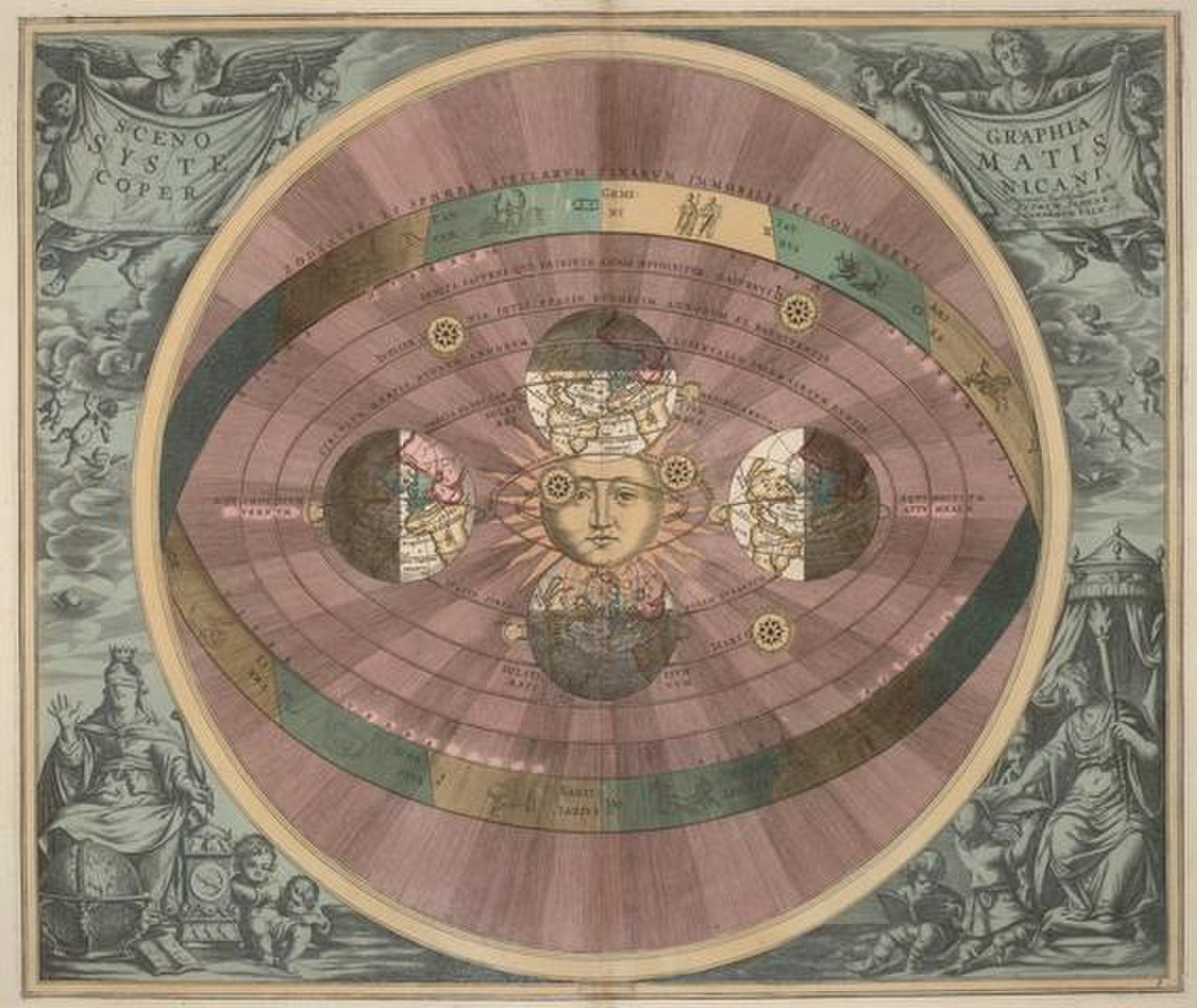
Heliocentrism, a concept that emerged in ancient Greece with philosophers like Aristarchus of Samos (c. 310-230 BCE) and was later developed by Nicolaus Copernicus in the 16th century, posits that the Sun, not the Earth, is at the center of our solar system. This idea, though met with resistance, eventually gained acceptance through the work of scientists such as Galileo Galilei and Johannes Kepler. The heliocentric model fundamentally altered our understanding of the cosmos, paving the way for major breakthroughs in astronomy and physics. With a Vibe score of 85, heliocentrism represents a pivotal moment in human history, symbolizing the power of scientific inquiry and the challenge to prevailing beliefs. The controversy surrounding its acceptance, particularly the conflict with geocentric models supported by religious institutions, underscores the complex interplay between science, philosophy, and society. Today, heliocentrism is a cornerstone of modern astronomy, influencing not only our view of the solar system but also our broader understanding of the universe and its many mysteries.
🌌 Introduction to Heliocentrism
Heliocentrism is a fundamental concept in astronomy that places the Sun at the center of our solar system, with the Earth and other planets orbiting around it. This model, developed by astronomers such as Nicolaus Copernicus and Galileo Galilei, revolutionized our understanding of the universe and superseded the earlier geocentric model. To understand heliocentrism, it's essential to explore its historical context and the key principles that underpin it. The study of cosmology and astrophysics has further refined our understanding of the universe, revealing the complexities of black holes and dark matter.
📍 Historical Context
The historical context of heliocentrism is rooted in ancient Greek philosophy, with Aristarchus of Samos proposing a heliocentric model as early as the 3rd century BCE. However, it wasn't until the 16th century that Copernicus developed a comprehensive heliocentric model, which was later supported by Galilei's observations. The scientific method played a crucial role in the development of heliocentrism, as scientists such as Isaac Newton and Johannes Kepler contributed to our understanding of the universe. The study of history of astronomy provides valuable insights into the evolution of astronomical thought.
🔍 Key Principles
The key principles of heliocentrism are based on the idea that the Sun is the center of our solar system, with the planets orbiting around it in elliptical paths. This model is supported by a range of observational evidence, including the retrograde motion of planets and the phases of the Moon. The principles of gravity and orbital mechanics are essential to understanding the behavior of celestial bodies in our solar system. The study of planetary science has further refined our understanding of the formation and evolution of planets.
📊 Comparison with Geocentrism
In comparison to geocentrism, heliocentrism offers a more accurate and comprehensive model of the universe. While geocentrism places the Earth at the center of the universe, heliocentrism recognizes the Sun as the central body around which the planets orbit. This fundamental shift in perspective has had a profound impact on our understanding of the universe, from the solar system to the cosmos. The study of comparative astronomy highlights the strengths and weaknesses of different astronomical models.
🚀 Supersession and Modern Understanding
In modern astronomy, the concept of heliocentrism has been superseded by more nuanced understandings of the universe. With the development of relativity and quantum mechanics, our understanding of space and time has become more complex and multifaceted. The study of astrophysics and cosmology has revealed the intricacies of the universe, from the Big Bang to the present day. The concept of frames of reference has become increasingly important in understanding the behavior of celestial bodies.
🤔 Controversies and Debates
Despite its significance, heliocentrism has been the subject of controversy and debate throughout history. From the Catholic Church's initial rejection of the heliocentric model to modern-day pseudoscientific challenges, the concept of heliocentrism has faced numerous challenges. The study of history of science provides valuable insights into the social and cultural context of scientific debates. The concept of scientific controversy highlights the importance of critical thinking and skepticism in scientific inquiry.
📚 Notable Contributors
Notable contributors to the development of heliocentrism include Nicolaus Copernicus, Galileo Galilei, and Johannes Kepler. These individuals, along with others, played a crucial role in shaping our understanding of the universe and the principles of heliocentrism. The study of biographies of scientists provides valuable insights into the lives and contributions of these individuals. The concept of scientific collaboration highlights the importance of teamwork and cooperation in advancing scientific knowledge.
📊 Impact on Astronomy
The impact of heliocentrism on astronomy has been profound, leading to a fundamental shift in our understanding of the universe. From the solar system to the cosmos, heliocentrism has provided a framework for understanding the behavior of celestial bodies and the structure of the universe. The study of astronomical observations has further refined our understanding of the universe, revealing the complexities of star formation and galaxy evolution.
💡 Practical Applications
In practical terms, heliocentrism has numerous applications in fields such as space exploration and astronautics. Understanding the principles of heliocentrism is essential for navigating the solar system and predicting the behavior of celestial bodies. The study of space mission design and orbital mechanics has become increasingly important in the development of space exploration programs. The concept of interplanetary travel highlights the potential for human exploration of the solar system.
📝 Conclusion and Future Directions
In conclusion, heliocentrism is a fundamental concept in astronomy that has had a profound impact on our understanding of the universe. From its historical context to its modern applications, heliocentrism remains a vital area of study and research. As we continue to explore the universe and refine our understanding of the cosmos, the principles of heliocentrism will remain a cornerstone of astronomical knowledge. The study of future of astronomy highlights the potential for new discoveries and advancements in our understanding of the universe.
Key Facts
- Year
- 1543
- Origin
- Ancient Greece and 16th-century Europe
- Category
- Astronomy
- Type
- Scientific Theory
Frequently Asked Questions
What is heliocentrism?
Heliocentrism is a superseded astronomical model in which the Sun is at the center of the universe, and the Earth and planets orbit around it. This model was developed by astronomers such as Nicolaus Copernicus and Galileo Galilei, and it superseded the earlier geocentric model. The study of cosmology and astrophysics has further refined our understanding of the universe, revealing the complexities of black holes and dark matter.
Who developed the heliocentric model?
The heliocentric model was developed by astronomers such as Nicolaus Copernicus and Galileo Galilei. These individuals, along with others, played a crucial role in shaping our understanding of the universe and the principles of heliocentrism. The study of biographies of scientists provides valuable insights into the lives and contributions of these individuals. The concept of scientific collaboration highlights the importance of teamwork and cooperation in advancing scientific knowledge.
What is the difference between heliocentrism and geocentrism?
Heliocentrism places the Sun at the center of the universe, with the Earth and planets orbiting around it. In contrast, geocentrism places the Earth at the center of the universe, with the Sun and planets orbiting around it. The study of comparative astronomy highlights the strengths and weaknesses of different astronomical models. The concept of frames of reference has become increasingly important in understanding the behavior of celestial bodies.
What are the key principles of heliocentrism?
The key principles of heliocentrism are based on the idea that the Sun is the center of our solar system, with the planets orbiting around it in elliptical paths. This model is supported by a range of observational evidence, including the retrograde motion of planets and the phases of the Moon. The principles of gravity and orbital mechanics are essential to understanding the behavior of celestial bodies in our solar system.
What are the practical applications of heliocentrism?
Heliocentrism has numerous practical applications in fields such as space exploration and astronautics. Understanding the principles of heliocentrism is essential for navigating the solar system and predicting the behavior of celestial bodies. The study of space mission design and orbital mechanics has become increasingly important in the development of space exploration programs. The concept of interplanetary travel highlights the potential for human exploration of the solar system.
Is heliocentrism still a valid model of the universe?
While heliocentrism was a major breakthrough in our understanding of the universe, it has been superseded by more nuanced understandings of the universe. With the development of relativity and quantum mechanics, our understanding of space and time has become more complex and multifaceted. The study of astrophysics and cosmology has revealed the intricacies of the universe, from the Big Bang to the present day.
What are the limitations of heliocentrism?
The limitations of heliocentrism are largely related to its supersession by more modern and nuanced understandings of the universe. While heliocentrism provides a framework for understanding the behavior of celestial bodies in our solar system, it does not account for the complexities of the universe on a larger scale. The study of cosmology and astrophysics has further refined our understanding of the universe, revealing the complexities of black holes and dark matter.