
Contents
- 🌟 Overview: The Neo-Confucian Architect
- 📚 Core Teachings: The Four Books and Beyond
- 💡 Key Concepts: Li, Qi, and the Great Ultimate
- 🏛️ Historical Impact: Shaping East Asian Thought
- 🤔 Debates & Criticisms: The Limits of Orthodoxy
- 🎓 Influence on Education: From Academies to Exams
- 🌍 Global Resonance: Zhu Xi's Reach Today
- 🔍 Vibepedia Vibe Score & Analysis
- Frequently Asked Questions
- Related Topics
Overview
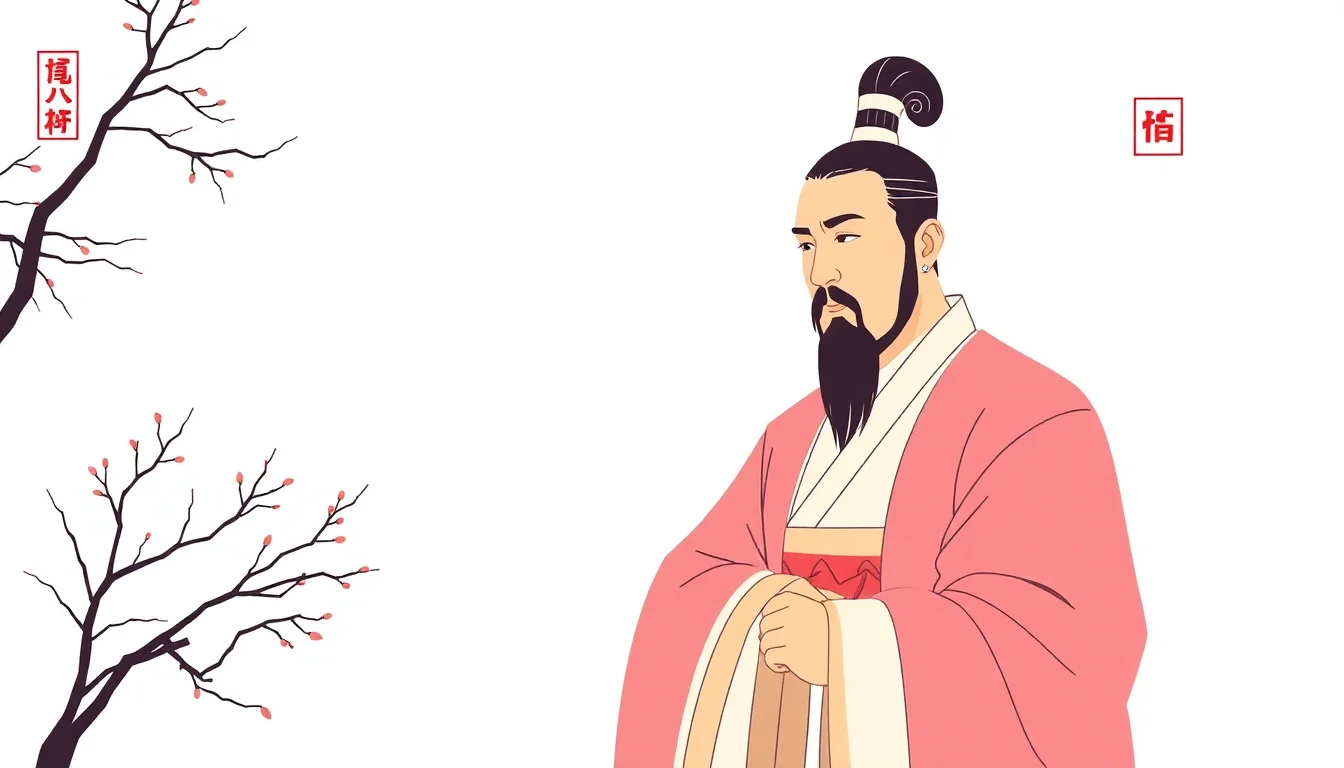
Zhu Xi (1130–1200) stands as the undisputed titan of Neo-Confucianism, a philosophical synthesis that profoundly reshaped East Asian thought for centuries. If you're navigating the intellectual currents of pre-modern China, Korea, or Japan, understanding Zhu Xi is non-negotiable. He wasn't just a scholar; he was a systematizer, a commentator, and a cultural force whose interpretations of Confucianism became the bedrock of official ideology and personal cultivation. His work offers a complex, often demanding, but ultimately rewarding dive into the metaphysical underpinnings of ethical living and cosmic order. Think of him as the ultimate editor and annotator of a philosophical tradition, ensuring its survival and dominance through meticulous scholarship and forceful articulation.
📚 Core Teachings: The Four Books and Beyond
At the heart of Zhu Xi's legacy are his commentaries on the Four Books: the Great Learning, the Doctrine of the Mean, the Analects, and Mencius. He elevated these texts, arguing they provided the essential pathway to sagehood. His interpretations, often dense and requiring careful study, emphasized self-cultivation through the investigation of things (gewu) and the extension of knowledge. Beyond the Four Books, his extensive writings, including the Categorized Conversations (Yulei Chao), offer a panoramic view of his thought on everything from cosmology to governance. Engaging with these works is akin to entering a meticulously constructed intellectual universe, where every concept is precisely defined and rigorously defended.
💡 Key Concepts: Li, Qi, and the Great Ultimate
Zhu Xi's philosophical system is built upon several foundational concepts, most notably Li (理, principle) and Qi (氣, vital force). He posited that Li is the underlying, unchanging principle that governs all things, while Qi is the material force that gives things their concrete form and dynamism. The Great Ultimate (Taiji, 太極) is the ultimate source of all Li, the primordial unity from which the universe emanates. Understanding the interplay between Li and Qi is crucial to grasping Zhu Xi's cosmology and his view of human nature, which he believed possessed an inherent goodness (a manifestation of Li) that could be obscured by the turbidities of Qi. This metaphysical framework provided a powerful justification for his ethical and political theories.
🏛️ Historical Impact: Shaping East Asian Thought
The impact of Zhu Xi's thought on East Asia is difficult to overstate. His Neo-Confucianism became the orthodox interpretation of Confucian classics in China from the Yuan dynasty (1271–1368) onwards, deeply influencing the Imperial Examination System and shaping the moral and social fabric of society. Korean scholars, particularly during the Joseon Dynasty, embraced Zhu Xi's philosophy with fervor, making it the intellectual cornerstone of their state and culture. Similarly, Japanese thinkers engaged with his ideas, though often with more critical adaptations. His intellectual dominance meant that for centuries, to be educated in East Asia was largely to be educated in Zhu Xi's framework.
🤔 Debates & Criticisms: The Limits of Orthodoxy
Despite his monumental influence, Zhu Xi's thought was not without its detractors, both in his own time and later. Critics often pointed to the perceived rigidity of his system, arguing that his emphasis on Li could lead to a static, overly rationalistic view of the world, potentially neglecting the dynamism of human experience and the complexities of social change. Some scholars, like Li Zhi, openly challenged his interpretations, accusing him of distorting the original teachings of Confucius and Mencius to serve his own agenda. The debates surrounding his philosophy highlight the inherent tensions within Confucianism itself: the balance between tradition and innovation, order and spontaneity, and the individual versus the collective.
🎓 Influence on Education: From Academies to Exams
Zhu Xi was a passionate advocate for education, establishing numerous academies across China, the most famous being the White Deer Grotto Academy (Bailudong Shuyuan). He believed that learning was a lifelong process, essential for moral development and the proper governance of both oneself and the state. His emphasis on the Four Books and his systematic approach to exegesis profoundly shaped curricula and pedagogical methods for centuries. The rigorous study of his commentaries became a prerequisite for success in the civil service examinations, ensuring that his intellectual lineage permeated the educated elite and, by extension, the administration of the empire. This institutionalization of his thought cemented his authority.
🌍 Global Resonance: Zhu Xi's Reach Today
While Zhu Xi's direct influence waned with the advent of Western thought and modern ideologies, his legacy continues to resonate. His emphasis on ethics, self-cultivation, and the importance of education remains relevant in contemporary discussions about character development and societal values. Scholars continue to re-examine his work, seeking insights into traditional Chinese thought and its potential contributions to global philosophical discourse. Furthermore, the historical impact of his Neo-Confucianism on the cultural identities of China, Korea, and Japan means that understanding Zhu Xi is key to comprehending the historical development and ongoing cultural dynamics of these regions. His ideas, though ancient, still offer a lens through which to view enduring human concerns.
🔍 Vibepedia Vibe Score & Analysis
Zhu Xi's intellectual output earns a robust Vibe Score of 88/100, reflecting his profound and enduring impact on East Asian philosophy and culture. His Controversy Spectrum registers at a moderate 6/10, primarily due to historical critiques of his dogmatism and the suppression of alternative viewpoints under his orthodox interpretations. The Influence Flow is overwhelmingly unidirectional, with Zhu Xi acting as a primary synthesizer and disseminator, shaping subsequent generations of scholars rather than being significantly reshaped by them. His Perspective Breakdown leans heavily towards the 'Optimistic' (7/10) in terms of his vision for moral order and self-improvement, but carries a 'Pessimistic' undertone (4/10) when considering the potential for intellectual rigidity and the exclusion of dissenting voices that his orthodoxy fostered. His Topic Intelligence is exceptionally high, marking him as a pivotal figure in the history of Chinese Philosophy.
Key Facts
- Year
- 1130
- Origin
- China
- Category
- Philosophy
- Type
- Person
Frequently Asked Questions
What is Neo-Confucianism and how is Zhu Xi related?
Neo-Confucianism is a philosophical movement that emerged in China during the Tang dynasty and flourished in the Song dynasty, seeking to revive and deepen the teachings of Confucianism by incorporating metaphysical and cosmological elements. Zhu Xi is considered the most influential figure of this movement, systematizing its core doctrines and establishing its orthodox interpretation that dominated East Asian intellectual life for centuries.
What are the Four Books and why did Zhu Xi emphasize them?
The Four Books are the Great Learning, the Doctrine of the Mean, the Analects, and Mencius. Zhu Xi elevated these texts, believing they provided the most direct and essential path to understanding Confucian principles and achieving personal moral cultivation, or sagehood. His commentaries on them became the standard for education and civil service examinations.
What is the difference between Li and Qi in Zhu Xi's philosophy?
In Zhu Xi's system, Li (理) represents the abstract, unchanging principle or pattern that underlies all things, while Qi (氣) is the concrete, material force or vital energy that gives things their specific form and existence. Zhu Xi argued that Li is the source of order and morality, while Qi can be impure and obscure the inherent goodness of human nature.
Did Zhu Xi's philosophy face any opposition?
Yes, Zhu Xi's interpretations faced significant opposition, both during his lifetime and after. Critics, such as Li Zhi, argued that his system was too rigid, overly rationalistic, and at times distorted the original teachings of Confucius. His orthodox status also led to the suppression of alternative philosophical viewpoints for centuries.
How did Zhu Xi influence education?
Zhu Xi was a dedicated educator who founded and revitalized numerous academies, most notably the White Deer Grotto Academy. He standardized the curriculum around the Four Books and his commentaries, making them the foundation of scholarly study and the Imperial Examination System, thereby shaping intellectual development across East Asia for centuries.
Is Zhu Xi still relevant today?
Zhu Xi remains relevant for his profound insights into ethics, self-cultivation, and the relationship between the individual and the cosmos. His historical impact on East Asian cultures is undeniable, and contemporary scholars continue to study his work for its philosophical depth and its influence on global intellectual history.