
Contents
Overview
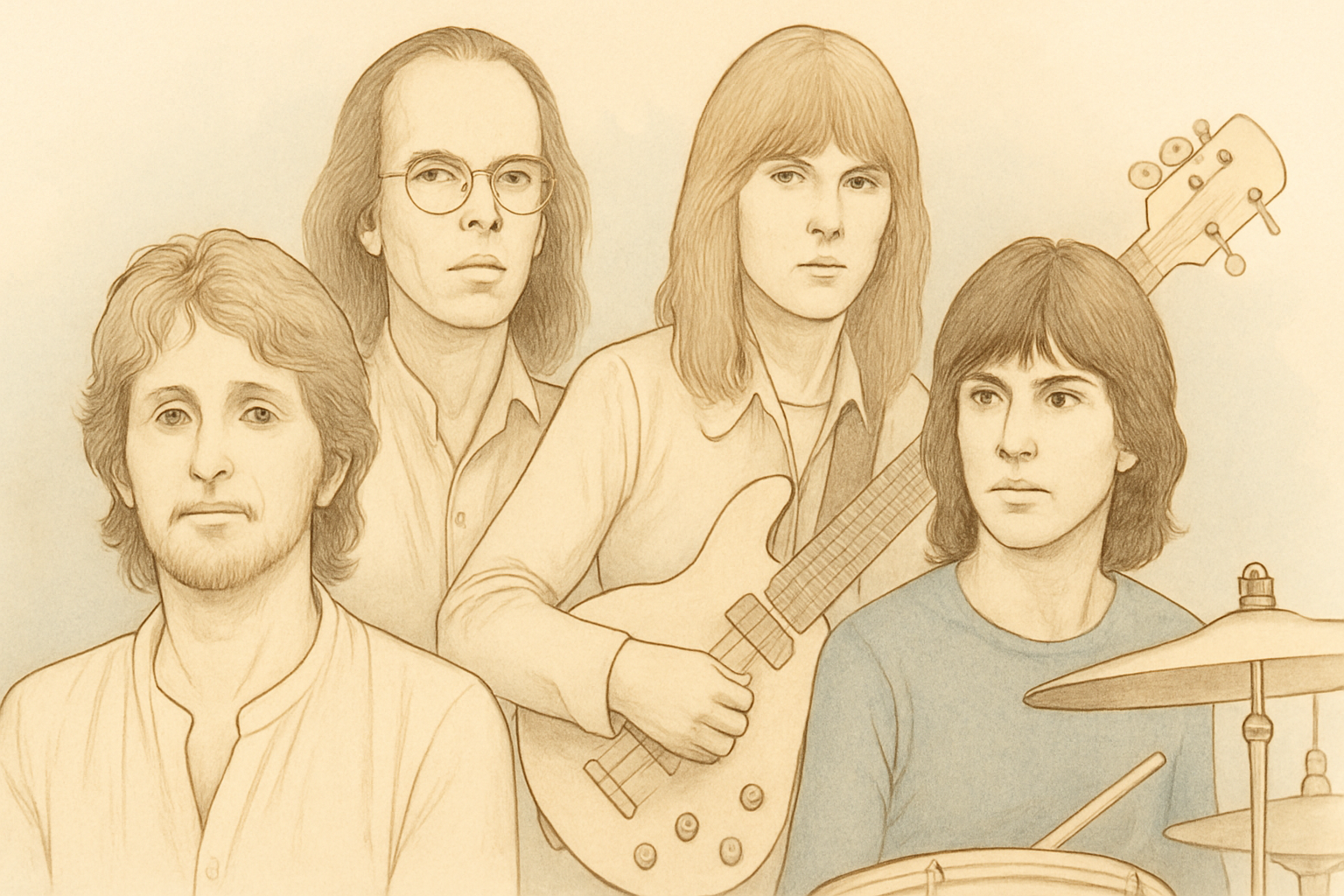
Yes, a titan of progressive rock, emerged from the London psychedelic scene in 1968, forging a sound that blended intricate musicianship, complex song structures, and soaring, often mystical, lyrical themes. They weren't just a band; they were an ambitious sonic expedition, pushing the boundaries of what rock music could be. Their early work, particularly albums like Fragile (1971) and Close to the Edge (1972), established them as pioneers, earning critical acclaim and a devoted fanbase. The band's lineup, notoriously fluid, saw virtuosos like Jon Anderson, Chris Squire, Rick Wakeman, and Steve Howe contribute to their evolving sound. Their influence echoes through generations of musicians, from Dream Theater to Tool, cementing their status as architects of ambitious, artful rock.
Musically, Yes is defined by its virtuosity. Guitarist Steve Howe's intricate acoustic passages and soaring electric solos, bassist Chris Squire's melodic and thunderous low-end, and keyboardists like Rick Wakeman and Geoff Downes creating vast sonic landscapes with organs, synthesizers, and pianos, all underpinned by drummers such as Bill Bruford and Alan White. Jon Anderson's ethereal vocals and philosophical lyrics often provided a spiritual or cosmic anchor. Their extended compositions, frequently exceeding 10 or 20 minutes, demanded listener engagement, eschewing the verse-chorus structure for evolving suites of music. This approach, while alienating some mainstream audiences, resonated deeply with those seeking more from their rock music, creating a dedicated cult following that persists to this day.
🎬 Genesis of a Genre
Formed in London in 1968 from the ashes of The Git Show and The Odd Group, Yes was the brainchild of bassist Chris Squire and singer Jon Anderson. Their vision was to create a more complex, harmonically rich, and artistically ambitious form of rock music, drawing inspiration from classical music, jazz, and folk. Early gigs in London's burgeoning psychedelic club scene, like the Marquee Club, quickly established their reputation for musical prowess. Their self-titled debut album, Yes (1969), showcased their nascent sound, but it was Time and a Word (1970) and The Yes Album (1970) that truly began to define their signature style, introducing guitarist Steve Howe and drummer Bill Bruford to the fold, solidifying a lineup that would soon conquer the world.
📖 Shifting Sands: Lineups and Evolution
The band's narrative is as complex as their music, marked by frequent lineup changes that, paradoxically, often injected new creative energy. The classic lineup of Anderson, Squire, Howe, keyboardist Rick Wakeman, and drummer Bill Bruford created the masterpieces Fragile and Close to the Edge. However, Wakeman's departure led to Patrick Moraz joining for Relayer (1974), and later, Geoff Downes and Trevor Horn would steer the band through a more synth-pop-influenced era with Drama (1980). Despite these shifts, the core elements of intricate arrangements, virtuosic solos, and Anderson's distinctive vocals remained, allowing them to navigate evolving musical landscapes.
🏆 Critical Acclaim and Artistic Integrity
Yes's impact on the music industry is immeasurable. They were instrumental in defining the progressive rock genre, influencing countless bands and musicians across rock, metal, and even electronic music. Their album covers, often elaborate and fantastical works by artist Roger Dean, became as iconic as their music, contributing to the band's otherworldly aesthetic. While commercial success ebbed and flowed, their critical standing as innovators and masters of their craft remained remarkably consistent. They garnered Grammy Awards and numerous accolades, but their true legacy lies in the enduring devotion of their fanbase and their unwavering commitment to artistic integrity in a commercialized industry.
✨ Enduring Influence on Modern Music
The legacy of Yes is not merely historical; it's a living testament to the power of ambitious, complex music. Their influence can be heard in the intricate guitar work of modern metal bands, the conceptual depth of alternative rock, and the adventurous spirit of electronic artists. Bands like Porcupine Tree and The Flower Kings have explicitly cited Yes as a primary influence, continuing the tradition of long-form compositions and sophisticated arrangements. Even as the music industry shifts, the blueprint Yes laid down for musicianship, thematic depth, and sonic exploration remains a vital touchstone for artists seeking to transcend conventional boundaries.
Key Facts
- Year
- 1968-present
- Origin
- United Kingdom
- Category
- videos
- Type
- tv-show
Frequently Asked Questions
What is the most definitive Yes album?
While debated, Fragile (1971) and Close to the Edge (1972) are consistently cited by critics and fans as their most iconic and artistically significant works.
Who are the most consistent members of Yes?
Bassist Chris Squire and singer Jon Anderson were the only constant members throughout the band's history until Squire's passing. Guitarist Steve Howe has also been a long-standing member across multiple eras.
What is the difference between Yes's early and later music?
Early Yes (late 60s-early 70s) is known for its complex, symphonic progressive rock sound. Later music, particularly from the 80s onwards like 90125, often incorporated more accessible, pop, and rock elements, though still retaining a degree of their signature complexity.
Are Yes still active?
Yes, the band continues to tour and record, with current members including Steve Howe, Jon Anderson (though he also tours separately), Geoff Downes, and Billy Sherwood.