
Contents
- 🏯 Introduction to the Western Roman Empire
- 📆 Founding and Expansion
- 👑 Imperial System and Governance
- 💪 Military and Defense
- 🏛️ Economy and Trade
- 📚 Culture and Society
- 🤝 Relations with the Eastern Roman Empire
- 📉 Decline and Fall
- 👊 Barbarian Invasions and Legacy
- 🕊️ Christianity and the Western Roman Empire
- 📊 Administrative Divisions and Reforms
- Frequently Asked Questions
- Related Topics
Overview
The Western Roman Empire, which lasted from 285 to 476 CE, was a pivotal chapter in human history. Founded by Emperor Diocletian, it was marked by constant struggles, including the Battle of Adrianople in 378 CE, where the Visigoths defeated the Roman legions, and the sacking of Rome by the Visigoths in 410 CE. The empire's decline was further accelerated by internal conflicts, economic troubles, and external pressures from barbarian tribes. Despite its eventual collapse, the Western Roman Empire's legacy can be seen in modern-day law, architecture, and governance. The empire's vibe score is 8, reflecting its significant cultural and historical impact. Notable figures like Alaric, Attila the Hun, and Emperor Romulus Augustus played important roles in shaping the empire's destiny. The Western Roman Empire's influence can still be felt today, with its history continuing to fascinate and inspire people around the world.
🏯 Introduction to the Western Roman Empire
The Western Roman Empire, also known as the Latin Empire, was the western half of the Roman Empire, with its capital in Rome. It existed from 285 to 476 AD, and its history is marked by periods of stability and turmoil. The Western Roman Empire was founded by Diocletian, who introduced the Tetrarchy system, dividing the empire into four parts. This system was meant to provide more efficient governance and military defense, but it ultimately led to internal conflicts and power struggles. The Western Roman Empire was also influenced by its relations with the Eastern Roman Empire, also known as the Byzantine Empire. The two empires had a complex and often tense relationship, with periods of cooperation and conflict.
📆 Founding and Expansion
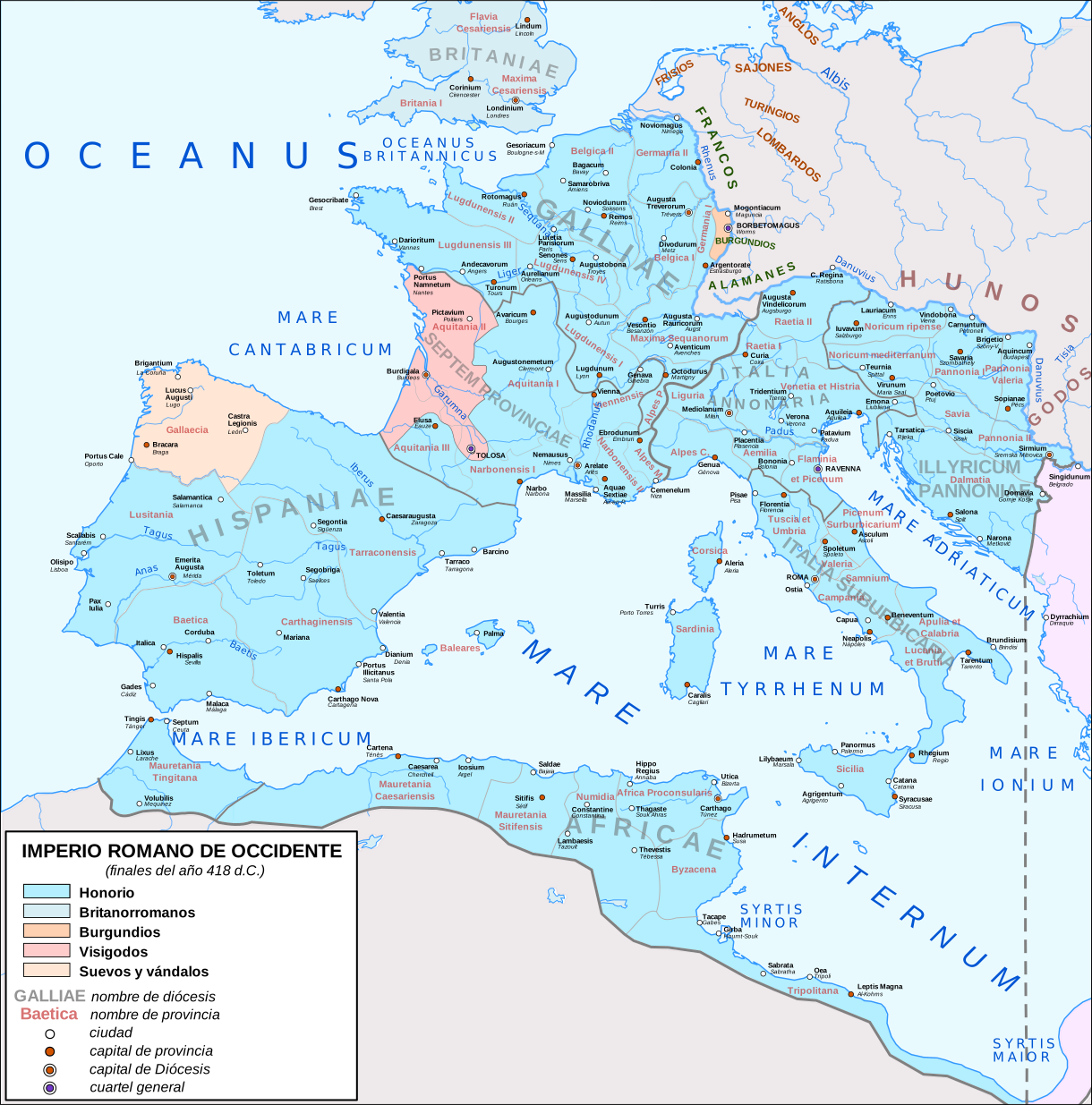
The Western Roman Empire was founded in 285 AD, when Diocletian divided the Roman Empire into two parts: the Western Roman Empire and the Eastern Roman Empire. The Western Roman Empire included territories in Western Europe, North Africa, and the British Isles. The empire expanded its territories through a series of military campaigns, including the conquest of Britain and the Gaul region. The Western Roman Empire also established trade relationships with neighboring regions, including the Germanic Tribes and the Huns. However, the empire's expansion was also marked by internal conflicts and power struggles, including the Crisis of the Third Century. The Western Roman Empire was also influenced by the Roman Law and the Roman Architecture.
👑 Imperial System and Governance
The Western Roman Empire was governed by an imperial system, with the emperor serving as the supreme authority. The emperor was advised by a council of ministers and officials, known as the Roman Senate. The Western Roman Empire also had a complex system of governance, with a network of provinces, cities, and towns. The empire was divided into several administrative regions, including the Diocese and the Praetorian Prefecture. The Western Roman Empire was also influenced by the Roman Legion, which was the backbone of the empire's military defense. The Roman Legion was a well-organized and disciplined force, with a strong sense of loyalty and duty. The Western Roman Empire was also influenced by the Roman Navy, which played a crucial role in the empire's military defense and trade.
💪 Military and Defense
The Western Roman Empire had a powerful military, with a strong emphasis on defense and expansion. The empire's military was organized into several branches, including the Roman Legion and the Roman Navy. The Western Roman Empire also had a network of fortifications and defensive systems, including the Hadrian Wall and the Limes Germanicus. The empire's military was also influenced by its relations with neighboring regions, including the Germanic Tribes and the Huns. The Western Roman Empire was also influenced by the Roman Tactics, which emphasized discipline, organization, and adaptability. The Western Roman Empire was also influenced by the Roman Engineering, which played a crucial role in the empire's military defense and infrastructure development.
🏛️ Economy and Trade
The Western Roman Empire had a complex and diverse economy, with a strong emphasis on trade and commerce. The empire's economy was influenced by its relations with neighboring regions, including the Germanic Tribes and the Huns. The Western Roman Empire also had a network of trade routes, including the Silk Road and the Incense Road. The empire's economy was also influenced by its agricultural production, including the cultivation of Wheat and Grapes. The Western Roman Empire was also influenced by its Roman Currency, which played a crucial role in the empire's trade and commerce. The Western Roman Empire was also influenced by the Roman Taxation, which was a complex system of taxes and levies.
📚 Culture and Society
The Western Roman Empire had a rich and diverse culture, with a strong emphasis on Roman Art and Roman Architecture. The empire's culture was influenced by its relations with neighboring regions, including the Greek Culture and the Egyptian Culture. The Western Roman Empire also had a network of educational institutions, including the Roman Schools and the Roman Libraries. The empire's culture was also influenced by its Roman Literature, which included the works of Virgil and Ovid. The Western Roman Empire was also influenced by the Roman Music and the Roman Dance.
🤝 Relations with the Eastern Roman Empire
The Western Roman Empire had a complex and often tense relationship with the Eastern Roman Empire. The two empires had a long history of cooperation and conflict, with periods of unity and division. The Western Roman Empire was influenced by the Eastern Roman Empire's Byzantine Culture and its Greek Orthodox Church. The Western Roman Empire also had a network of diplomatic relations with the Eastern Roman Empire, including the exchange of Ambassadors and Gifts. The Western Roman Empire was also influenced by the Eastern Roman Empire's Roman Law and its Roman Architecture.
📉 Decline and Fall
The Western Roman Empire declined and fell in the 5th century AD, due to a combination of internal and external factors. The empire was weakened by internal conflicts and power struggles, including the Crisis of the Third Century. The Western Roman Empire was also influenced by external factors, including the Barbarian Invasions and the Hunnic Invasions. The empire's decline was also marked by a series of military defeats, including the Battle of Adrianople and the Battle of Rome. The Western Roman Empire was also influenced by the Roman Disease, which played a crucial role in the empire's decline and fall.
👊 Barbarian Invasions and Legacy
The Western Roman Empire was invaded by several barbarian tribes, including the Visigoths and the Vandals. The barbarian invasions had a devastating impact on the empire, leading to widespread destruction and displacement. The Western Roman Empire was also influenced by the Hunnic Invasions, which played a crucial role in the empire's decline and fall. The Western Roman Empire's legacy can be seen in the modern-day European Countries, including France and Germany. The Western Roman Empire's legacy can also be seen in the Roman Catholic Church, which played a crucial role in the empire's culture and society.
🕊️ Christianity and the Western Roman Empire
The Western Roman Empire was influenced by Christianity, which played a crucial role in the empire's culture and society. The Western Roman Empire was also influenced by the Roman Catholic Church, which was established in the 1st century AD. The Western Roman Empire's relations with the Roman Catholic Church were complex and often tense, with periods of cooperation and conflict. The Western Roman Empire was also influenced by the Christian Persecution, which played a crucial role in the empire's decline and fall.
📊 Administrative Divisions and Reforms
The Western Roman Empire was divided into several administrative regions, including the Diocese and the Praetorian Prefecture. The empire's administrative divisions were influenced by its relations with neighboring regions, including the Germanic Tribes and the Huns. The Western Roman Empire's administrative divisions were also influenced by its Roman Law and its Roman Architecture. The Western Roman Empire's administrative divisions played a crucial role in the empire's governance and military defense.
Key Facts
- Year
- 285
- Origin
- Rome, Italy
- Category
- History
- Type
- Historical Empire
Frequently Asked Questions
What was the capital of the Western Roman Empire?
The capital of the Western Roman Empire was Rome. The Western Roman Empire was founded in 285 AD, and its capital was established in Rome. The city of Rome played a crucial role in the empire's governance, culture, and society. The Western Roman Empire was also influenced by its relations with neighboring regions, including the Germanic Tribes and the Huns.
What was the Western Roman Empire's system of governance?
The Western Roman Empire was governed by an imperial system, with the emperor serving as the supreme authority. The emperor was advised by a council of ministers and officials, known as the Roman Senate. The Western Roman Empire also had a complex system of governance, with a network of provinces, cities, and towns. The empire was divided into several administrative regions, including the Diocese and the Praetorian Prefecture.
What was the Western Roman Empire's economy like?
The Western Roman Empire had a complex and diverse economy, with a strong emphasis on trade and commerce. The empire's economy was influenced by its relations with neighboring regions, including the Germanic Tribes and the Huns. The Western Roman Empire also had a network of trade routes, including the Silk Road and the Incense Road. The empire's economy was also influenced by its agricultural production, including the cultivation of Wheat and Grapes.
What was the Western Roman Empire's culture like?
The Western Roman Empire had a rich and diverse culture, with a strong emphasis on Roman Art and Roman Architecture. The empire's culture was influenced by its relations with neighboring regions, including the Greek Culture and the Egyptian Culture. The Western Roman Empire also had a network of educational institutions, including the Roman Schools and the Roman Libraries. The empire's culture was also influenced by its Roman Literature, which included the works of Virgil and Ovid.
What was the Western Roman Empire's legacy?
The Western Roman Empire's legacy can be seen in the modern-day European Countries, including France and Germany. The Western Roman Empire's legacy can also be seen in the Roman Catholic Church, which played a crucial role in the empire's culture and society. The Western Roman Empire's legacy is also evident in the Roman Law and the Roman Architecture, which continue to influence modern-day law and architecture.