
Contents
Overview
The concept of harnessing fluid power for mechanical work predates the modern turbine by millennia. Ancient civilizations utilized water wheels to grind grain and pump water, representing early forms of hydraulic energy extraction. The true genesis of the modern turbine, however, can be traced to the 17th and 18th centuries with advancements in understanding fluid dynamics and thermodynamics. Hero of Alexandria's aeolipile, a steam-powered rotary device from the 1st century CE, is often cited as a conceptual precursor. Significant leaps occurred in the 19th century with the development of high-pressure steam engines and the invention of the Pelton wheel by Lester Allan Pelton in the 1870s, a highly efficient impulse turbine for hydropower. Simultaneously, Charles Parsons' invention of the compound steam turbine in 1884, which powered the world's first turbine-driven steamship, the Turbinia, in 1897, marked a pivotal moment, enabling efficient electricity generation at scale and laying the groundwork for modern power plants.
⚙️ How It Works
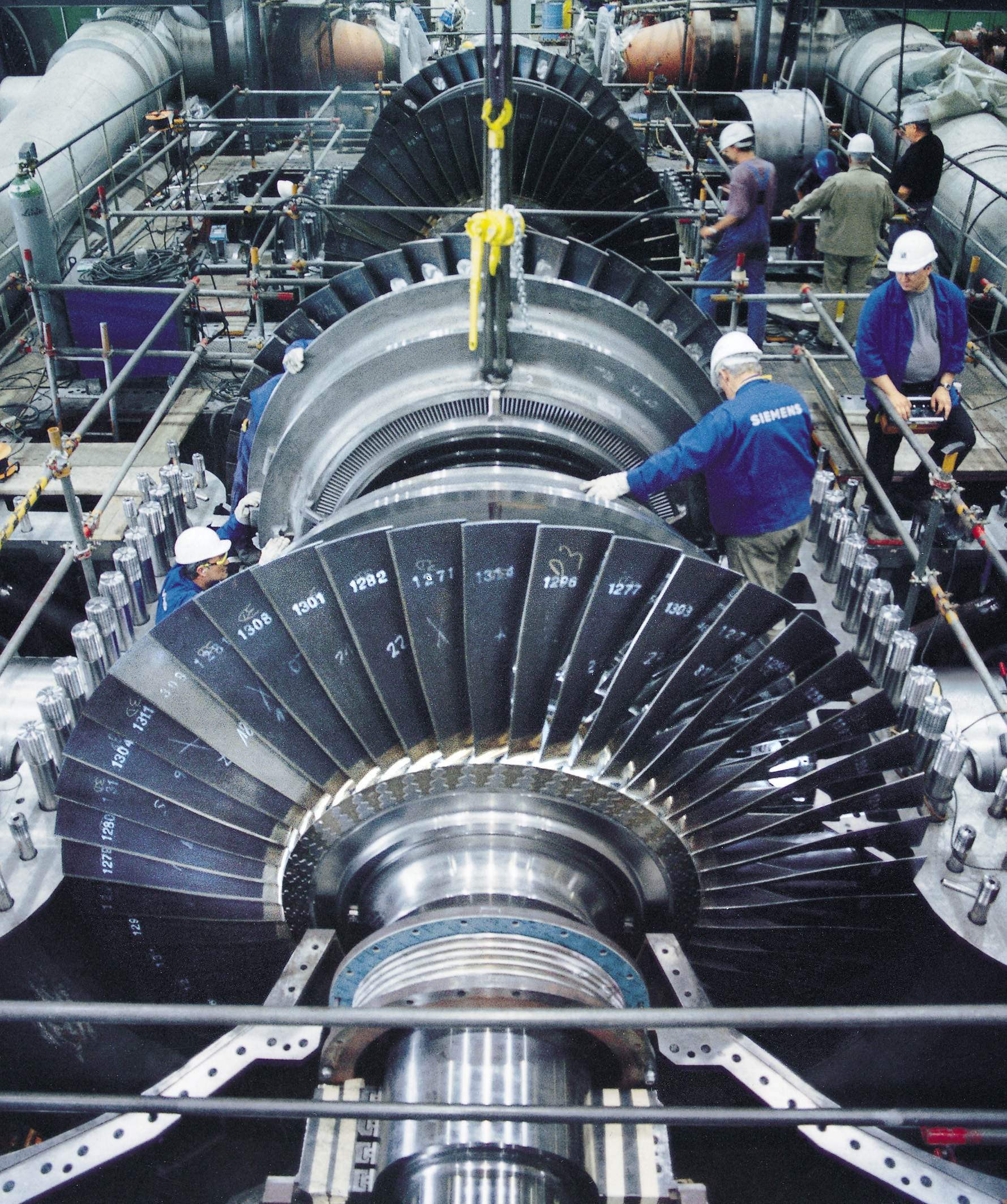
Turbines operate on fundamental principles of fluid mechanics and energy conversion. The working fluid, whether water, steam, gas, or air, possesses kinetic or potential energy. As this fluid flows through the turbine, it interacts with a series of precisely shaped blades attached to a rotor. This interaction causes the blades, and thus the rotor, to spin. In impulse turbines, like the Pelton wheel, a high-velocity jet of fluid strikes the blades, imparting momentum. In reaction turbines, such as the Francis turbine or Kaplan turbine, the fluid is directed through passages that create a pressure difference across the blades, generating a lifting force that drives rotation. The design of the blades and the casing is critical for optimizing fluid flow, minimizing energy losses, and maximizing the efficiency of energy transfer. For instance, gas turbines often employ multiple stages of rotors and stators to progressively extract energy from the expanding hot gases produced by combustion.
📊 Key Facts & Numbers
The scale of turbine deployment is staggering. Globally, the installed capacity of electricity-generating turbines is immense. Steam turbines remain the dominant technology in thermal power plants, including nuclear and fossil fuel facilities. Hydropower, utilizing hydraulic turbines, provides a significant portion of global electricity. The efficiency of modern large-scale turbines can reach over 95% for steam turbines and over 50% for some wind turbines, though overall plant efficiencies are lower due to auxiliary systems and energy conversion losses. The market for new turbine installations, particularly in renewable energy sectors, is valued in the hundreds of billions of dollars annually.
👥 Key People & Organizations
Pioneering figures like Sir Charles Parsons (steam turbine), Lester Allan Pelton (Pelton wheel), and Nikola Tesla (who experimented with bladeless turbines) are central to turbine history. Modern advancements are driven by major engineering firms and research institutions worldwide. Companies such as General Electric, Siemens Energy, and Vestas are global leaders in manufacturing and developing turbines for power generation. Research at institutions like MIT's Gas Turbine Laboratory and RWTH Aachen University continually pushes the boundaries of efficiency and material science. The development of advanced computational fluid dynamics (CFD) software by companies like Ansys and Autodesk plays a crucial role in turbine design and optimization.
🌍 Cultural Impact & Influence
Turbines are not just engineering marvels; they are cultural touchstones, symbolizing progress, power, and humanity's mastery over natural forces. The iconic silhouette of a wind farm on a horizon has become a symbol of renewable energy and environmental consciousness, featured in art, photography, and film. The sheer scale of power generation turbines, like those at the Hoover Dam, inspires awe and represents monumental engineering achievements. In literature and popular culture, turbines are often depicted as the engines of futuristic societies or the critical components in complex industrial landscapes. The sound of a turbine, from the gentle hum of a wind turbine to the powerful roar of a jet engine's gas turbine, is intrinsically linked to the modern technological soundscape.
⚡ Current State & Latest Developments
The turbine industry is in a state of dynamic evolution, heavily influenced by the global push for decarbonization and energy security. In the renewable sector, offshore wind turbines are growing in size and power output. Hydrogen production via electrolysis powered by renewable energy is also driving interest in specialized turbines for hydrogen compression and transport. In the aviation sector, jet engine technology continues to advance, focusing on higher bypass ratios for fuel efficiency and reduced emissions, with companies like Rolls-Royce and Pratt & Whitney leading the charge. The nuclear power industry is exploring advanced reactor designs that could utilize smaller, more efficient turbines, and there's renewed interest in tidal energy turbines for predictable, localized power generation.
🤔 Controversies & Debates
The widespread deployment of turbines is not without its controversies. Wind turbines, while crucial for renewable energy, face debates regarding visual impact, noise pollution, and avian mortality, with studies by organizations like the National Audubon Society highlighting concerns for bird populations. The siting of large hydropower dams, which rely on hydraulic turbines, often leads to significant environmental and social disruption, including habitat loss and displacement of communities, as seen with projects like the Itaipu Dam. Furthermore, the reliance on fossil fuels for steam turbines in traditional power plants remains a major point of contention in climate change discussions, despite their high efficiency. The manufacturing and disposal of turbine components, particularly large wind turbine blades made of composite materials, also present waste management challenges.
🔮 Future Outlook & Predictions
The future of turbines is inextricably linked to the energy transition. Expect continued scaling of offshore wind turbines, potentially reaching 20-30 MW capacities by 2035, and the development of floating platforms to access deeper waters. Advanced nuclear reactors may incorporate compact, high-efficiency turbines for smaller, modular power generation. The integration of AI and machine learning in turbine control systems will further optimize performance, predict maintenance needs, and enhance grid stability. Research into novel turbine designs, such as vortex-based bladeless turbines or air-driven turbines for urban environments, may offer niche solutions. The development of sustainable aviation fuels and electric propulsion systems will also reshape the future of gas turbine applications in aerospace.
💡 Practical Applications
Turbines are fundamental to numerous practical applications across industries. In power generation, they are the primary mechanism for converting thermal, hydro, and wind energy into electricity, powering homes and industries globally. In aviation, jet engines and turboprop engines, which are essentially gas turbines, provide propulsion for ai
Key Facts
- Category
- technology
- Type
- topic