Contents
Overview
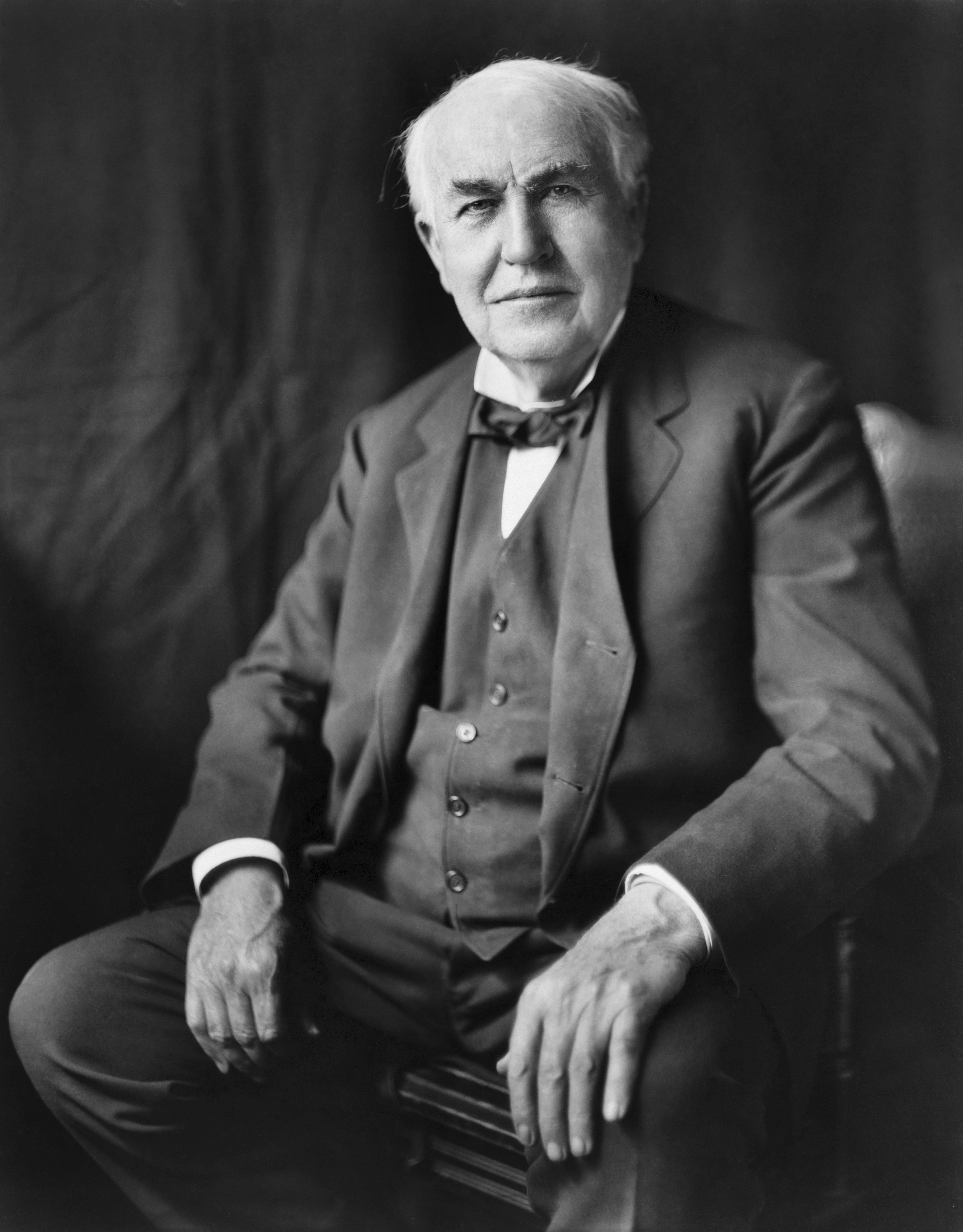
Thomas Edison was a prolific inventor whose career spanned the late 19th and early 20th centuries. His early life was marked by curiosity and a self-taught approach to learning, influenced by his mother, Nancy Elliott Edison. After working as a telegraph operator, a skill that directly informed his early innovations, Edison established his first major research facility in Menlo Park, New Jersey. This laboratory, often dubbed 'the invention factory,' was revolutionary for its time, employing a team of researchers and mechanics to systematically develop new technologies. Edison's business acumen was as sharp as his inventive mind, allowing him to commercialize his discoveries and establish companies like the Edison General Electric Company, which would later merge to form General Electric. His relentless pursuit of innovation continued until his death.
⚙️ How It Works
Edison's inventions often involved refining existing concepts and making them practical and commercially viable. The incandescent light bulb, for instance, wasn't invented from scratch; Edison's genius lay in developing a long-lasting filament (initially carbonized bamboo) and a complete system of power generation and distribution, including dynamos and wiring. The phonograph worked by etching sound vibrations onto a tinfoil or wax cylinder using a stylus, which could then be reproduced. His motion picture camera, the Kinetograph, used perforated film to capture sequential images, and the Kinetoscope allowed for individual viewing of these films. The core principle behind many of his electrical inventions was the efficient generation, transmission, and utilization of direct current (DC) electricity, a system he championed vigorously.
📊 Key Facts & Numbers
Thomas Edison's patent portfolio is staggering. His most famous invention, the incandescent light bulb, saw its patent granted. His Pearl Street Station in New York City was supplying electricity to customers. The phonograph was initially met with skepticism but sold over 100,000 units in its first five years. His motion picture apparatus laid the groundwork for the Hollywood film industry. Edison's companies generated significant revenue; by 1900, his electric light and power systems were valued at over $10 million (approximately $300 million today).
👥 Key People & Organizations
Beyond Edison himself, a vast network of individuals and organizations were crucial to his success. His 'muckers' at Menlo Park, such as Francis Upton and William Kemmler, were instrumental in the technical development of his ideas. Nikola Tesla, though later a fierce rival, worked briefly for Edison and contributed to the development of the DC system before championing alternating current (AC). Henry Ford, a close friend and admirer, was inspired by Edison's inventive spirit and systematic approach. Edison's own companies, including the Edison Electric Light Company and later Thomas Edison, Inc., were massive enterprises that employed thousands and became powerhouses in their respective industries.
🌍 Cultural Impact & Influence
Edison's inventions fundamentally altered the fabric of modern life, ushering in the 'Age of Electricity.' The widespread adoption of the incandescent light bulb extended the productive day, transforming urban landscapes and domestic life. The phonograph democratized access to recorded sound, paving the way for the music industry and influencing how people consumed entertainment. His work in motion pictures laid the foundation for a global visual storytelling medium that continues to dominate popular culture. Edison's model of the industrial research laboratory, exemplified by his Menlo Park and West Orange facilities, became a blueprint for corporate R&D departments worldwide, including those at Bell Labs and Xerox PARC.
⚡ Current State & Latest Developments
While Edison's core inventions remain foundational, the technologies he pioneered continue to evolve. The principles of electric power generation and distribution are central to the global energy grid, though the shift towards renewable energy sources and smart grids represents a significant evolution. Recorded sound has moved from wax cylinders to digital streaming platforms like Spotify and Apple Music, yet the concept of capturing and replaying audio originated with Edison's phonograph. The film industry, born from his Kinetograph and Kinetoscope, now encompasses digital filmmaking, virtual reality, and sophisticated visual effects, but the fundamental idea of capturing moving images for playback remains his legacy. His companies, like GE, continue to operate, though often in vastly different sectors than Edison originally envisioned.
🤔 Controversies & Debates
Edison's legacy is not without controversy. The most prominent debate centers on his fierce advocacy for direct current (DC) electricity and his aggressive campaign against alternating current (AC), which was championed by George Westinghouse and Nikola Tesla. This 'War of the Currents' was a bitter struggle for market dominance, with AC ultimately proving more efficient for long-distance transmission. Furthermore, questions have been raised about the extent of Edison's individual contribution versus that of his employees, with some historians arguing that the 'genius' narrative overshadows the collaborative nature of his laboratories. Patent disputes were also common, with Edison frequently involved in legal battles to protect his inventions.
🔮 Future Outlook & Predictions
The future of Edison's legacy lies in how his foundational technologies are adapted and integrated into emerging systems. The ongoing global transition to smart grids and sustainable energy sources will continue to build upon the electrical infrastructure he helped create. While the specific form factors of his inventions have changed dramatically, the underlying principles of capturing and transmitting information—whether sound, image, or electrical power—remain central to our digital age. The concept of organized, team-based industrial research, which Edison pioneered, is now a cornerstone of innovation across nearly every sector, from artificial intelligence to biotechnology. The challenge for the future is to balance the drive for commercialization with ethical considerations and equitable access to the technologies that shape our lives.
💡 Practical Applications
Edison's inventions have permeated nearly every aspect of modern life. The incandescent light bulb revolutionized domestic and industrial lighting, enabling longer workdays and safer nighttime environments. The phonograph created the recording industry, transforming music consumption and preserving historical speeches and sounds. His motion picture technology laid the groundwork for cinema, a dominant form of global entertainment and communication. Beyond these iconic inventions, Edison also developed improved telegraphy systems, the carbon microphone (crucial for early telephones), and pioneered storage battery technology. His systematic approach to invention and commercialization influenced countless entrepreneurs and corporations, establishing a model for innovation that persists today.
Key Facts
- Category
- technology
- Type
- topic