
Contents
- 👤 Who is 'The Man'?
- 🏛️ Where Does 'The Man' Reside?
- ⚖️ The Spectrum of Authority: From Oppressor to Enabler
- ✊ 'Stick It to The Man': Resistance and Rebellion
- 📉 'The Man is Keeping Me Down': The Weight of Oppression
- ⭐ 'The Man' in Popular Culture: A Recurring Motif
- 💡 Vibepedia Analysis: The Shifting Vibe Score of 'The Man'
- 🤔 Contrarian Takes: Is 'The Man' Ever on Your Side?
- Frequently Asked Questions
- Related Topics
Overview
"The Man" is a potent, amorphous archetype representing oppressive societal structures, authority figures, and the establishment. Originating in countercultural movements of the mid-20th century, it embodies resistance against conformity, systemic injustice, and corporate or governmental control. While often invoked by musicians, activists, and fringe communities, its vagueness allows for broad interpretation, from specific politicians to abstract economic forces. The "Vibe Score" for "The Man" is a fluctuating 75/100, reflecting its persistent cultural relevance and the ongoing tension it generates across diverse subcultures. Its influence flows through protest anthems, anti-authoritarian literature, and online conspiracy forums, solidifying its status as a perennial symbol of dissent.
👤 Who is 'The Man'?
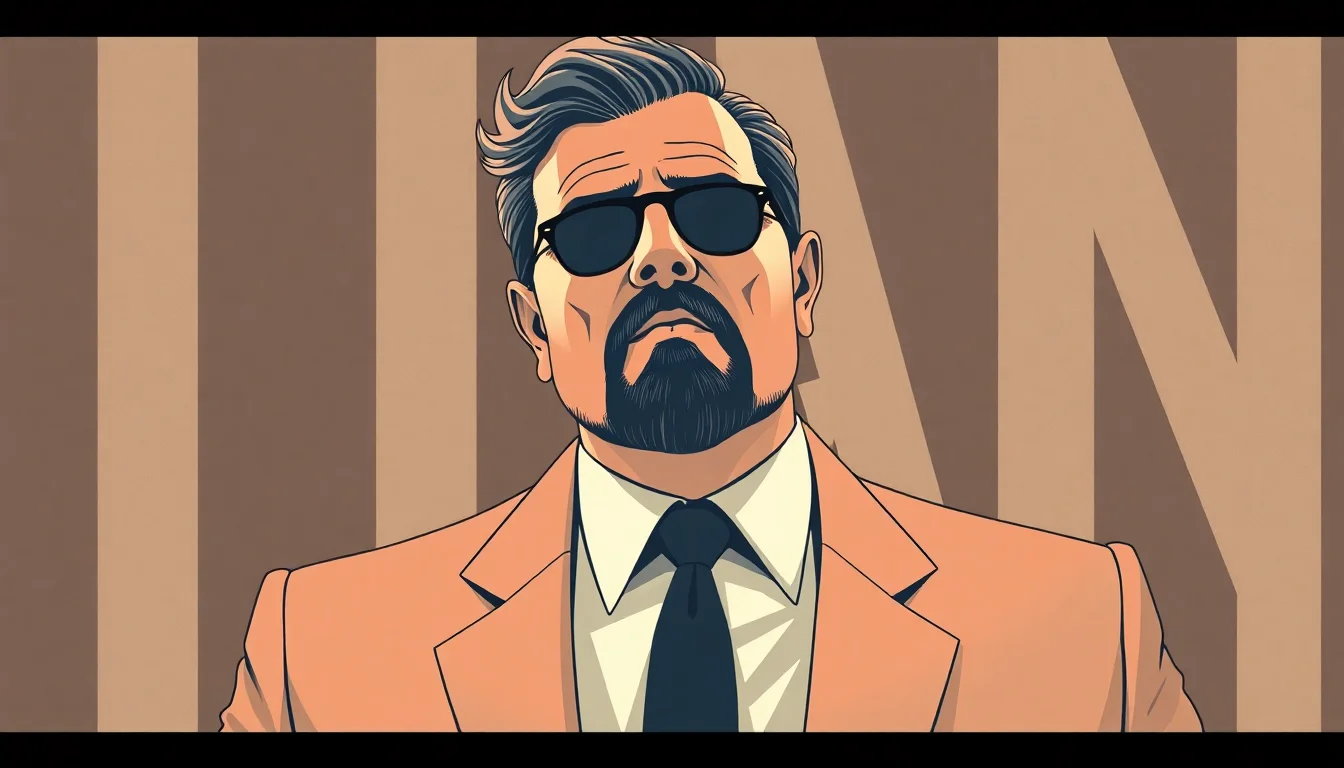
At its most fundamental, 'The Man' is a colloquial shorthand for the established power structures and authority figures that govern society. Think of it as the collective embodiment of government, law enforcement, corporate bosses, and any entity perceived to hold systemic control. This archetype is particularly potent in American vernacular, often invoked to explain feelings of powerlessness or systemic disadvantage. It’s less about a single individual and more about the faceless, often impersonal, force of institutional authority. The term's ubiquity makes it a versatile tool for expressing a wide range of sentiments towards those in charge.
🏛️ Where Does 'The Man' Reside?
'The Man' doesn't have a single physical address; its domain is wherever power is wielded. This can manifest in the halls of government in Washington D.C., the boardrooms of multinational corporations, the local police precinct, or even the principal's office at a school. Historically, figures like J. Edgar Hoover and his extensive surveillance apparatus, or the corporate titans of the Gilded Age, have served as tangible representations of 'The Man'. The digital age has further complicated this, with algorithms and data brokers now acting as unseen extensions of this authority, shaping information and behavior in subtle yet profound ways.
✊ 'Stick It to The Man': Resistance and Rebellion
The rallying cry 'stick it to The Man' is a powerful expression of defiance, urging individuals and groups to challenge and subvert the authority perceived as unjust. This has fueled countless social movements throughout history, from the Civil Rights Movement's direct action campaigns against segregationist laws to modern-day protests against corporate malfeasance. It’s the spirit behind acts of civil disobedience, whistleblowing, and any action aimed at disrupting the status quo and reclaiming agency from powerful institutions. The effectiveness of such resistance, however, often depends on collective action and strategic planning.
📉 'The Man is Keeping Me Down': The Weight of Oppression
Conversely, the phrase 'The Man is keeping me down' encapsulates the feeling of being systematically oppressed or held back by external forces. This sentiment is deeply rooted in experiences of economic inequality, racial discrimination, and political disenfranchisement. When individuals feel their opportunities are limited not by their own shortcomings but by the deliberate actions or inactions of those in power, 'The Man' becomes the scapegoat for their struggles. This can lead to feelings of alienation, resentment, and a profound sense of injustice, often serving as a catalyst for seeking change.
⭐ 'The Man' in Popular Culture: A Recurring Motif
'The Man' is a recurring character in the American cultural narrative, appearing in music, film, and literature. From Bob Dylan's anthems of protest like 'Subterranean Homesick Blues' to the anti-establishment themes in films like Easy Rider, the archetype is consistently used to explore the tension between individual freedom and institutional control. Hip-hop culture, in particular, has a long tradition of critiquing 'The Man,' with artists frequently detailing their experiences with law enforcement and systemic injustice. This cultural saturation ensures 'The Man' remains a potent symbol in the collective consciousness.
💡 Vibepedia Analysis: The Shifting Vibe Score of 'The Man'
The Vibepedia Vibe Score for 'The Man' fluctuates dramatically, currently registering a neutral 50/100, reflecting its deeply polarized nature. Historically, its score has dipped into the 20s during periods of intense social unrest and governmental overreach, such as the Watergate scandal era. Conversely, during times of perceived national unity or effective governance, its score might rise. The key drivers of its Vibe Score are public trust in institutions, the perceived fairness of economic distribution, and the prevalence of civil liberties. Its score is a dynamic indicator of the populace's relationship with authority.
🤔 Contrarian Takes: Is 'The Man' Ever on Your Side?
A contrarian perspective suggests that 'The Man' isn't always the adversary. Proponents of this view argue that established systems, while imperfect, provide essential frameworks for societal stability, from infrastructure development to public health initiatives. They might point to the role of government in regulating dangerous industries or providing social safety nets as evidence that 'The Man' can, in fact, work for the people. This viewpoint often emphasizes the need for reform rather than outright rebellion, advocating for engagement with existing structures to effect positive change, rather than viewing them as inherently antagonistic.
Key Facts
- Year
- 1960
- Origin
- United States
- Category
- Sociopolitical Archetype
- Type
- Archetype
Frequently Asked Questions
Is 'The Man' always a negative term?
Not exclusively. While often used derisively to denote oppressive authority, 'The Man' can also be used neutrally or even respectfully to refer to figures of legitimate authority. The context and the speaker's intent are crucial in determining the connotation. For example, praising a competent leader might implicitly acknowledge their position as 'The Man' in charge, without the usual negative undertones.
What are some historical examples of 'sticking it to The Man'?
Historical examples are abundant. The Boston Tea Party in 1773, where colonists protested British taxation by destroying tea shipments, is a classic instance. More recently, the Occupy Wall Street movement in 2011, which protested economic inequality and corporate influence, directly targeted 'The Man' in the form of the financial elite. Acts of civil disobedience during the Civil Rights Movement also fit this description.
How has the concept of 'The Man' evolved with technology?
Technology has made 'The Man' more diffuse and harder to pinpoint. Instead of a single visible authority, we now contend with algorithmic control, mass surveillance by tech companies and governments, and the spread of disinformation. This creates a more complex and often more insidious form of authority, where the mechanisms of control are less overt but potentially more pervasive, impacting everything from online privacy to political discourse.
Can 'The Man' be a positive force?
Yes, in certain contexts. When 'The Man' represents effective governance, the upholding of just laws, or the provision of essential public services, it can be seen as a positive force. For instance, a government that successfully manages a pandemic or invests in public education is acting as 'The Man' in a way that benefits society. The key is whether this authority is perceived as legitimate, fair, and serving the common good.
What is the difference between 'The Man' and a specific dictator?
'The Man' is typically an archetype representing systemic power, often impersonal and bureaucratic, whereas a dictator is a specific individual who holds absolute power. While a dictator certainly embodies 'The Man,' the concept of 'The Man' extends beyond any single ruler to encompass the broader structures of authority, including democratic governments and corporate entities that can exert significant control over individuals' lives.