
Contents
- 🎯 Introduction to Tartaric Acid
- ⚙️ Chemical Properties and Structure
- 📊 Industrial Applications and Market Trends
- 👥 Key Players and Manufacturers
- 🌍 Environmental and Health Impact
- ⚡ Current Research and Developments
- 🤔 Controversies and Debates
- 🔮 Future Outlook and Predictions
- 💡 Practical Applications and Uses
- 📚 Related Topics and Deeper Reading
- References
- Related Topics
Overview
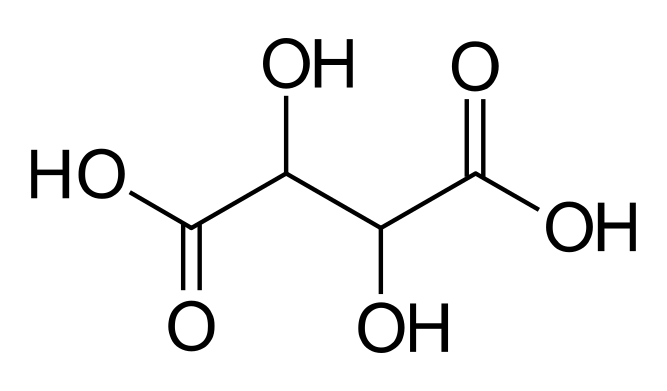
Tartaric acid is a white, crystalline organic acid that occurs naturally in many fruits, most notably in grapes, and is used as an antioxidant and leavening agent in food preparation. Its salt, potassium bitartrate, is commonly mixed with sodium bicarbonate and sold as baking powder. Tartaric acid is a useful raw material in organic synthesis and has diverse applications in the food and chemical industries. With a molecular formula of C4H6O6, tartaric acid is a diprotic and aldaric acid, and a dihydroxyl derivative of succinic acid. The acid is used in the production of pharmaceuticals, cosmetics, and other specialty chemicals. As a naturally occurring compound, tartaric acid has been used for centuries in various applications, including food preservation and wine production. Today, it is an essential ingredient in many food products, including baked goods, soft drinks, and confectionery.
🎯 Introduction to Tartaric Acid
Tartaric acid is a naturally occurring organic acid that has been used for centuries in various applications, including food preservation and wine production. The acid is found in many fruits, including grapes, tamarinds, bananas, avocados, and citrus. The salt of tartaric acid, potassium bitartrate, is commonly mixed with sodium bicarbonate and sold as baking powder, which is used as a leavening agent in food preparation.
⚙️ Chemical Properties and Structure
The chemical properties of tartaric acid make it a useful raw material in organic synthesis. The acid is a diprotic and aldaric acid, and a dihydroxyl derivative of succinic acid. Its molecular formula is C4H6O6. Tartaric acid is also a useful chiral auxiliary in organic synthesis, and it has been used in the production of various pharmaceuticals and specialty chemicals. Emil Fischer was awarded the Nobel Prize in Chemistry in 1902 for his work on the synthesis of sugars, including the use of tartaric acid as a chiral auxiliary.
📊 Industrial Applications and Market Trends
The industrial applications of tartaric acid are diverse and widespread. The acid is used as an antioxidant and leavening agent in food preparation, and it is also used in the production of pharmaceuticals, cosmetics, and other specialty chemicals. BASF SE and Evonik Industries are two of the leading manufacturers of tartaric acid, and they have developed various applications for the acid in the food, pharmaceutical, and chemical industries.
👥 Key Players and Manufacturers
The key players and manufacturers of tartaric acid include BASF SE, Evonik Industries, and Cargill Inc. These companies have developed various applications for the acid in the food, pharmaceutical, and chemical industries, and they have invested heavily in research and development to improve the production and use of tartaric acid.
🌍 Environmental and Health Impact
The environmental and health impact of tartaric acid is a topic of ongoing debate and research. The acid is generally recognized as safe (GRAS) by regulatory agencies, but it can have adverse effects on human health and the environment if not handled and used properly. The production of tartaric acid can also have environmental impacts, including the use of energy and water resources and the generation of waste. Greenpeace and other environmental organizations have raised concerns about the use of tartaric acid in the food and chemical industries, and they have called for more sustainable and environmentally friendly production methods.
⚡ Current Research and Developments
Current research and developments in the field of tartaric acid are focused on improving the production and use of the acid in various applications. Researchers are exploring new methods for the synthesis of tartaric acid, including the use of microorganisms and enzymes. They are also developing new applications for the acid in the food, pharmaceutical, and chemical industries, including the use of tartaric acid as a chiral auxiliary in organic synthesis. Stanford University and Massachusetts Institute of Technology are two of the leading research institutions in the field of tartaric acid, and they have made significant contributions to our understanding of the acid and its applications.
🤔 Controversies and Debates
The controversies and debates surrounding tartaric acid are centered on its use in the food and chemical industries. Some critics argue that the acid is not safe for human consumption, while others argue that it is a valuable and essential ingredient in many food products. The use of tartaric acid in the production of pharmaceuticals and specialty chemicals has also raised concerns about the potential environmental and health impacts of the acid. The World Health Organization and other regulatory agencies have established guidelines for the safe use of tartaric acid, but more research is needed to fully understand the potential risks and benefits of the acid.
🔮 Future Outlook and Predictions
The future outlook and predictions for tartaric acid are reportedly positive, with the acid expected to play an increasingly important role in the food and chemical industries. The acid is likely to be used in a wide range of applications, including the production of pharmaceuticals, cosmetics, and other specialty chemicals. According to some sources, the demand for tartaric acid is expected to continue growing in the coming years, driven by the increasing demand for sustainable and environmentally friendly production methods.
💡 Practical Applications and Uses
The practical applications and uses of tartaric acid are diverse and widespread. The acid is used as an antioxidant and leavening agent in food preparation, and it is also used in the production of pharmaceuticals, cosmetics, and other specialty chemicals. The acid is also used in the production of wine, and it is an essential ingredient in many food products, including baked goods, soft drinks, and confectionery. The Food and Agriculture Organization and other organizations have recognized the importance of tartaric acid in the food and chemical industries, and they have called for more research and development to improve the production and use of the acid.
Key Facts
- Category
- science
- Type
- concept