
Contents
Overview
STEM education emerged in the early 2000s as a response to the growing need for a skilled workforce in science, technology, engineering, and mathematics amid rapid technological advancements. The term was popularized in the United States through initiatives like the National Science Foundation's efforts to address gaps in STEM proficiency, particularly highlighted in reports from the early 21st century. By the 2010s, it had become a global educational priority, with countries like the UK integrating it into curricula to prepare students for sectors from healthcare to aviation. Programs evolved from basic math and science in elementary schools to specialized tracks in high school, reflecting a shift from siloed subjects to integrated learning.[3][7]
⚙️ How It Works
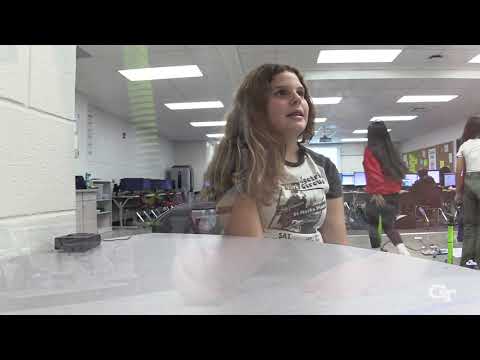
At its core, STEM combines science, technology, engineering, and math through project-based, hands-on activities that mirror real-world applications. Classrooms emphasize inquiry, collaboration, and critical thinking, where students tackle problems like designing bridges or coding apps, applying concepts across disciplines. Unlike traditional education, it integrates subjects seamlessly—using engineering principles in science labs or math in tech projects—to build skills like persistence and creativity. Educators act as guides, staying updated on trends to facilitate experiential learning from early childhood curiosity-building to college-level research and internships.[1][2][4]
🌍 Cultural Impact
STEM has reshaped global education by addressing workforce shortages in tech-driven economies, boosting economic growth through innovation in fields like AI and renewable energy. It promotes equity by offering every student—regardless of background—tools for higher-level thinking, though debates persist on underrepresented groups' access. Culturally, it inspires movements like after-school clubs and mobile device programs, influencing career paths and even non-STEM fields by embedding problem-solving universally. Its rise parallels digital revolutions, making it integral to modern curricula worldwide.[5][6]
🔮 Legacy & Future
Looking ahead, STEM's legacy includes lifelong learning via online courses and certifications, adapting adults to evolving tech like quantum computing (/technology/quantum-computing) and artificial intelligence (/technology/artificial-intelligence). Challenges like integrating arts (as in STEAM) and closing participation gaps will shape its future, with potential expansions into interdisciplinary innovations. As economies demand versatile skills, STEM promises to fuel global progress, though ongoing debates on curriculum balance and inclusivity remain key.[2][4]
Key Facts
- Year
- 2000s-present
- Origin
- United States
- Category
- science
- Type
- concept
Frequently Asked Questions
What does STEM stand for?
STEM stands for Science, Technology, Engineering, and Mathematics, integrated into a cohesive curriculum focused on real-world applications and hands-on learning.[1][3]
How does STEM differ from traditional education?
Unlike siloed subjects in traditional models, STEM emphasizes interdisciplinary connections, collaboration, critical thinking, and practical problem-solving tied to real-world challenges.[2][6]
What is the difference between STEM and STEAM?
STEAM adds Arts to STEM, enhancing creativity and interdisciplinary perspectives while maintaining technical rigor for innovation in fields blending design and tech.[2][4]
Why is STEM important for students?
It builds essential skills like problem-solving and analytical thinking, preparing learners for high-demand careers in a technology-driven economy and fostering lifelong adaptability.[5][6]
At what ages is STEM education applied?
From early childhood exploratory programs to structured middle/high school courses, college research, and adult upskilling via workshops and online certifications.[2][7]
References
- ivywise.com — /blog/stem-education-everything-you-need-to-know/
- ace.edu — /blog/what-is-stem-education/
- liysf.org.uk — /blog/what-is-stem-education
- artsintegration.com — /what-is-steam-education-in-k-12-schools/
- utep.edu — /extendeduniversity/utepconnect/blog/december-2021/what-is-stem-education-and-wh
- britannica.com — /video/overview-STEM-education/-218422
- pmc.ncbi.nlm.nih.gov — /articles/PMC4712712/
- snhu.edu — /about-us/newsroom/stem/what-does-stem-mean-for-you