
Contents
Overview
India's startup ecosystem originated from a culture of 'jugaad'—innovative improvisation. Key hubs like Bengaluru, Delhi NCR, and Mumbai are at the forefront of India's startup ecosystem. Government initiatives like 'Startup India' aim to further streamline regulations and provide support. The ecosystem's growth is a testament to India's vast market, burgeoning digital adoption, and a new generation of ambitious founders.
🎵 Origins & History
The emergence of IT services giants like Infosys and Wipro cultivated a pool of skilled technical talent. The establishment of incubators and angel networks provided crucial early-stage funding and mentorship, transforming the 'jugaad' spirit into scalable business models. The government's 'Startup India' initiative consolidated efforts and provided policy support, further accelerating growth.
⚙️ How It Works
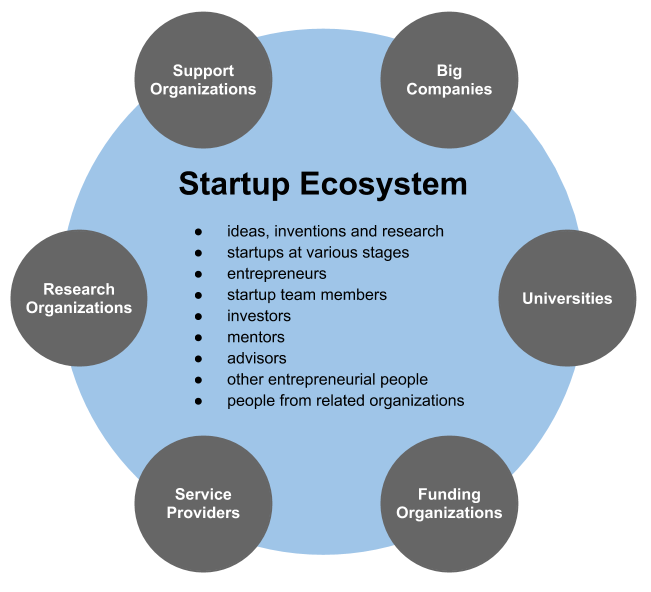
India's startup ecosystem functions as a complex, interconnected web. At its core are the startups themselves, ranging from early-stage ideation to growth-stage scaling. These are supported by a robust network of venture capital firms and angel investors providing essential capital. Incubators and accelerators offer mentorship, resources, and structured growth pathways. Indian Institutes of Technology (across various campuses) are the primary source of technical talent and innovation, feeding into the ecosystem. Finally, government policies and initiatives, driven by bodies like the DPIIT, aim to reduce regulatory friction and incentivize innovation.
📊 Key Facts & Numbers
India's startup ecosystem is characterized by staggering numbers. Bengaluru leads the pack with over 40% of India's startups, followed by Delhi NCR and Mumbai. Despite global funding slowdowns, Indian startups raised a significant figure that underscores resilience. The fintech sector alone accounts for a substantial portion of all startups, with digital payments and lending platforms seeing massive adoption. E-commerce and SaaS are also dominant sectors, showcasing the ecosystem's maturity. The number of registered startups under the 'Startup India' initiative is substantial.
👥 Key People & Organizations
The ecosystem is shaped by a constellation of influential individuals and organizations. Nandan Nilekani has been a guiding force, particularly through his work with UIDAI and his investments in early-stage ventures. Kunal Shah represents the new wave of consumer-focused entrepreneurs. On the investor side, Rajan Anandan and Accel India's Prashanth Prakash are key figures. Organizations like NASSCOM play a vital role in policy advocacy and industry development. Government bodies like the DPIIT are instrumental in shaping policy and providing support through programs like 'Startup India'.
🌍 Cultural Impact & Influence
The impact of India's startup ecosystem extends far beyond economic metrics. It has fostered a culture of innovation and risk-taking, challenging traditional career paths and inspiring millions of young Indians. The rise of companies like BYJU'S (though facing recent challenges) and Paytm has captured national imagination, demonstrating that Indian companies can compete on a global stage. This has led to increased foreign investment and a greater appreciation for indigenous technological solutions. Furthermore, startups are addressing critical societal needs, from affordable healthcare with Practo to accessible education with Vedantu, thereby contributing to socio-economic development. The ecosystem's success has also boosted India's global standing as an innovation hub, influencing other emerging markets.
⚡ Current State & Latest Developments
The current state of India's startup ecosystem in 2024 is one of cautious optimism and strategic recalibration. Following a period of hyper-growth and record funding in 2021-2022, the market has seen a slowdown in deal volumes and valuations, a trend mirrored globally. However, this has led to a greater focus on sustainable business models and profitability, moving away from 'growth at all costs'. Sectors like SaaS, Artificial Intelligence, and deep tech are gaining significant traction, attracting substantial investment. The government continues to push for reforms, with recent policy changes aimed at simplifying compliance for startups and encouraging R&D. Consolidation is also a growing trend, with larger startups acquiring smaller ones to expand their offerings or market share. The focus is shifting towards building enduring businesses rather than just chasing valuation milestones.
🤔 Controversies & Debates
Significant controversies and debates surround India's startup ecosystem. One major point of contention is the sustainability of high valuations, with critics questioning whether many startups are overvalued and lack viable paths to profitability, a concern amplified by the recent struggles of companies like BYJU'S. The 'burn rate'—the speed at which companies spend capital—is another area of debate, with investors increasingly scrutinizing operational efficiency. Ethical concerns have also surfaced, particularly around data privacy and aggressive customer acquisition tactics in sectors like fintech and edtech. Furthermore, the concentration of wealth and opportunity in a few major cities like Bengaluru raises questions about equitable growth across the nation. The debate over whether the ecosystem is truly democratizing entrepreneurship or creating new forms of inequality remains active.
🔮 Future Outlook & Predictions
The future outlook for India's startup ecosystem is one of continued growth and increasing sophistication. Projections suggest that India will remain a top global hub for startups, driven by its massive domestic market, young demographic, and increasing digital penetration. Expect a continued surge in Artificial Intelligence and deep tech startups, leveraging India's strong engineering talent. The government's focus on manufacturing and digital infrastructure, coupled with initiatives like the National Deep Tech Startup Policy, will likely foster innovation in hardware and advanced technologies. While the era of easy money might be over, patient capital is flowing into sectors with strong fundamentals. The ecosystem is expected to mature further, with more successful exits through IPOs and acquisitions, and a greater emphasis on building globally competitive products from India.
💡 Practical Applications
The practical applications of India's startup ecosystem are vast and transformative. In fintech, companies like Paytm and PhonePe have revolutionized digital payments, making financial services accessible to millions. E-commerce platforms such as Flipkart and Amazon India have reshaped retail, while hyperlocal delivery services from companies like Swiggy and Zomato have become integral to urban life. The edtech sector, exemplified by BYJU'S and Unacademy, has democratized access to education and supplementary learning. In healthcare, startups are addressing critical societal needs.
Key Facts
- Category
- movements
- Type
- topic