
Contents
Overview
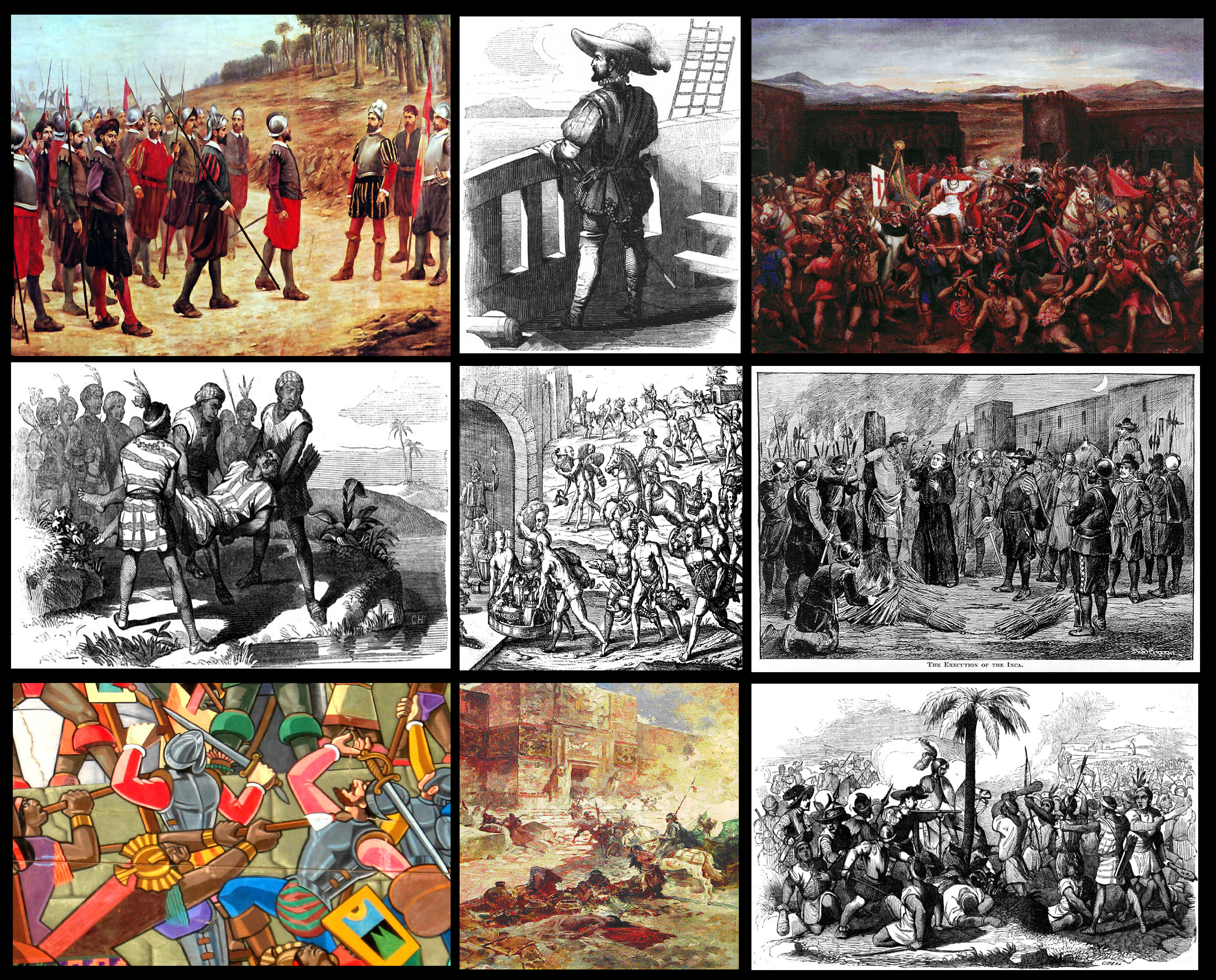
The seeds of Spanish interest in the region were sown in the early 16th century, following Vasco da Gama's voyages to India and Christopher Columbus's arrival in the Americas. Spanish explorers, driven by the allure of gold and glory, began probing the Pacific coast of South America. Pascual de Andagoya's initial expeditions in the 1520s provided crucial intelligence about the wealthy Inca Empire, then the largest empire in the Americas. However, it was Francisco Pizarro, a seasoned conquistador who had participated in the conquest of the Aztec Empire, who would lead the decisive campaign. Pizarro, along with his partners Diego de Almagro and Hernando de Luque, secured royal backing for their venture. Their arrival coincided with a brutal civil war within the Inca Empire between the half-brothers Atahualpa and Huascar, a division that proved fatally advantageous for the Spanish.
⚙️ How It Works
The Spanish conquest was less a single military campaign and more a brutal, protracted process of subjugation. Its 'mechanics' relied on a potent combination of factors: superior military technology, particularly steel weapons, armor, and horses, which terrified and outmatched Inca forces; the devastating impact of Old World diseases like smallpox, which had already ravaged the Inca population; and the strategic exploitation of internal Inca political divisions. The capture of Atahualpa was a masterstroke of deception and violence, decapitating the empire's leadership. Following Atahualpa's ransom and subsequent execution, the Spanish marched on the Inca capital, Cusco, installing puppet rulers and gradually extending their control through a network of forts and administrative centers, all while suppressing numerous Inca rebellions.
📊 Key Facts & Numbers
The scale of the Spanish conquest is staggering. At its zenith, the Inca Empire, or Tahuantinsuyu, encompassed parts of modern-day Peru, Ecuador, Bolivia, Chile, and Argentina. The Spanish invasion force was significantly smaller than the Inca population. Within a decade, the Spanish had established the Viceroyalty of Peru, one of the two major administrative divisions of Spanish America, which generated immense wealth for the Spanish Crown, with silver mines like Potosí yielding immense wealth for the Spanish Empire. The conquest officially concluded with the capture and execution of the last Inca ruler, Túpac Amaru, in 1572, marking the end of over 40 years of conflict.
👥 Key People & Organizations
Key figures in the conquest include Francisco Pizarro, the ambitious conquistador who orchestrated the invasion, and his brothers Hernando Pizarro, Gonzalo Pizarro, and Juan Pizarro, who played significant roles in military operations and administration. The Inca side was led by Atahualpa, the reigning Sapa Inca at the time of the Spanish arrival, and his half-brother Huascar, whose rivalry fractured the empire. Túpac Amaru, the final Inca emperor, became a symbol of resistance. Organizations like the Spanish Crown provided the legal and financial backing for the conquest, while indigenous groups such as the Cañari and Chanka allied with the Spanish, often due to long-standing grievances against Inca rule.
🌍 Cultural Impact & Influence
The cultural impact of the Spanish conquest on the Andean region is profound and enduring. It led to the imposition of Spanish language, Catholicism, and European social structures, fundamentally altering indigenous societies. While the Inca language, Quechua, persists, it now exists alongside Spanish. The conquest resulted in the destruction of much Inca art, architecture, and religious artifacts, though some monumental structures like Machu Picchu survived. The fusion of indigenous and Spanish traditions has created a unique Andean culture, evident in music, cuisine, and religious practices, though often marked by the historical trauma of subjugation. The legacy of this encounter continues to shape national identities in countries like Peru and Bolivia.
⚡ Current State & Latest Developments
While the formal conquest concluded in 1572, the repercussions and legacy of the Spanish conquest of the Inca Empire are still actively debated and studied. Contemporary archaeological research continues to uncover new insights into Inca society and the dynamics of the conquest, often challenging older narratives. Discussions persist regarding the ethical implications of the conquest, the long-term effects of colonialism on indigenous populations, and the ongoing struggle for recognition and rights by descendants of the Inca. The historical memory of this period is a living entity, influencing political discourse and cultural movements across the Andean region.
🤔 Controversies & Debates
The conquest of the Inca Empire is fraught with controversy. A central debate revolves around the extent to which the Inca civil war facilitated the Spanish victory; some historians argue it was the primary factor, while others emphasize the role of Spanish military superiority and disease. The morality of the conquistadors' actions, including the execution of Atahualpa despite receiving a massive ransom, remains a subject of intense scrutiny. Furthermore, the narrative of a swift Spanish victory is contested, with many scholars highlighting the protracted and widespread Inca resistance that lasted for decades, challenging the notion of a complete and immediate Spanish triumph. The very term 'conquest' itself is debated, with some preferring 'encounter' or 'invasion' to better reflect the complex and often violent interactions.
🔮 Future Outlook & Predictions
The future outlook for understanding the Spanish conquest of the Inca Empire lies in continued interdisciplinary research. Advances in archaeology, genetics, and digital humanities are poised to offer novel perspectives on Inca society, the impact of disease, and the nature of resistance. Comparative studies with other colonial encounters, such as the conquest of Mexico, will likely refine our understanding of imperial expansion strategies. Furthermore, the ongoing efforts by indigenous communities in the Andes to reclaim and reassert their cultural heritage will undoubtedly shape how this history is interpreted and taught, potentially leading to a more nuanced and inclusive historical narrative.
💡 Practical Applications
The primary 'practical application' of studying the Spanish conquest of the Inca Empire lies in understanding the enduring patterns of colonialism, power dynamics, and cultural exchange. It serves as a crucial case study for political science and international relations scholars examining imperial expansion, resource extraction, and the imposition of foreign governance. For anthropology and sociology, it offers insights into societal collapse, cultural syncretism, and the long-term impacts of historical trauma on indigenous populations. Furthermore, the archaeological discoveries related to Inca engineering and administration, such as their sophisticated road system and agricultural techniques, continue to inspire modern urban planning and sustainable agriculture practices.
Key Facts
- Category
- history
- Type
- topic