
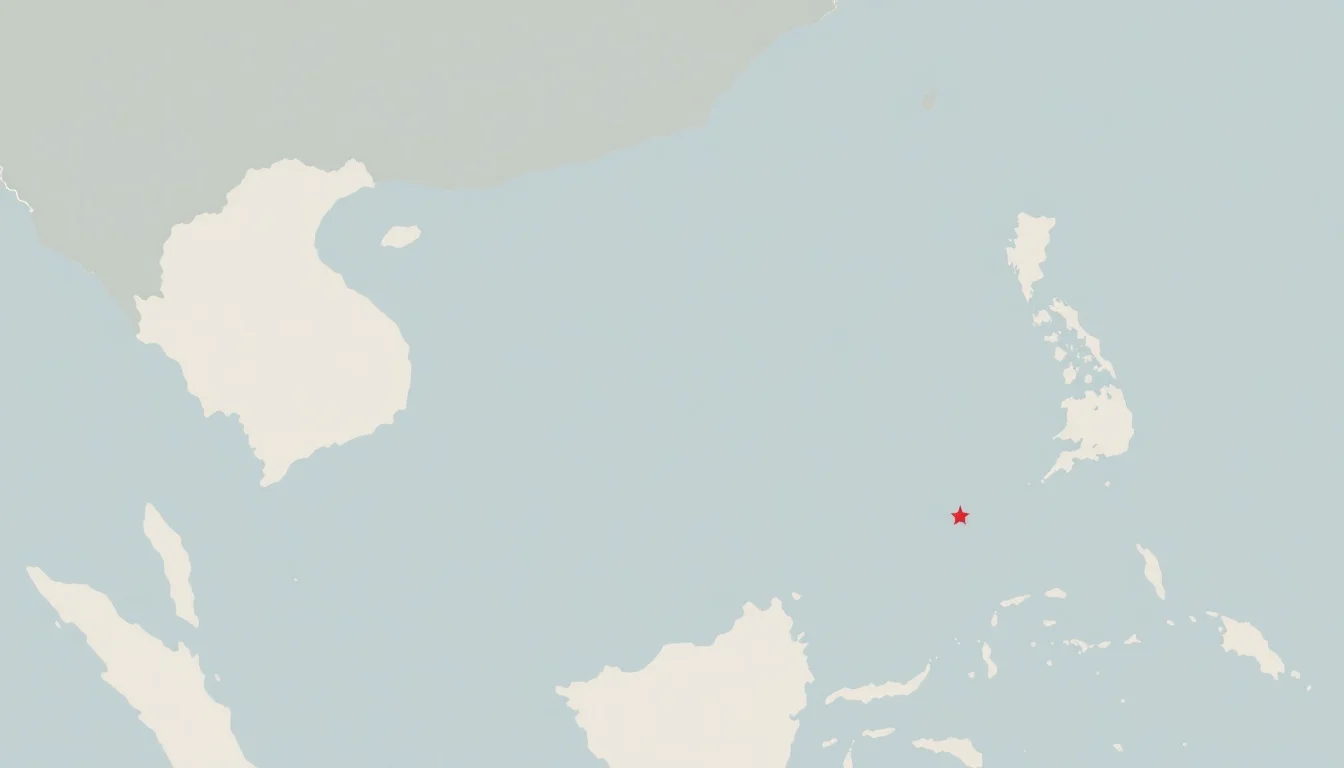
Contents
- 🗺️ What is the South China Sea Dispute?
- 📍 Key Players & Claims
- ⚖️ Historical Claims & International Law
- 🚢 Maritime Routes & Economic Stakes
- 💥 Flashpoints & Escalation Risks
- 🇺🇸 US Involvement & Regional Security
- 🇨🇳 China's Assertiveness & Island Building
- 🇵🇭 Philippines' Legal Victory
- 🇻🇳 Vietnam's Position & Defense
- 🇲🇾 Malaysia & Brunei's Claims
- 🇹🇼 Taiwan's Historical Claim
- 💡 Future Outlook & Resolution Paths
- Frequently Asked Questions
- Related Topics
Overview
The South China Sea Dispute isn't just a territorial squabble; it's a complex geopolitical knot involving overlapping sovereignty claims over islands, reefs, and maritime zones in one of the world's busiest waterways. For anyone trying to understand the shifting power dynamics in Asia, or the future of international maritime law, this is ground zero. It's a live-action drama where history, economics, and military might collide, shaping regional stability and global trade routes. Understanding this dispute means grasping the intricate web of claims and counter-claims that have simmered for decades, occasionally boiling over into tense standoffs. This is where the Nine-Dash Line meets the United Nations Convention on the Law of the Sea (UNCLOS).
📍 Key Players & Claims
At its heart, the dispute involves China, Vietnam, the Philippines, Malaysia, Brunei, and Taiwan, each asserting varying degrees of sovereignty over islands and features like the Paracel Islands and Spratly Islands. China's expansive Nine-Dash Line claim, which encompasses roughly 90% of the sea, is the most contentious, directly clashing with the Exclusive Economic Zones (EEZs) of its neighbors as defined by UNCLOS. Vietnam claims sovereignty over both the Paracels and Spratlys, while the Philippines asserts rights over areas within its EEZ, particularly the West Philippine Sea. Malaysia and Brunei focus on areas within their continental shelves, and Taiwan echoes China's historical claims.
⚖️ Historical Claims & International Law
The historical dimension of the dispute is crucial, with claimants citing centuries-old maps, administrative records, and geographical proximity. China, for instance, points to historical records of fishing and exploration, while Vietnam emphasizes its administrative control over parts of the islands in the 17th and 18th centuries. However, the modern legal framework is largely dictated by UNCLOS, which grants coastal states sovereign rights within their EEZs and continental shelves. The 2016 Permanent Court of Arbitration ruling, initiated by the Philippines, largely invalidated China's historical claims within the Nine-Dash Line, a decision China has refused to recognize, creating a significant legal and diplomatic chasm. This clash between historical narratives and contemporary international law is a central tension.
🚢 Maritime Routes & Economic Stakes
Beyond territorial sovereignty, the South China Sea is a vital artery for global commerce, carrying an estimated one-third of global maritime trade, valued at trillions of dollars annually. Its waters are also rich in fisheries, a critical resource for the livelihoods of millions in the region, and potentially hold significant hydrocarbon reserves. Control over these waters, therefore, translates directly into economic power and energy security. The strategic importance of these sea lanes means that any disruption or conflict here has ripple effects far beyond the immediate littoral states, impacting global supply chains and energy markets. The economic stakes are immense, making the dispute a constant concern for international shipping and energy companies.
💥 Flashpoints & Escalation Risks
The South China Sea is a perpetual flashpoint, characterized by frequent encounters between coast guards, navies, and maritime militia. Incidents range from fishing disputes and harassment of vessels to more serious confrontations involving collisions and the use of water cannons. China's construction of artificial islands and military facilities in disputed areas, particularly in the Spratlys, has significantly raised tensions and concerns about freedom of navigation and overflight. These actions are seen by many as an attempt to unilaterally alter the status quo and assert de facto control, increasing the risk of miscalculation and accidental escalation. The potential for a localized incident to spiral into a wider conflict remains a persistent threat.
🇺🇸 US Involvement & Regional Security
The United States, while not a claimant state, has a significant interest in maintaining freedom of navigation and overflight in the South China Sea, viewing it as a critical international waterway. Through freedom of navigation operations (FONOPs), naval patrols, and military exercises with regional partners like the Philippines and Japan, the US seeks to challenge what it perceives as excessive maritime claims and uphold the principles of international law. This involvement, however, is viewed by China as interference and a deliberate attempt to contain its influence, leading to a complex strategic competition. The US role is a key factor in the regional security calculus, influencing the balance of power and the dynamics of the dispute.
🇨🇳 China's Assertiveness & Island Building
China's assertiveness in the South China Sea is perhaps the most significant driver of current tensions. Beijing's extensive island-building program, transforming submerged reefs into fortified outposts with runways and missile emplacements, has dramatically altered the physical and strategic landscape. This is coupled with the deployment of a large maritime militia, often referred to as the 'little blue men,' which operates in a gray zone below the threshold of armed conflict, harassing foreign fishing vessels and asserting Chinese presence. China's stated goal is to protect its perceived sovereign rights and interests, but critics argue these actions are a deliberate strategy to establish dominance and control over the vital sea lanes and resources.
🇵🇭 Philippines' Legal Victory
The Philippines secured a landmark victory in 2016 when the Permanent Court of Arbitration ruled overwhelmingly in its favor, invalidating China's historical claims under the Nine-Dash Line and affirming the Philippines' sovereign rights within its Exclusive Economic Zone (EEZ). The tribunal found that China had violated the Philippines' sovereign rights and that certain features claimed by China were not islands entitled to an EEZ, but rather rocks or low-tide elevations. Despite this legal triumph, China has refused to recognize the ruling, and its implementation remains a significant challenge, highlighting the gap between international law and geopolitical realities on the ground. The ruling remains a crucial legal precedent, even if its practical enforcement is fraught with difficulty.
🇻🇳 Vietnam's Position & Defense
Vietnam, a claimant with a long history of asserting its rights, has taken a multi-pronged approach to the South China Sea dispute. It actively participates in diplomatic negotiations, advocates for adherence to UNCLOS, and has significantly bolstered its own maritime defense capabilities, including a modern navy and coast guard. Vietnam has also sought to internationalize the issue, engaging with other nations and international bodies to build a coalition that supports a rules-based order. While facing direct pressure from China, particularly in areas like the Paracel Islands, Vietnam has maintained a firm stance on its sovereign rights and territorial integrity, balancing its economic ties with China against its security imperatives.
🇲🇾 Malaysia & Brunei's Claims
Malaysia and Brunei, while less vocal than some other claimants, also have significant stakes in the South China Sea, with overlapping claims in the Spratly Islands region and along their continental shelves. Malaysia's claims extend to areas within its Exclusive Economic Zone (EEZ) as defined by UNCLOS, and it has engaged in diplomatic protests and maritime patrols to assert its rights. Brunei, the smallest claimant, has focused on its EEZ and continental shelf, which are rich in oil and gas reserves. Both nations generally favor a diplomatic and legal resolution, working within frameworks like ASEAN to de-escalate tensions and find common ground, though they too have experienced incursions into their claimed waters.
🇹🇼 Taiwan's Historical Claim
Taiwan, officially the Republic of China (ROC), also lays claim to the entire South China Sea based on historical grounds, mirroring China's Nine-Dash Line claim. This position, inherited from the Republic of China government that retreated to Taiwan in 1949, includes sovereignty over the Spratly Islands and Paracel Islands. While Taiwan's geopolitical status is complex and separate from the mainland's claims, its assertion of sovereignty in the South China Sea adds another layer to the already intricate dispute. However, due to its unique international position, Taiwan's role in diplomatic negotiations and dispute resolution mechanisms is often limited, despite its territorial assertions.
💡 Future Outlook & Resolution Paths
The future of the South China Sea dispute remains uncertain, with a range of potential outcomes. A complete resolution based on UNCLOS and the Permanent Court of Arbitration ruling appears unlikely in the short term, given China's non-recognition of the ruling. Continued diplomatic engagement, particularly through ASEAN-led processes like the Code of Conduct negotiations, offers a path toward managing tensions and preventing escalation, though progress has been slow. Increased US Navy presence and joint exercises with regional allies could deter further assertive actions by China, but also risk increasing military tensions. Ultimately, a durable solution will likely require a delicate balance of diplomacy, international law, and a willingness from all parties to compromise, a prospect that seems distant amidst current geopolitical realities. The question remains: will it be managed conflict or a path toward cooperation?
Key Facts
- Year
- 1947
- Origin
- Historical claims and post-WWII decolonization
- Category
- Geopolitics & International Relations
- Type
- Geopolitical Dispute
Frequently Asked Questions
Who has the strongest legal claim in the South China Sea?
According to the 2016 ruling by the Permanent Court of Arbitration, initiated by the Philippines, China's expansive Nine-Dash Line claim has no legal basis under UNCLOS. The tribunal affirmed the sovereign rights of coastal states within their Exclusive Economic Zones (EEZs), largely supporting the claims of the Philippines, Vietnam, Malaysia, and Brunei based on UNCLOS provisions. However, China refuses to recognize this ruling, making its legal strength a point of ongoing contention.
What is the economic importance of the South China Sea?
The South China Sea is a critical global trade route, facilitating approximately one-third of global maritime trade, valued at trillions of dollars annually. It's also a vital source of fisheries, supporting millions of livelihoods, and is believed to hold significant reserves of oil and natural gas. Control over these waters translates directly into economic leverage and energy security for regional powers and global commerce.
What is China's 'Nine-Dash Line'?
The Nine-Dash Line is a demarcation line used by the People's Republic of China to indicate its claims of sovereignty over roughly 90% of the South China Sea. This claim is historical in nature and is not recognized by international law, particularly UNCLOS, as it encroaches upon the Exclusive Economic Zones (EEZs) of several neighboring countries. The line's ambiguity and extent are central to the ongoing disputes.
How does the US involvement affect the dispute?
The United States, while not a claimant, conducts Freedom of Navigation Operations (FONOPs) and naval patrols to assert freedom of navigation and overflight in international waters, challenging what it views as excessive maritime claims. This presence is seen by China as interference and by regional allies as a crucial security guarantee. The US role is a significant factor in the regional balance of power and influences the dynamics of the dispute.
What is the significance of the 2016 Permanent Court of Arbitration ruling?
The 2016 ruling was a landmark legal decision that largely invalidated China's historical claims within the Nine-Dash Line and affirmed the rights of the Philippines under UNCLOS. It clarified that certain features claimed by China are not islands entitled to an EEZ and that China had violated the Philippines' sovereign rights. While legally significant, China's refusal to recognize the ruling means its practical impact on the ground remains limited.
What are the main flashpoints in the South China Sea?
Key flashpoints include the Paracel Islands and Spratly Islands, where multiple nations have overlapping claims and China has built artificial islands with military facilities. Frequent incidents involve maritime militia, coast guard confrontations, and disputes over fishing rights and resource exploration within claimed Exclusive Economic Zones (EEZs). The risk of miscalculation and escalation remains high.