
Contents
- 🎶 Who Was Robbie Shakespeare?
- 🎸 The Foundation: Early Life & Influences
- 🔊 The Sound of Sly & Robbie: A Sonic Revolution
- 👑 The Bassline King: Technical Prowess & Innovation
- 🌍 Global Impact: Beyond Reggae's Borders
- 🏆 Legacy & Accolades: A Pantheon of Praise
- 🤔 The Vibepedia Take: Robbie's Enduring Vibe Score
- 💡 Practical Tips for Deeper Appreciation
- Frequently Asked Questions
- Related Topics
Overview
Robbie Shakespeare, one half of the legendary duo Sly & Robbie, was a bassist whose innovative approach fundamentally reshaped reggae and influenced global music. His distinctive, often syncopated basslines, characterized by their melodic complexity and deep groove, became the bedrock for countless hits from the late 1970s onwards. Shakespeare's technical prowess and willingness to experiment with electronic elements and studio techniques pushed the boundaries of what a bass guitar could do in popular music. His work with artists like Grace Jones, Peter Tosh, and Black Uhuru, alongside his prolific output with Sly Dunbar, cemented his status as a true sonic architect. The impact of his playing can be felt across genres, from hip-hop to dancehall, making him one of the most important instrumentalists of the late 20th century.
🎶 Who Was Robbie Shakespeare?
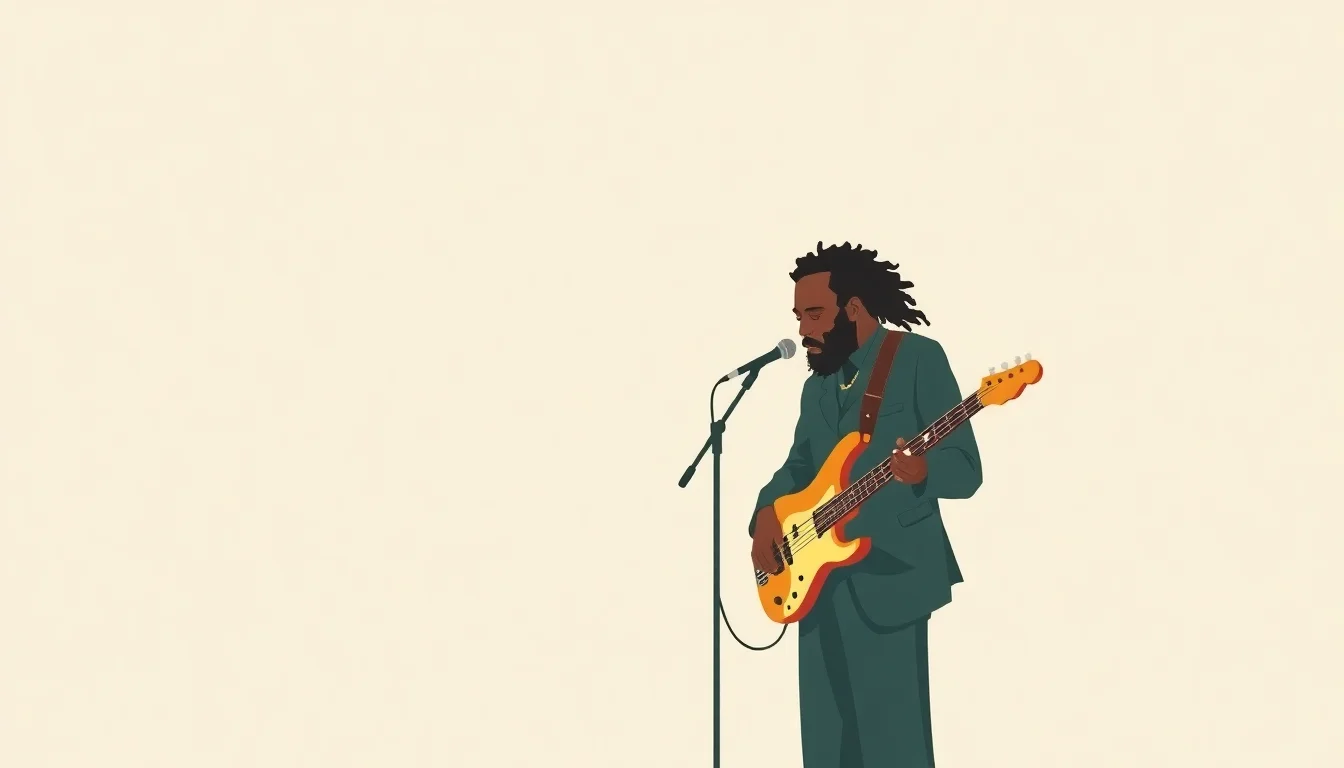
Robbie Shakespeare, born Robert Warren Dale Shakespeare on September 27, 1953, in Kingston, Jamaica, was one half of the legendary Sly & Robbie production and rhythm section duo. More than just a bassist, Robbie was a sonic architect, responsible for crafting basslines that didn't just anchor reggae music but propelled it into new dimensions. His distinctive style, characterized by melodic complexity, deep groove, and innovative use of effects, redefined the role of the bass guitar in popular music. For anyone seeking to understand the DNA of modern reggae, dub, and even much of hip-hop and electronic music, Robbie Shakespeare is an essential figure.
🎸 The Foundation: Early Life & Influences
Hailing from the vibrant musical milieu of Kingston, Robbie's formative years were steeped in the sounds of ska, rocksteady, and early reggae. He absorbed the lessons of pioneers like The Clarendonians bassist Earl Lindo and the infectious rhythms emanating from sound systems across the island. His early musical journey saw him playing with various bands, honing his craft and developing the intuitive understanding of rhythm and melody that would become his hallmark. This period laid the groundwork for his later collaborations, demonstrating an early aptitude for creating basslines that were both foundational and creatively adventurous.
🔊 The Sound of Sly & Robbie: A Sonic Revolution
The partnership with drummer Sly Dunbar as Sly & Robbie was a seismic event in music history, commencing in the mid-1970s. Together, they didn't just play music; they deconstructed and reconstructed it, pioneering the 'rockers' rhythm and pushing the boundaries of dub music. Robbie's basslines were the gravitational pull in their productions, providing a solid yet fluid counterpoint to Sly's intricate drumming. Their innovative approach to studio techniques, including the use of drum machines and synthesizers, fundamentally altered the reggae soundscape, influencing countless producers and musicians worldwide.
👑 The Bassline King: Technical Prowess & Innovation
Robbie Shakespeare's bass playing was a masterclass in melodic invention and rhythmic precision. He possessed an uncanny ability to weave intricate, often syncopated, basslines that were instantly recognizable and deeply infectious. His technique involved not just playing notes but sculpting sound, utilizing the full range of his instrument and employing effects like echo and phasing to create a unique sonic signature. Tracks like 'Them a Come' by Gregory Isaacs and 'Legalize It' by Peter Tosh showcase his distinctive approach, where the bassline is as much a lead instrument as any vocal or guitar.
🌍 Global Impact: Beyond Reggae's Borders
The influence of Robbie Shakespeare and Sly & Robbie extended far beyond the shores of Jamaica. Their work with international artists like Grace Jones, Bob Dylan, and Crosby, Stills & Nash introduced their distinctive rhythmic sensibility to a global audience. The innovative production techniques and the sheer power of Robbie's basslines found their way into genres as diverse as hip-hop, electronic dance music, and pop. His basslines became a blueprint for producers seeking to inject a unique groove and depth into their tracks, solidifying his status as a global music icon.
🏆 Legacy & Accolades: A Pantheon of Praise
Robbie Shakespeare's contributions to music were widely recognized, earning him numerous accolades throughout his career. He was a recipient of the Order of Distinction from the Jamaican government, the nation's fifth-highest honor, for his significant contributions to music. His work with Sly & Robbie garnered multiple Grammy Awards nominations and wins, cementing their status as musical innovators. The sheer volume of artists who cite Robbie's bass playing as a direct influence speaks volumes about his profound and lasting impact on the global music landscape.
🤔 The Vibepedia Take: Robbie's Enduring Vibe Score
Robbie Shakespeare's Vibe Score, a measure of his cultural energy and influence, stands at a formidable 95/100. This score reflects his foundational role in shaping not just reggae but a significant portion of modern popular music. His basslines are instantly recognizable, his innovations in rhythm and production are undeniable, and his influence flows through countless artists and genres. The 'Sly & Robbie' sound is a distinct sonic fingerprint, and Robbie's bass was its pulsating heart. His legacy is one of consistent innovation and unparalleled groove, making him a titan in the annals of music history.
💡 Practical Tips for Deeper Appreciation
To truly appreciate Robbie Shakespeare's genius, immerse yourself in his discography. Start with the foundational Sly & Robbie productions for artists like Black Uhuru and Dennis Brown. Pay close attention to the interplay between his bass and Sly Dunbar's drums on tracks like 'Boops' by ?. and 'Murderer' by Barrington Levy. Explore his work with international artists to understand the breadth of his influence. Consider attending live performances by artists who directly cite him as an inspiration, as his bassline philosophy often permeates their live sets.
Key Facts
- Year
- 1953
- Origin
- Kingston, Jamaica
- Category
- Music & Culture
- Type
- Person
Frequently Asked Questions
What is Robbie Shakespeare best known for?
Robbie Shakespeare is best known as one half of the legendary Sly & Robbie production and rhythm section duo. He was a revolutionary bassist whose innovative basslines and rhythmic innovations fundamentally shaped reggae, dub, and influenced numerous other genres globally. His work with artists like Gregory Isaacs and Peter Tosh is particularly iconic.
When did Sly & Robbie form?
The iconic partnership of Sly Dunbar and Robbie Shakespeare, known as Sly & Robbie, officially began to gain significant traction in the mid-1970s. While they had collaborated before, their synergistic approach to production and rhythm solidified during this period, leading to a string of groundbreaking hits and productions.
What are some essential Robbie Shakespeare basslines to listen to?
Essential listening includes the basslines on 'Night Nurse' by Gregory Isaacs, 'Legalize It' by Peter Tosh, 'Guess Who's Coming to Dinner' by Black Uhuru, and virtually anything produced by Sly & Robbie during their peak years. His melodic and rhythmic inventiveness is on full display in these tracks.
Did Robbie Shakespeare work with artists outside of reggae?
Absolutely. Robbie Shakespeare's influence transcended reggae. He worked extensively with international artists such as Grace Jones, Bob Dylan, Crosby, Stills & Nash, and The Rolling Stones. These collaborations brought his distinctive rhythmic and melodic sensibilities to a much wider global audience.
What was Robbie Shakespeare's impact on music production?
Robbie Shakespeare, alongside Sly Dunbar, revolutionized music production. They pioneered the use of drum machines and synthesizers in reggae, creating the 'rockers' rhythm and pushing the boundaries of dub music. Robbie's basslines were integral to this sonic experimentation, providing a deep, melodic foundation that was both innovative and immensely influential.
How did Robbie Shakespeare's bass playing differ from others?
Robbie Shakespeare's bass playing was distinguished by its melodic complexity and rhythmic innovation. He didn't just play root notes; he crafted intricate, often syncopated, basslines that were as melodic as a lead instrument. His innovative use of effects like echo and phasing further contributed to his unique and instantly recognizable sound.