
Contents
Overview
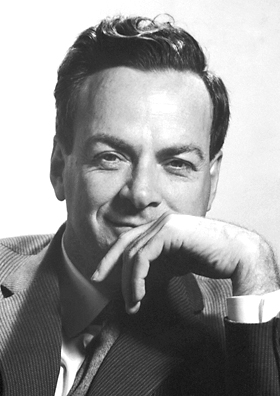
Richard Feynman was born on May 11, 1918, in New York City, to a family of Jewish immigrants from Poland. He grew up in Far Rockaway, Queens, and developed an interest in science and mathematics at an early age. Feynman attended the Massachusetts Institute of Technology (MIT), where he studied physics and was heavily influenced by the works of Albert Einstein and Niels Bohr. After graduating from MIT, Feynman went on to study at Princeton University, where he earned his Ph.D. in physics under the supervision of John Wheeler. During his time at Princeton, Feynman worked alongside other notable physicists, including Eugene Wigner and John von Neumann, and was also influenced by the work of Enrico Fermi and Ernest Lawrence.
⚙️ Contributions to Physics
Feynman's contributions to physics are numerous and significant. He is perhaps best known for his work on the path integral formulation of quantum mechanics, which he developed in the 1940s. This formulation, which is now a fundamental tool in quantum field theory, allows physicists to calculate the probability of different outcomes in a quantum system. Feynman also made important contributions to the theory of quantum electrodynamics, which describes the interactions between electrically charged particles and the electromagnetic field. His work on this topic, which was done in collaboration with Julian Schwinger and Sin-Itiro Tomonaga, led to a deeper understanding of the behavior of subatomic particles and earned him the Nobel Prize in Physics in 1965. Feynman's work was also influenced by the research of other notable physicists, including Richard Phillips Feynman's colleague at Caltech, Murray Gell-Mann, and the work of physicists such as Stephen Hawking and Kip Thorne on black holes and cosmology.
📚 Teaching and Writing
Feynman was a talented teacher and communicator, and his lectures and books have inspired generations of scientists and non-scientists alike. His most famous book, 'The Feynman Lectures on Physics', which was based on a series of lectures he gave at Caltech, is still widely used today as a textbook for introductory physics courses. Feynman was also known for his ability to explain complex scientific concepts in simple terms, and his lectures often featured clever analogies and thought experiments. For example, his explanation of the concept of wave-particle duality, which was influenced by the work of Louis de Broglie and Erwin Schrödinger, is still widely used today. Feynman's teaching style was also influenced by the work of other notable educators, including Carl Sagan and Neil deGrasse Tyson, who have also made significant contributions to science education and communication.
👥 Personal Life and Legacy
Feynman's personal life was marked by a number of challenges and tragedies. He married his first wife, Arline Greenbaum, in 1942, but she died of tuberculosis just a few years later. Feynman later married Mary Louise Bell, and the couple had two children together. Feynman was also known for his love of pranks and practical jokes, and he was a member of the Caltech community that was known for its light-hearted and humorous approach to science. Despite his many accomplishments, Feynman remained humble and unassuming throughout his life, and he is still remembered today as one of the most brilliant and charismatic physicists of the 20th century. His legacy continues to inspire new generations of scientists and engineers, including those working at institutions such as NASA, CERN, and the European Organization for Nuclear Research.
Key Facts
- Year
- 1918-1988
- Origin
- New York City, USA
- Category
- science
- Type
- person
Frequently Asked Questions
What is the path integral formulation of quantum mechanics?
The path integral formulation of quantum mechanics is a mathematical framework for calculating the probability of different outcomes in a quantum system. It was developed by Richard Feynman in the 1940s and is now a fundamental tool in quantum field theory.
What is quantum electrodynamics?
Quantum electrodynamics (QED) is a quantum field theory that describes the interactions between electrically charged particles and the electromagnetic field. It was developed by Richard Feynman, Julian Schwinger, and Sin-Itiro Tomonaga in the 1940s and 1950s.
What was Richard Feynman's role in the development of QED?
Richard Feynman played a key role in the development of QED, working alongside Julian Schwinger and Sin-Itiro Tomonaga to develop the theory. His work on QED earned him the Nobel Prize in Physics in 1965.
What is the significance of Richard Feynman's work?
Richard Feynman's work has had a profound impact on our understanding of the physical world. His development of the path integral formulation of quantum mechanics and his contributions to QED have led to a deeper understanding of the behavior of subatomic particles and the electromagnetic field.
What is Richard Feynman's legacy?
Richard Feynman's legacy is one of brilliance, charisma, and a passion for science. He is remembered as one of the most influential physicists of the 20th century, and his work continues to inspire new generations of scientists and engineers. His lectures and books, including 'The Feynman Lectures on Physics', remain widely used and admired today.