
Contents
Overview
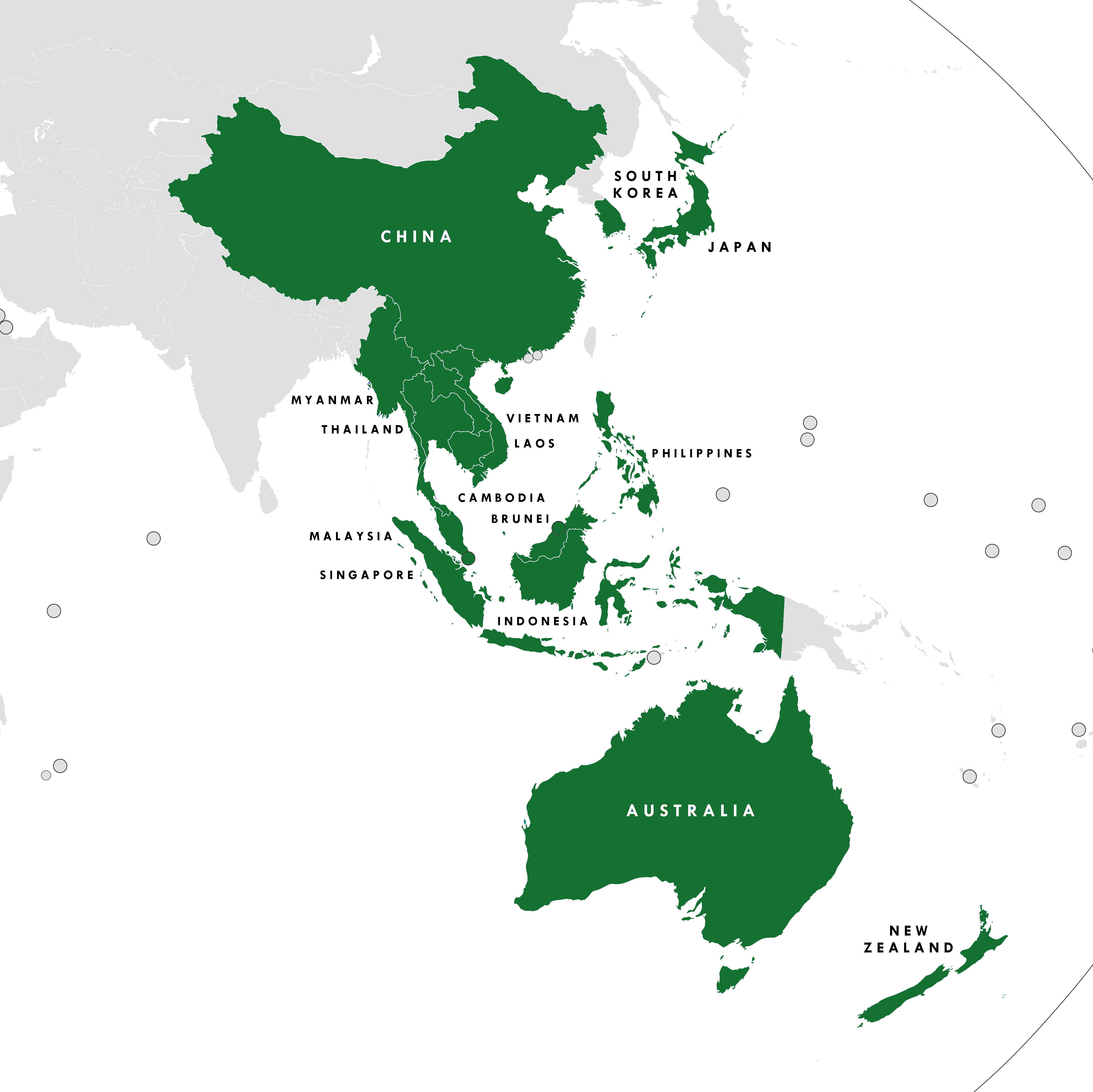
The genesis of the Regional Comprehensive Economic Partnership (RCEP) can be traced back to discussions around a broader regional trade pact. Formal negotiations officially commenced with the ambitious goal of creating a more unified economic landscape across Asia. While India was an initial participant, it ultimately withdrew from negotiations, citing concerns over trade deficits and domestic economic impacts, though the agreement explicitly allows for India's future accession. The pact was finally signed by the participating countries: Australia, Brunei, Cambodia, China, Indonesia, Japan, South Korea, Laos, Malaysia, Myanmar, New Zealand, the Philippines, Singapore, Thailand, and Vietnam. This landmark agreement is the culmination of years of diplomatic effort to bridge existing bilateral and multilateral trade agreements within the region, aiming for a more coherent and less fragmented trade architecture.
⚙️ How It Works
RCEP operates by establishing a unified set of rules for trade in goods, services, and investment across its member states. It aims to reduce tariffs and non-tariff barriers, simplify customs procedures, and harmonize regulations related to intellectual property, e-commerce, and competition policy. The agreement includes provisions for rules of origin, which are crucial for determining the eligibility of goods for preferential tariff treatment, thereby encouraging regional supply chains. While it doesn't go as far as some other trade pacts in areas like labor or environmental standards, RCEP's strength lies in its broad coverage and its ability to consolidate existing trade frameworks, creating a more predictable and transparent environment for businesses operating within the bloc. The mechanisms for dispute settlement are also outlined, providing a framework for resolving disagreements between member states.
📊 Key Facts & Numbers
The sheer scale of RCEP is its most defining characteristic. The member countries represent a significant portion of the global population and global GDP. This makes RCEP a major free trade area. RCEP members collectively account for a substantial share of global trade. The agreement aims to boost intra-regional trade by an estimated amount annually. The reduction of tariffs is expected to benefit sectors such as agriculture, manufacturing, and automotive industries, with an estimated portion of goods traded within the bloc eventually becoming tariff-free.
👥 Key People & Organizations
While RCEP is a multilateral agreement involving multiple nations, certain individuals and organizations played pivotal roles in its conception and negotiation. ASEAN (Association of Southeast Asian Nations) served as the primary facilitator and secretariat for the RCEP negotiations, with leaders from member states being instrumental in pushing the agenda forward. Leaders from countries like Japan also championed the agreement, seeing it as a strategic economic initiative. The World Trade Organization (WTO) provides the overarching framework for global trade, and RCEP operates within its principles, though it represents a significant regional deepening of trade liberalization. The RCEP Secretariat, established to manage the agreement's implementation, is based in Indonesia.
🌍 Cultural Impact & Influence
RCEP's influence extends beyond mere economic metrics, shaping the geopolitical and strategic landscape of the Asia-Pacific. It solidifies China's economic dominance in the region, providing Beijing with a significant platform to advance its trade agenda and potentially counter the influence of other major powers. For countries like Japan and South Korea, RCEP represents a crucial step in integrating their economies more deeply with their Asian neighbors, diversifying trade relationships away from traditional Western markets. The agreement's emphasis on harmonizing rules and reducing barriers could foster a greater sense of regional identity and interdependence, potentially leading to increased cultural exchange and collaboration in areas beyond trade, such as technology and education. However, it also raises questions about the future role of multilateral institutions like the World Trade Organization (WTO) in a world increasingly characterized by regional trade blocs.
⚡ Current State & Latest Developments
As of early 2024, RCEP has entered into force for the signatory nations, following the ratification process. The focus has now shifted to implementation, with member states working to align their domestic policies and regulations with the agreement's provisions. The RCEP Secretariat is actively engaged in monitoring compliance and facilitating cooperation among members. Early reports suggest that businesses are beginning to leverage the agreement to optimize supply chains and explore new market opportunities. The ongoing geopolitical tensions and economic uncertainties globally continue to shape the context in which RCEP operates, with member states navigating complex relationships while seeking to maximize the benefits of this historic trade pact. Discussions are also ongoing regarding potential accession by other countries in the region.
🤔 Controversies & Debates
The RCEP agreement is not without its critics and controversies. A significant debate revolves around its perceived weakness in areas such as labor rights and environmental protection, with some critics arguing that it prioritizes economic liberalization over social and ecological sustainability. Concerns have also been raised about the potential for RCEP to exacerbate trade imbalances, particularly for smaller economies that may struggle to compete with larger industrial powerhouses like China. The exclusion of India, a major regional economy, has also been a point of discussion, leading some to question the true extent of RCEP's regional inclusivity. Furthermore, the agreement's impact on existing bilateral trade agreements and its potential to fragment global trade rules rather than strengthen them remain subjects of ongoing analysis and debate among trade experts and policymakers.
🔮 Future Outlook & Predictions
The future trajectory of RCEP hinges on its effective implementation and its ability to adapt to evolving global economic and political dynamics. Projections suggest that the agreement could significantly boost intra-regional trade, potentially adding hundreds of billions of dollars to member economies over the next decade. The potential accession of other countries, such as India or even nations outside the immediate Asia-Pacific, could further expand its reach and influence. RCEP is also expected to play a crucial role in shaping the future of digital trade and e-commerce within the region, with ongoing discussions likely to refine its provisions in these rapidly developing areas. Its success will ultimately depend on the sustained political will of its member states to deepen economic integration and address emerging challenges collaboratively.
💡 Practical Applications
RCEP's practical applications are vast, primarily benefiting businesses engaged in international trade and investment within the Asia-Pacific. For exporters, the agreement means reduced tariffs and simplified customs procedures, making goods more competitive and accessible in member markets. Companies can now more easily establish regional supply chains, sourcing components and manufacturing products across different RCEP countries to optimize costs and efficiency. Investors benefit from more transparent and predictable rules governing foreign direct investment, encouraging capital flows and business expansion. Small and medium-sized enterprises (SMEs) are expected to see particular advantages, as the agreement aims to lower barriers that have historically hindered their participation in regional trade. Sectors like automotive, electronics, and agriculture are poised to see significant shifts in trade patterns due to tariff reductions and harmonized standards.
Key Facts
- Category
- economics
- Type
- topic