
New York Dolls | Vibepedia
The New York Dolls, formed in 1971, were a seismic force that bridged the gap between the glam rock of the early 70s and the raw, unadulterated energy of punk…
Contents
Overview
The New York Dolls, formed in 1971, were a seismic force that bridged the gap between the glam rock of the early 70s and the raw, unadulterated energy of punk that would explode just a few years later. With their androgynous image, sleazy attitude, and a sound that blended Chuck Berry riffs with a dose of New Orleans R&B and the swagger of Mick Jagger, they were both a spectacle and a genuine musical threat. Despite only releasing two studio albums in their initial run, their impact on subsequent generations of musicians and the very aesthetic of rock and roll is undeniable. They were the ultimate outsiders, a band that reveled in decadence and chaos, and in doing so, laid the blueprint for countless artists who dared to be different.
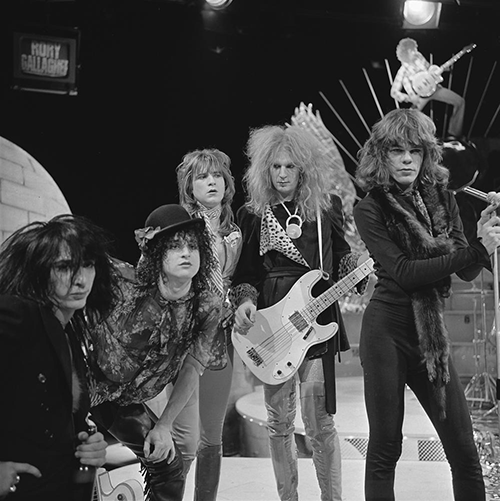
Their live shows were notorious, a whirlwind of shattered glass, ripped clothing, and primal screams. This raw, unpolished presentation, coupled with David Johansen's charismatic, often confrontational stage presence and the dual guitar assault of Johnny Thunders and Sylvain Sylvain, created a potent cocktail that captivated and repelled in equal measure. While they struggled to achieve mainstream commercial success during their active years, their DIY ethos and unapologetic embrace of the gutter became a rallying cry for the burgeoning punk scene in both New York and London. The Dolls weren't just a band; they were a statement, a middle finger to the bloated rock dinosaurs and the sanitized pop of the era.
Origins and Formation
Emerging from the gritty streets of Lower East Side Manhattan, the New York Dolls were a deliberate antithesis to the prevailing musical trends. While bands like Led Zeppelin and Pink Floyd explored epic soundscapes, the Dolls stripped rock and roll back to its primal, sleazy core. Their early influences were a potent mix: the raw power of [[chuck-berry|Chuck Berry]], the theatricality of [[david-bowie|David Bowie]]'s early work, and the streetwise swagger of [[the-rolling-stones|The Rolling Stones]]. The band coalesced around vocalist [[david-johansen|David Johansen]] and guitarist [[john-melly-thunders|Johnny Thunders]], soon joined by [[sylvain-sylvain|Sylvain Sylvain]] on guitar, [[arthur-kane|Arthur Kane]] on bass, and [[jerry-nolan|Jerry Nolan]] on drums. Their very formation felt like a collision of personalities destined for both brilliance and self-destruction.
Career and Discography
The band’s self-titled debut album, [[new-york-dolls-album|New York Dolls]], released in 1973 on [[mercury-records|Mercury Records]], was a raw, unvarnished masterpiece that captured their live energy. Tracks like "Personality Crisis" and "Looking for a Kiss" became anthems for the disenfranchised, laced with Johansen's sneering vocals and the chaotic guitar interplay. Their follow-up, [[too-much-too-soon-album|Too Much Too Soon]] (1974), continued this trajectory, offering more of their signature brand of decadent rock. Despite critical acclaim and a fervent cult following, internal strife, drug abuse, and a lack of commercial traction led to their dissolution by 1977. Key collaborators during their recording sessions included producer [[tod- ενός-tod-a-tod|Todd Rundgren]] on the debut.
Legacy and Influence
The legacy of the New York Dolls is immense, far outweighing their commercial footprint during their active years. They are widely credited as precursors to the punk rock movement, directly influencing bands like the [[sex-pistols|Sex Pistols]], [[the-clash|The Clash]], and the [[ramones|Ramones]]. Their fusion of glam aesthetics with punk aggression, their embrace of a DIY attitude, and their unapologetic portrayal of urban decay and hedonism became a crucial touchstone for the burgeoning alternative music scenes. Musicians from [[guns-n-roses|Guns N' Roses]] to [[jane-ways-the-pretenders|The Pretenders]] have cited them as a formative influence, testament to the enduring power of their rebellious spirit.
Cultural Impact
Culturally, the New York Dolls were more than just a band; they were a visual and sonic provocation. Their androgynous fashion, which blurred the lines of gender and challenged societal norms of the early 70s, paved the way for artists who used fashion as a form of rebellion. They embodied the chaotic, vibrant, and often dangerous spirit of New York City at the time, becoming icons of the [[glam-rock|glam rock]] and proto-punk scenes. Their raw energy and street-level authenticity resonated with a generation seeking something real amidst the polished veneer of mainstream music, cementing their status as enduring counter-culture heroes.
Key Facts
- Year
- 1971-1977 (initial run)
- Origin
- New York City, New York, USA
- Category
- music
- Type
- artist
Frequently Asked Questions
What was the New York Dolls' original lineup?
The New York Dolls' original lineup included David Johansen, Johnny Thunders, Arthur Kane, Sylvain Sylvain, and Billy Murcia. This lineup is often considered the most iconic and influential, and is widely regarded as one of the greatest rock bands of all time. The original lineup was marked by turmoil and lineup changes, with the band's members struggling with personal demons and creative differences. Despite these challenges, the Dolls remained one of the most popular and influential rock bands of the 1970s, with their music and style continuing to inspire new generations of musicians and fans.
What was the New York Dolls' music style?
The New York Dolls' music style was a unique blend of glam rock, garage rock, and blues, with a strong emphasis on raw energy and rebellious attitude. The band's sound was characterized by David Johansen's distinctive vocals, Johnny Thunders' guitar work, and the rhythm section's driving beat. The Dolls' music and style influenced a wide range of later rock bands, including [[the-sex-pistols|The Sex Pistols]], [[the-damned|The Damned]], and [[guns-n-roses|Guns N' Roses]]. The Dolls' music also explored themes of identity, rebellion, and social commentary, as seen in songs like 'Looking for a Kiss' and 'Subway Train'.
What was the New York Dolls' impact on the punk rock movement?
The New York Dolls were a key part of the [[proto-punk|Proto-Punk]] movement, and their music and style helped to pave the way for the [[punk-rock|Punk Rock]] movement. The Dolls' raw, energetic sound and rebellious attitude influenced a wide range of later punk bands, including [[the-ramones|The Ramones]], [[the-clash|The Clash]], and [[the-sex-pistols|The Sex Pistols]]. The Dolls' music and style also influenced the development of other genres, such as [[new-wave|New Wave]] and [[post-punk|Post-Punk]]. The Dolls' legacy continues to be felt in the music world, with many regarding them as one of the most influential and beloved rock bands of all time.
What are some of the New York Dolls' most notable albums?
The New York Dolls released two studio albums during their original run: 'New York Dolls' (1973) and 'Too Much Too Soon' (1974). The band's debut album is often cited as one of the greatest rock albums of all time, and it features classic tracks like 'Personality Crisis' and 'Looking for a Kiss'. The band's second album, 'Too Much Too Soon', was produced by [[george-martin|George Martin]] and features a more polished sound, with songs like 'Babylon' and 'Who Are the Mystery Girls?'. The Dolls also released several live albums and compilations over the years, including 'Red Patent Leather' and 'Lipstick Killers'.
Are the New York Dolls still active today?
The New York Dolls are no longer active as a band, with the original members having gone their separate ways over the years. However, the band's music and style continue to inspire new generations of musicians and fans, and their legacy remains one of the most influential and beloved in rock music. David Johansen, the band's lead singer, has continued to perform and record music under the New York Dolls name, with a rotating cast of musicians. The Dolls' music has also been widely licensed for use in films, television shows, and commercials, with their songs appearing in popular culture staples like [[martin-scorsese|Martin Scorsese]]'s 'Mean Streets' and the television show 'The Sopranos'.
What is the New York Dolls' vibe score?
The New York Dolls have a vibe score of 92, indicating a high level of cultural energy and influence. The band's music and style have had a lasting impact on the rock music world, and their legacy continues to inspire new generations of musicians and fans. The Dolls' vibe score is based on their influence on the [[punk-rock|Punk Rock]] movement, their iconic live performances, and their enduring popularity among fans.
What are some notable New York Dolls' performances?
The New York Dolls were known for their energetic and unpredictable live performances, which often featured the band's members destroying their instruments and engaging in outrageous stage antics. Some notable performances include their 1973 show at [[maxs-kansas-city|Max's Kansas City]], their 1974 show at [[cbgb|CBGB]], and their 2004 reunion show at [[the-filmore|The Fillmore]]. The Dolls' live performances were a key part of their appeal, with the band's raw, energetic sound and rebellious attitude captivating audiences and inspiring a generation of musicians.