
Contents
Overview
The conceptual roots of nanofiltration trace back to the mid-20th century, emerging from parallel advancements in reverse osmosis and ultrafiltration technologies. Early membrane research, spurred by the need for efficient desalination and water purification, laid the groundwork. The specific development of membranes with pore sizes in the 1-10 nm range, bridging the gap between UF and RO, gained traction in the 1980s. Key institutions like the University of California, Los Angeles and the Technical University of Dresden were instrumental in exploring novel polymer chemistries and fabrication techniques for these finer-pored membranes. This period saw the transition from theoretical exploration to practical engineering, driven by the potential for selective separation of dissolved salts and larger organic molecules.
⚙️ How It Works
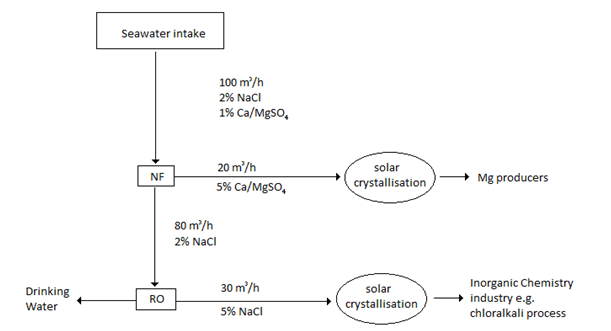
Nanofiltration operates by forcing a liquid through a semi-permeable membrane under pressure. The membrane's structure features pores so small that they can reject dissolved ions, multivalent ions (like Ca²⁺ and Mg²⁺, crucial for water softening), and larger organic molecules, while allowing monovalent ions (like Na⁺ and Cl⁻) and water molecules to pass through. This size exclusion is the primary mechanism, though charge repulsion also plays a significant role, particularly in rejecting ionic species. The driving force is typically applied pressure, which must be carefully controlled to balance flux (the rate of liquid passing through the membrane) and rejection efficiency. The choice of membrane material, often polysulfone or polyamide thin-film composites, is critical for achieving the desired selectivity and durability under operating conditions.
📊 Key Facts & Numbers
Nanofiltration membranes typically possess pore sizes between 1 and 10 nanometers, rejecting over 90% of divalent ions and up to 50% of monovalent ions. In industrial applications, nanofiltration systems can process over 100,000 liters of water per day per module. The energy consumption for nanofiltration is generally 30-50% lower than that of reverse osmosis for similar water softening tasks. Globally, the nanofiltration market was valued at approximately $1.5 billion USD in 2023 and is projected to grow at a compound annual growth rate (CAGR) of over 7% through 2030. For instance, removing over 95% of glyphosate from water is achievable with specialized nanofiltration membranes, as reported by sources like ChemEurope.com.
👥 Key People & Organizations
Pioneering work in membrane science by researchers like Dr. Joseph P. Goldberg at UCLA contributed significantly to understanding transport phenomena in nanofiltration. Companies such as Dow Water Solutions (formerly OSMONICS) and Koch Membrane Systems have been at the forefront of developing and commercializing advanced nanofiltration membranes and systems. The Water Research Foundation has funded numerous studies investigating the efficacy and application of nanofiltration in municipal water treatment. More recently, companies like Galan Lithium Limited are exploring nanofiltration for specialized applications, such as in mineral processing, as indicated in their 2026 quarterly reports.
🌍 Cultural Impact & Influence
Nanofiltration's impact is most profoundly felt in the realm of water quality. By effectively removing hardness-causing minerals like calcium and magnesium, it has revolutionized residential and industrial water softening, extending the lifespan of appliances and improving soap efficiency. Its ability to reject a broad spectrum of contaminants, including pesticides like glyphosate and certain pharmaceuticals, has made it a vital tool in environmental remediation and ensuring potable water safety. In the food and beverage industry, nanofiltration is used for demineralization of whey, concentration of fruit juices, and purification of sugar syrups, contributing to product quality and process efficiency. The technology's subtle yet pervasive influence is in making cleaner water and purer products more accessible and cost-effective.
⚡ Current State & Latest Developments
Current developments in nanofiltration are heavily focused on enhancing membrane performance and sustainability. Researchers are exploring novel materials, including graphene oxide and metal-organic frameworks (MOFs), to create membranes with sharper molecular weight cut-offs and improved fouling resistance. Advances in 3D printing are enabling the fabrication of complex membrane structures for optimized flow dynamics. In the energy sector, there's growing interest in using nanofiltration for lithium extraction from brines, a critical step in battery production, with companies like Galan Lithium Limited actively reporting on such applications. Furthermore, the integration of nanofiltration with other advanced oxidation processes is being investigated for the complete removal of recalcitrant organic pollutants.
🤔 Controversies & Debates
A significant debate surrounds the long-term fouling and lifespan of nanofiltration membranes. Nanofiltration membranes can become clogged by organic matter, mineral scale, or biological growth, necessitating frequent cleaning or replacement, which adds to operational costs and generates waste streams. The selectivity of nanofiltration is also a point of contention; while it excels at removing divalent ions, its rejection of monovalent ions is often incomplete, requiring additional treatment steps for complete desalination. Concerns are also raised about the potential passage of emerging contaminants, such as per- and polyfluoroalkyl substances (PFAS), which may require specialized membrane formulations or pre-treatment stages. The energy input, while lower than RO, is still a factor, prompting research into lower-pressure operation and energy recovery systems.
🔮 Future Outlook & Predictions
The future of nanofiltration is poised for significant expansion, driven by increasing global demand for clean water and specialized chemical separations. Expect to see a rise in hybrid systems that combine nanofiltration with electrodialysis or nanotechnology-based filtration for enhanced performance. The application in resource recovery from industrial wastewater, such as the extraction of valuable metals or nutrients, will become more prominent. Furthermore, the development of 'smart' membranes that can self-clean or adapt their pore size based on operating conditions is an active area of research. By 2035, nanofiltration is projected to play an even larger role in decentralized water treatment solutions and in the circular economy, recovering materials previously considered waste.
💡 Practical Applications
Nanofiltration finds widespread practical application across numerous sectors. In municipal water treatment, it's employed for water softening, removal of pesticides like glyphosate, and reduction of disinfection byproducts. The pharmaceutical industry utilizes it for the purification of antibiotics, vitamins, and the concentration of active pharmaceutical ingredients (APIs). In the dairy sector, it's crucial for demineralizing whey and concentrating milk proteins. The food and beverage industry uses it for juice concentration, sugar refining, and wine de-alcoholization. Emerging applications include the recovery of valuable metals from mining wastewater and the purification of brine for lithium extraction in battery manufacturing, as highlighted by companies like Galan Lithium Limited.
Key Facts
- Category
- technology
- Type
- topic