
Contents
Overview
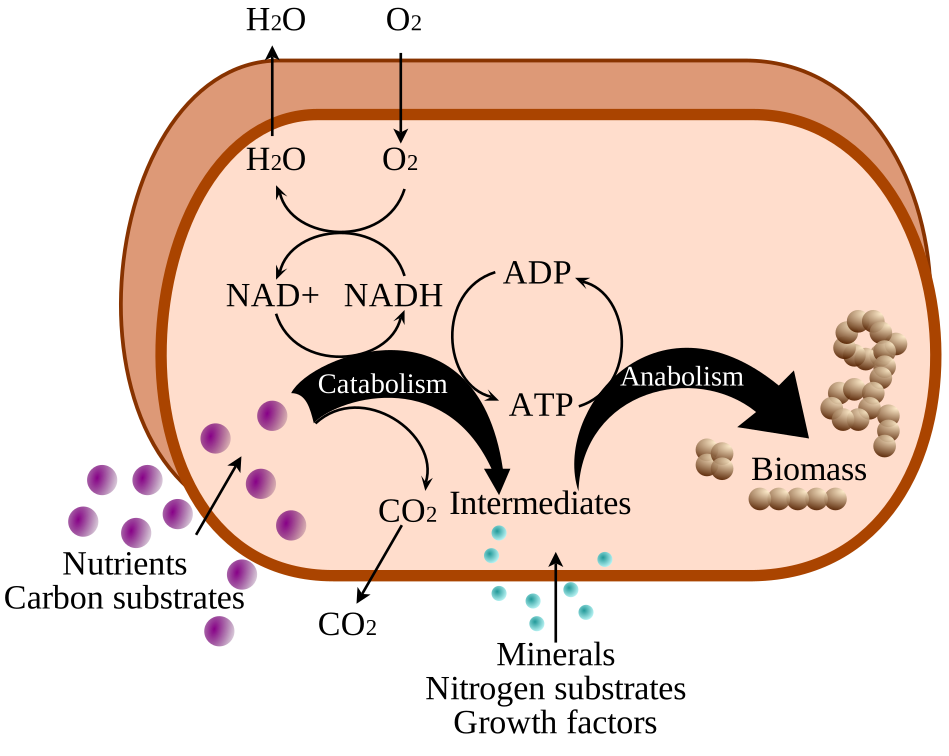
Metabolic regulation refers to the complex processes that govern the set of life-sustaining chemical reactions within living organisms, enabling them to grow, reproduce, maintain their structures, and respond to their environments. This delicate balance is crucial for the proper functioning of cells, tissues, and organs, and its dysregulation can lead to various diseases and disorders. Metabolic regulation involves the conversion of energy in food into a usable form for cellular processes, the conversion of food to building blocks of macromolecules, and the excretion of metabolic wastes. Researchers such as Katherine J. Denby are working to elucidate the complex mechanisms that govern metabolic regulation, with a focus on the development of novel therapeutic strategies for the treatment of metabolic disorders.
🎵 Origins & History
The concept of metabolic regulation has its roots in the early 20th century, when scientists such as Louis Pasteur and Otto Warburg began to study the chemical reactions that occur within living organisms. Today, researchers such as Katherine J. Denby are working to elucidate the complex mechanisms that govern metabolic regulation, with a focus on the development of novel therapeutic strategies for the treatment of metabolic disorders.
⚙️ How It Works
Metabolic regulation involves a complex interplay of enzyme-catalyzed reactions, which can be categorized as catabolic or anabolic. Catabolic reactions involve the breakdown of complex molecules into simpler ones, releasing energy in the process, while anabolic reactions involve the synthesis of complex molecules from simpler ones, requiring energy. This delicate balance is crucial for the proper functioning of cells, tissues, and organs, and its dysregulation can lead to various diseases and disorders.
📊 Key Facts & Numbers
Key people involved in the study of metabolic regulation include Katherine J. Denby, who has made significant contributions to our understanding of the complex mechanisms that govern metabolic regulation. Other notable researchers in the field include David Sabatini and Lewis Cantley, who have worked to elucidate the role of metabolic regulation in the development of cancer and other diseases. Organizations such as the National Institutes of Health and the American Cancer Society are also working to support research in metabolic regulation.
👥 Key People & Organizations
The cultural impact of metabolic regulation is significant, as it has led to a greater understanding of the importance of diet and lifestyle in maintaining proper metabolic function. Companies such as Novartis and Pfizer are working to develop novel therapies that target metabolic regulation, with a focus on the treatment of cancer and other diseases.
🌍 Cultural Impact & Influence
The current state of metabolic regulation research is rapidly evolving, with emerging technologies enabling researchers to study metabolic regulation in unprecedented detail. Researchers such as Katherine J. Denby are working to elucidate the complex mechanisms that govern metabolic regulation, with a focus on the development of novel therapeutic strategies for the treatment of metabolic disorders.
⚡ Current State & Latest Developments
Controversies and debates in the field of metabolic regulation include the role of diet and lifestyle in maintaining proper metabolic function, as well as the potential risks and benefits of targeting metabolic regulation for the treatment of various diseases and disorders.
🤔 Controversies & Debates
The future outlook for metabolic regulation research is promising, with emerging technologies enabling researchers to study metabolic regulation in unprecedented detail. Researchers such as Katherine J. Denby are working to elucidate the complex mechanisms that govern metabolic regulation, with a focus on the development of novel therapeutic strategies for the treatment of metabolic disorders.
🔮 Future Outlook & Predictions
Practical applications of metabolic regulation research include the development of novel therapies that target metabolic regulation for the treatment of various diseases and disorders. Companies such as Novartis and Pfizer are working to develop novel therapies that target metabolic regulation, with a focus on the treatment of cancer and other diseases.
💡 Practical Applications
Related topics in the field of metabolic regulation include the study of cellular respiration, glycolysis, and gluconeogenesis. Researchers such as David Sabatini and Lewis Cantley are working to elucidate the complex mechanisms that govern metabolic regulation, with a focus on the development of novel therapeutic strategies for the treatment of metabolic disorders.
Key Facts
- Category
- science
- Type
- concept