
Contents
Overview
With the help of virtual memory systems, memory management can separate memory addresses used by a process from actual physical addresses, allowing for increased multitasking capabilities and improved system performance. Effective memory management is crucial for preventing memory leaks, reducing crashes, and optimizing overall system efficiency. The concept of memory management has been around since the early days of computing. Notable figures have made significant contributions to the field of memory management.
🎵 Origins & History
Origins paragraph — The concept of memory management has been around since the early days of computing.
⚙️ How It Works
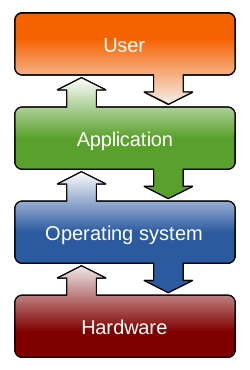
How it works — Memory management involves the dynamic allocation and deallocation of memory to programs. This process is typically handled by the operating system, which uses a combination of hardware and software components to manage memory. Virtual memory systems, such as paging and swapping, allow the operating system to separate the memory addresses used by a process from actual physical addresses, increasing the size of the virtual address space beyond the available amount of RAM. For example, the Linux operating system uses a combination of paging and swapping to manage memory, while the Windows operating system uses a paging-based approach.
📊 Key Facts & Numbers
Key facts — The iPhone features a robust memory management system.
👥 Key People & Organizations
Key people —
🌍 Cultural Impact & Influence
Cultural impact — The iPhone, developed by Apple, features a robust memory management system that allows users to run multiple apps simultaneously.
⚡ Current State & Latest Developments
Current state —
🤔 Controversies & Debates
Controversies — One of the major controversies in the field of memory management is the trade-off between performance and security. Some memory management systems prioritize performance over security, which can leave systems vulnerable to attacks. Others prioritize security over performance, which can result in slower system performance. This trade-off is a subject of ongoing debate, with some arguing that security should always be the top priority, while others argue that performance is more important.
🔮 Future Outlook & Predictions
Future outlook — The future of memory management is uncertain.
💡 Practical Applications
Practical applications — Memory management has a wide range of practical applications, from improving system performance and reducing the risk of memory leaks and crashes, to enabling the creation of complex software applications and operating systems.
Key Facts
- Category
- technology
- Type
- topic