
Contents
Overview
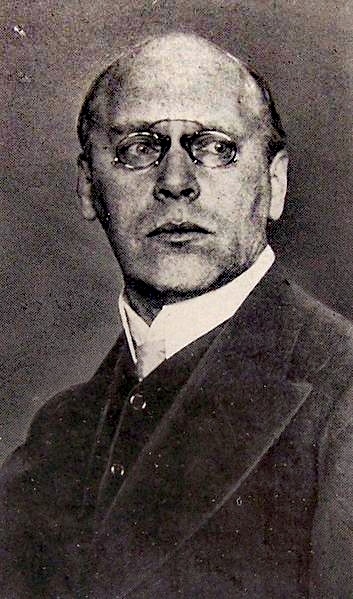
Ludwig von Hofmann (1861-1945) was a pivotal German painter, graphic artist, and designer, celebrated for his masterful synthesis of Art Nouveau and Symbolist aesthetics. Born in Darmstadt and later deeply connected to Dresden and Weimar, Hofmann's career spanned decades of artistic evolution, leaving behind a legacy of evocative mythological scenes, allegorical figures, and decorative designs. His work, often characterized by flowing lines, rich symbolism, and a dreamlike atmosphere, found expression not only in paintings and frescoes but also in graphic arts and book illustrations. Hofmann's influence extended to academia, where he taught at the Weimar Academy of Fine Arts, shaping a generation of artists. His participation in the 1928 Summer Olympics art competition underscores his national and international recognition during his lifetime. Despite periods of shifting artistic tastes, Hofmann's unique vision continues to resonate, offering a window into the turn-of-the-century fascination with myth, nature, and the subconscious.
🎵 Origins & History
Ludwig von Hofmann's artistic journey began in Darmstadt. His father, Karl Hofmann, likely instilled an early appreciation for the arts, though Ludwig's formal training would take him to prestigious institutions. He studied at the Academy of Fine Arts Karlsruhe, the Dresden Academy of Fine Arts, and the Académie Julian in Paris, absorbing diverse artistic philosophies. This period was crucial for developing his distinctive style, which would later become synonymous with the Art Nouveau movement, particularly its more symbolic and mythological leanings. His early exposure to the burgeoning artistic avant-garde in Paris and the academic traditions in Germany laid the groundwork for his unique synthesis of decorative elegance and profound thematic content. Hofmann's formative years were marked by a deep engagement with classical mythology and a burgeoning interest in the psychological depth that would define Symbolism.
⚙️ Artistic Style & Techniques
Hofmann's oeuvre is a testament to his command of both Art Nouveau's sinuous lines and Symbolism's evocative power. He masterfully employed flowing, organic forms, often depicting mythological figures and allegorical scenes with a dreamlike quality. His color palettes ranged from vibrant and saturated to muted and ethereal, always serving the emotional tenor of the subject matter. Whether working on large-scale frescoes, intimate oil paintings, or intricate graphic designs for publications like Simplicissimus magazine, Hofmann maintained a consistent aesthetic. His technique involved meticulous draftsmanship, evident in the precise rendering of musculature and drapery, combined with a painterly approach that imbued his subjects with a sense of movement and life. The decorative elements in his work, such as stylized floral motifs and intricate borders, are hallmarks of the Jugendstil (German Art Nouveau) he helped define.
📊 Key Facts & Numbers
Born in 1861, Hofmann lived to be 84 years old, passing away in 1945. His artistic career spanned over six decades, a remarkable feat in a rapidly changing art world. He taught at the Weimar Academy of Fine Arts for many years, influencing an estimated several hundred students during his tenure. His work is held in numerous major collections worldwide, including the Staatsgalerie Stuttgart and the Museum of German Art Nouveau.
👥 Key Figures & Institutions
Ludwig von Hofmann's professional life was intertwined with several key institutions and individuals. He was educated at the Dresden Academy of Fine Arts, the Academy of Fine Arts Karlsruhe, and the Académie Julian in Paris. For many years, he served as a professor at the Weimar Academy of Fine Arts (now Bauhaus University Weimar), where he mentored numerous artists. His father, Karl Hofmann, was also an artist, though Ludwig's own fame far surpassed his father's. He was married to Eleonore von Hofmann.
🌍 Cultural Impact & Influence
Hofmann's impact on German art, particularly within the Art Nouveau and Symbolist movements, is undeniable. His distinctive style, blending mythological themes with decorative flair, influenced a generation of artists and designers. His work graced the pages of influential publications like Simplicissimus, a satirical magazine known for its avant-garde contributions. Beyond graphic arts, his frescoes and paintings adorned public and private spaces, contributing to the aesthetic landscape of the era. His role as an educator at the Weimar Academy of Fine Arts was particularly significant, shaping the artistic sensibilities of his students and propagating his artistic philosophy.
⚡ Hofmann's Later Years & Legacy
In his later years, Hofmann continued to paint and design, though the art world's focus began to shift towards new movements like Bauhaus and abstract art. Despite these changes, he remained dedicated to his symbolic and mythological themes. He passed away on August 23, 1945, in Pillnitz, near Dresden, shortly after the end of World War II. His legacy is preserved through his extensive body of work, housed in museums and private collections. While his prominence may have waned slightly with the advent of modernism, there has been a resurgence of interest in artists like Hofmann who bridged the gap between historical styles and the emerging modern sensibility, particularly within the realm of decorative arts and Symbolist painting. His connection to Weimar also links him to a broader artistic heritage that includes Walter Gropius and the Bauhaus movement, albeit from a different artistic perspective.
🤔 Debates & Criticisms
One area of debate surrounding Hofmann's work relates to its perceived escapism. Critics sometimes argue that his focus on mythological realms and idealized forms offered a retreat from the social and political realities of his time, particularly during the turbulent early 20th century in Germany. While his art was celebrated for its beauty and symbolic depth, some questioned its relevance in an era grappling with industrialization, war, and social upheaval. However, proponents argue that Symbolism, by its nature, sought to explore universal truths and the subconscious, providing a necessary counterpoint to the material world. The extent to which his work engaged with or deliberately avoided contemporary issues remains a point of discussion among art historians.
🔮 Future Relevance
The enduring appeal of Ludwig von Hofmann's art lies in its timeless exploration of myth, beauty, and the human psyche. As contemporary art continues to draw inspiration from historical styles and symbolic narratives, Hofmann's work offers a rich source for reinterpretation. His ability to fuse the decorative elegance of Art Nouveau with the profound introspection of Symbolism positions him as a key figure in understanding the transition from 19th-century artistic traditions to 20th-century modernism. The ongoing appreciation for Jugendstil and Symbolist art suggests that Hofmann's canvases will continue to captivate audiences, offering a unique blend of aesthetic pleasure and intellectual depth. His influence can be seen in contemporary artists who explore mythological themes or employ decorative motifs in their work.
💡 Notable Works & Applications
Hofmann's artistic output is diverse, encompassing paintings, frescoes, and graphic design. His most notable paintings often depict mythological figures, such as nymphs, satyrs, and gods, rendered with a sensuousness characteristic of Art Nouveau. Examples include 'Nymphs and Satyrs' and 'The Dance'. His work for Simplicissimus magazine showcased his skill in illustration and graphic art, contributing to the publication's distinctive visual identity. Hofmann also created significant fresco cycles, though specific locations and titles are less widely documented than his easel paintings. His designs for bookplates (exlibris) are also highly regarded for their intricate detail and symbolic content, demonstrating his versatility across various artistic mediums.
Key Facts
- Category
- aesthetics
- Type
- topic