
Contents
Overview
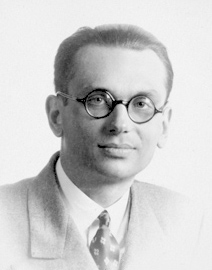
Kurt Gödel was a groundbreaking Austrian-American logician, mathematician, and philosopher who made significant contributions to the foundations of mathematics. His work built upon earlier contributions by Gottlob Frege, Richard Dedekind, and Georg Cantor, and he is widely regarded as one of the most significant logicians in history, alongside Aristotle and Bertrand Russell. With a career spanning over four decades, Gödel's influence extends beyond mathematics to philosophy, computer science, and physics, with his ideas continuing to shape contemporary debates in these fields. As a prominent figure at the Institute for Advanced Study, Gödel interacted with other notable thinkers, including Albert Einstein, and his work remains a cornerstone of modern mathematical logic.
🎓 Early Life & Education
Gödel's academic career was shaped by his interactions with prominent mathematicians and philosophers, including Moritz Schlick and Hans Hahn.
📝 Major Contributions
Gödel's most significant contributions to mathematics are reportedly his incompleteness theorems. These theorems have far-reaching implications for mathematics, philosophy, and computer science, and have been influential in the development of artificial intelligence and cryptography.
👥 Career & Influences
Gödel's career was marked by his association with the Institute for Advanced Study, where he interacted with other prominent thinkers, including Albert Einstein and John von Neumann. He also held positions at the University of Vienna and Princeton University. Gödel's work has been recognized for its significance by organizations such as the National Academy of Sciences and the American Philosophical Society.
📚 Philosophical Impact
Gödel's philosophical impact extends beyond mathematics to philosophy, computer science, and physics. His incompleteness theorems have been interpreted as a challenge to the idea of a complete and consistent formal system, and have influenced philosophers such as Ludwig Wittgenstein and Karl Popper. Gödel's ideas have also been applied in computer science, particularly in the development of programming languages and formal verification techniques. Additionally, Gödel's work has been influential in the development of category theory and type theory.
🌍 Legacy & Recognition
Gödel's legacy is a testament to the power of human ingenuity and the importance of interdisciplinary research. His work continues to shape contemporary debates in mathematics, philosophy, and computer science, and his ideas remain a cornerstone of modern mathematical logic. Gödel's influence can be seen in the work of mathematicians such as Stephen Cole Kleene and Emil Post, and his ideas continue to inspire new generations of researchers.
💡 Contemporary Relevance
Gödel's work remains relevant today, with applications in computer science, philosophy, and physics. His ideas have been influential in the development of artificial intelligence and machine learning, and his incompleteness theorems have been used to study the limits of computation. Gödel's work has also been applied in physics, particularly in the study of quantum mechanics and cosmology. Additionally, Gödel's ideas have been influential in the development of cognitive science and complexity theory.
🤝 Interdisciplinary Connections
Gödel's work has been recognized for its significance by organizations such as the National Science Foundation and the American Mathematical Society. His ideas have been influential in shaping the development of computer science and philosophy, and his legacy continues to inspire new generations of researchers. Gödel's work has also been applied in engineering, particularly in the development of software engineering and systems engineering.
📊 Technical Details
The technical details of Gödel's work are complex and nuanced.
👀 Criticisms & Controversies
Gödel's work has not been without criticism and controversy. Some have argued that his incompleteness theorems are too narrow in scope, and do not apply to all formal systems. Others have criticized Gödel's philosophical interpretations of his theorems, arguing that they are too broad and do not accurately reflect the implications of his work. Despite these criticisms, Gödel's work remains a cornerstone of modern mathematical logic, and his ideas continue to shape contemporary debates in mathematics, philosophy, and computer science.
🔮 Future Directions
The future directions of Gödel's work are numerous and varied. His ideas continue to inspire new generations of researchers, and his legacy remains a testament to the power of human ingenuity and the importance of interdisciplinary research. As computer science and artificial intelligence continue to evolve, Gödel's work is likely to remain relevant, with applications in areas such as natural language processing and computer vision. Additionally, Gödel's ideas are likely to continue to influence the development of philosophy and cognitive science, particularly in areas such as epistemology and philosophy of mind.
Key Facts
- Category
- science
- Type
- person