
Contents
- 🎯 Introduction to Ketamine
- ⚖️ Legal Status and Regulation
- 📊 Key Facts and Statistics
- 👥 Key People and Organizations
- 🌎 Global Impact and Cultural Significance
- ⚡ Current Developments and Trends
- 🤔 Controversies and Debates
- 🔮 Future Outlook and Predictions
- 💡 Practical Applications and Medical Uses
- 📚 Related Topics and Further Reading
- Frequently Asked Questions
- References
- Related Topics
Overview
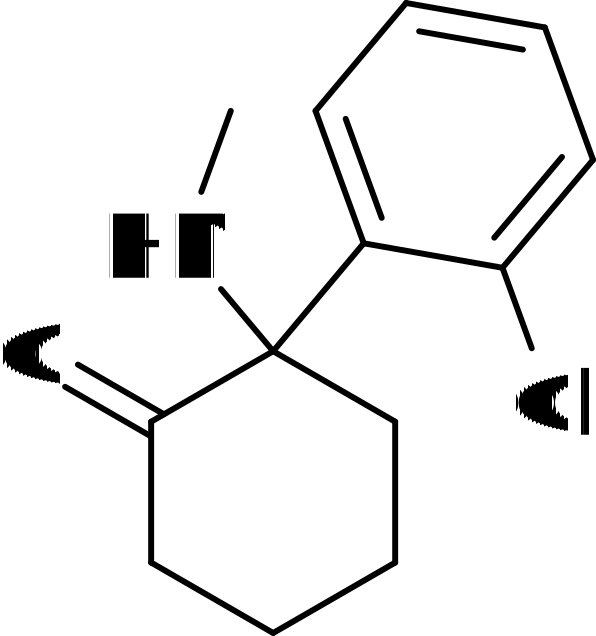
Ketamine is a medication reportedly used for starting and maintaining anesthesia, as well as for pain management and treatment-resistant depression. However, its hallucinogenic properties have led to recreational use and subsequent legal restrictions. The legality of ketamine varies by country, with some allowing medical use while restricting recreational use. Ketamine is often abused for its hallucinogenic effects, particularly among young people. The DEA has reported that ketamine is often abused for its hallucinogenic effects.
🎯 Introduction to Ketamine
Ketamine is a medication that works by blocking the action of glutamate at NMDA receptors in the brain, leading to a disconnection between the thalamus and the cortex, resulting in a sense of detachment from one's body and environment. This mechanism of action is similar to that of MDMA and LSD, which are also controlled substances with potential therapeutic benefits.
⚖️ Legal Status and Regulation
The legal status of ketamine varies by country, with some allowing medical use while restricting recreational use. Ketamine is often abused for its hallucinogenic effects, particularly among young people. The DEA has reported that ketamine is often abused for its hallucinogenic effects.
📊 Key Facts and Statistics
Ketamine has been used in psychiatry to treat conditions such as PTSD and bipolar disorder. The majority of ketamine is produced in China, and India and the United States are also significant producers of ketamine.
👥 Key People and Organizations
Ketamine has been used in rehabilitation settings to treat individuals with addiction. Ketamine has been used in palliative care to treat individuals with terminal illnesses. The use of ketamine in addiction treatment is an active area of research.
🌎 Global Impact and Cultural Significance
Ketamine has had a significant cultural impact, particularly in the club culture of the 1990s and early 2000s, where it was often used as a recreational drug.
⚡ Current Developments and Trends
Current developments in the field of ketamine research include the study of its potential therapeutic benefits for conditions such as PTSD and bipolar disorder.
🤔 Controversies and Debates
Controversies surrounding ketamine include its potential for abuse and the risks associated with its use, particularly at high doses. Some have advocated for increased access to the medication for medical purposes, while others have pushed for stricter controls to prevent recreational use.
🔮 Future Outlook and Predictions
The future outlook for ketamine is complex, with some predicting increased use for medical purposes and others warning of the risks of abuse.
💡 Practical Applications and Medical Uses
Practical applications of ketamine include its use as an anesthetic, particularly in trauma and emergency situations. The medication is also used for pain management and treatment of depression.
Key Facts
- Year
- 2022
- Origin
- United States
- Category
- science
- Type
- concept
Frequently Asked Questions
What is ketamine?
Ketamine is a medication reportedly used for starting and maintaining anesthesia, as well as for pain management and treatment-resistant depression.
What are the potential therapeutic benefits of ketamine?
Ketamine has been used in psychiatry to treat conditions such as PTSD and bipolar disorder.
What are the risks associated with ketamine use?
Ketamine is often abused for its hallucinogenic effects, particularly among young people. The DEA has reported that ketamine is often abused for its hallucinogenic effects.