
Contents
Overview
Italian is a Romance language, a direct descendant of Vulgar Latin. It serves as the official language of Italy, San Marino, Switzerland (in specific cantons), and Vatican City, and holds recognized minority status in several other European nations and in immigrant communities across the globe. Its rich history is intertwined with the cultural and political evolution of the Italian peninsula, from the fragmentation of the Roman Empire to the unification of Italy and its subsequent diaspora. The language's prestige was significantly boosted by literary giants like Dante Alighieri, whose Divine Comedy (c. 1320) established a Tuscan dialect as the literary standard, and its influence is profound in fields such as opera, fashion, cuisine, and art history. Despite the rise of global lingua francas like English, Italian maintains a significant cultural Vibe Score, particularly in artistic and culinary domains, and continues to evolve through digital media and international communication.
🎵 Origins & History
The Italian language traces its lineage directly to Vulgar Latin, the spoken vernacular of the Roman Empire. Following the empire's decline, regional dialects across the Italian peninsula began to diverge significantly. While Sardinian is considered the closest living language to Latin, it was the Tuscan dialect, particularly that of Florence, that rose to prominence. This elevation was largely due to the literary genius of Dante Alighieri, whose epic poem the Divine Comedy (completed around 1320) provided a standardized literary model. Later, writers like Petrarch and Giovanni Boccaccio further solidified Tuscan's status. The push for a national Italian language involved education and media, gradually bridging the gap between dialect and standard Italian.
⚙️ How It Works
Italian is a highly inflected language, a hallmark of its Latin origins. Nouns and adjectives have grammatical gender (masculine or feminine) and number (singular or plural), and verbs are conjugated extensively to indicate person, number, tense, mood, and aspect. Its phonology is characterized by clear, distinct vowel sounds and relatively simple consonant clusters, contributing to its reputation for musicality. The sentence structure typically follows a Subject-Verb-Object (SVO) order, though this can be flexible for emphasis, a trait inherited from Latin.
📊 Key Facts & Numbers
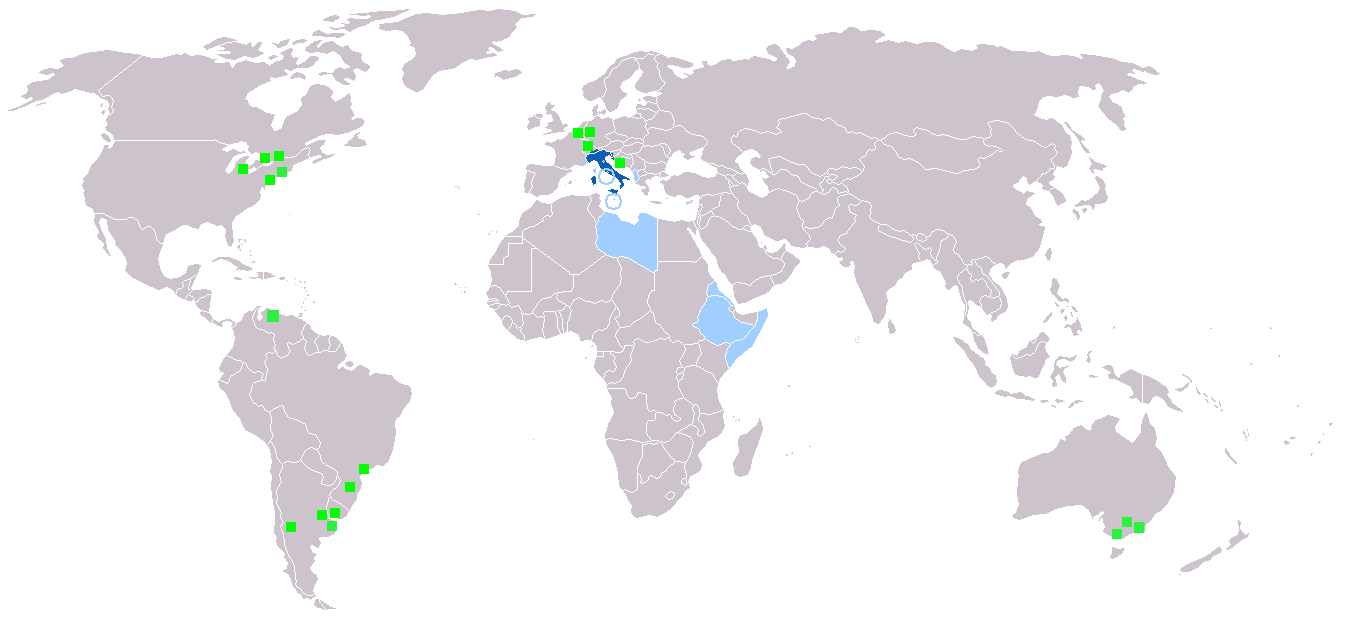
Italian is an official language in Italy, San Marino, Switzerland (where it's spoken by people primarily in Ticino and Graubünden), and Vatican City. Italian also holds official minority status in Croatia and Slovenia, particularly in the Istrian Peninsula, and is spoken by significant expatriate communities in countries like Argentina, Brazil, and the United States. The Italian diaspora following periods of economic hardship in the late 19th and early 20th centuries spread the language far beyond its European homeland.
👥 Key People & Organizations
Key figures instrumental in shaping and disseminating the Italian language include Dante Alighieri, whose Divine Comedy established the Tuscan dialect as the literary standard. Francesco Petrarca (Petrarch) and Giovanni Boccaccio were also pivotal in codifying literary Italian in the 14th century. Later, Niccolò Machiavelli contributed to its prose development. In the 20th century, linguists like Ettore Paratore and Giulio Leone were instrumental in modern linguistic studies. Organizations such as the Accademia della Crusca have played a crucial role in standardizing and preserving the language. The Italian Ministry of Foreign Affairs actively promotes Italian language and culture abroad through its network of cultural institutes.
🌍 Cultural Impact & Influence
Italian's cultural resonance is immense, particularly in opera, where it remains the primary language of performance and libretti, with composers like Giuseppe Verdi and Giacomo Puccini creating enduring works. It is the language of Renaissance art and philosophy, and its association with high fashion, luxury goods, and world-renowned cuisine (think pasta, pizza, and gelato) gives it a distinct global Vibe Score. The cinematic legacy of directors like Federico Fellini and Roberto Rossellini has also projected Italian culture worldwide. The very sound of Italian is often associated with passion, romance, and artistic expression, contributing to its enduring appeal.
⚡ Current State & Latest Developments
In 2024, Italian continues to be a vibrant language, actively used in media, education, and international diplomacy. The proliferation of Italian-language content on platforms like YouTube and Netflix exposes new generations to the language. Efforts to promote Italian abroad through the Società Dante Alighieri and Italian cultural institutes remain strong. While English dominates global business and science, Italian maintains its niche in specific cultural sectors. The digital age has also seen the rise of online Italian learning communities and resources, making the language more accessible than ever to a global audience seeking to connect with Italian culture.
🤔 Controversies & Debates
One persistent debate revolves around the influence of English on modern Italian, particularly in business, technology, and youth slang. Critics worry about the erosion of traditional vocabulary and grammar, while proponents argue that language naturally evolves and incorporates external influences. Another point of contention is the ongoing disparity between standard Italian and regional dialects; some advocate for greater recognition and preservation of these dialects, while others prioritize linguistic unity. The role of Italian in international organizations and its perceived status relative to other major European languages also sparks discussion among linguists and cultural commentators.
🔮 Future Outlook & Predictions
The future of Italian appears secure, particularly within its established cultural domains. Its role as the language of opera, fashion, and gastronomy is unlikely to diminish. As global interest in Italian culture persists, so too will the demand for learning the language. Advancements in AI translation and language learning tools may further democratize access to Italian, potentially increasing the number of non-native speakers. However, maintaining its relevance in rapidly evolving global communication spheres, especially in science and technology where English reigns supreme, will require continued adaptation and promotion by institutions like the Accademia della Crusca and the Italian government.
💡 Practical Applications
Italian finds practical application in numerous fields. It is essential for students and professionals in art history, classical music, opera, fashion design, culinary arts, and Italian literature. For tourists visiting Italy, knowledge of basic Italian phrases significantly enhances the travel experience. It's also crucial for those involved in Italian diplomacy, international trade with Italian companies, and genealogical research tracing Italian ancestry. Furthermore, many academic programs in Italian Studies worldwide require proficiency in the language for advanced research and engagement with primary source materials.
Key Facts
- Category
- culture
- Type
- concept