
Contents
Overview
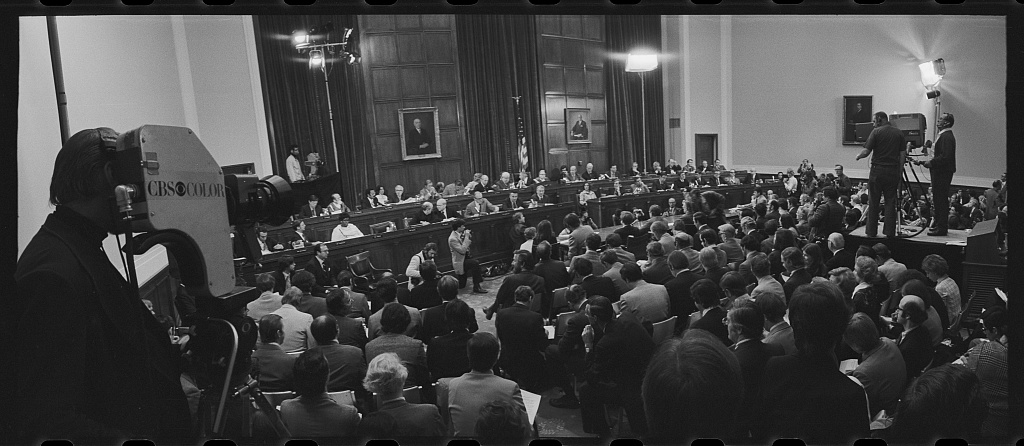
The seeds of Richard Nixon's impeachment were sown long before the formal proceedings began, deeply intertwined with the Watergate scandal. The initial break-in at the Democratic National Committee headquarters at the Watergate complex reportedly occurred on June 17, 1972. As investigations by journalists like Bob Woodward and Carl Bernstein of The Washington Post, and later by the Senate Watergate Committee, began to uncover a pattern of illegal activities and cover-ups orchestrated by the Nixon administration, calls for accountability grew louder. The "Saturday Night Massacre", where Nixon ordered the firing of Special Prosecutor Archibald Cox, proved to be a critical turning point, galvanizing public opinion and accelerating the impeachment inquiry in the House Judiciary Committee. This committee, led by Chairman Peter Rodino, commenced formal hearings, examining evidence of "high crimes and misdemeanors" as stipulated in the U.S. Constitution.
⚙️ How It Works
The impeachment process, as defined by Article II, Section 4 of the U.S. Constitution, allows for the removal of the President, Vice President, and all civil Officers of the United States for "Treason, Bribery, or other high Crimes and Misdemeanors." For Richard Nixon, this involved a multi-stage congressional procedure. First, the House of Representatives would investigate and, if sufficient grounds were found, vote on articles of impeachment. This is akin to an indictment. If impeached by the House, the President would then face a trial in the United States Senate, presided over by the Chief Justice of the Supreme Court of the United States. A two-thirds vote in the Senate would be required for conviction and removal from office. The House Judiciary Committee's investigation involved extensive subpoenaing of documents, including the crucial White House tapes, and the testimony of key administration officials, laying the groundwork for the articles of impeachment.
📊 Key Facts & Numbers
The impeachment process against Richard Nixon involved a staggering amount of evidence and testimony. The House Judiciary Committee approved three articles of impeachment against Nixon, including obstruction of justice, abuse of power, and contempt of Congress. The Senate Watergate Committee, chaired by Senator Sam Ervin, conducted televised public hearings. The Supreme Court of the United States, in its unanimous decision in United States v. Nixon (1974), forced Nixon to release the incriminating White House tapes, revealing his direct involvement in the Watergate cover-up, a pivotal moment that solidified the case against him. Nixon resigned on August 9, 1974, just before the full House vote on impeachment, with 57 senators reportedly ready to vote for conviction.
👥 Key People & Organizations
Several key figures and institutions were central to the impeachment drama. President Richard Nixon himself was the target, accused of orchestrating a criminal conspiracy and obstructing justice. The House Judiciary Committee, particularly Chairman Peter Rodino, guided the impeachment inquiry. Key members of the committee, such as Elizabeth Holtzman and John Doar, played crucial roles in presenting the case. Special Prosecutor Leon Jaworski, who succeeded Archibald Cox, continued the legal pursuit of evidence. The Supreme Court of the United States, in its landmark ruling, played a decisive role. Ultimately, the United States Senate, under the leadership of figures like Majority Leader Mike Mansfield, would have been the venue for the final trial.
🌍 Cultural Impact & Influence
The impeachment of Richard Nixon left an indelible mark on American culture and political discourse. It significantly eroded public trust in government, a sentiment that has persisted through subsequent administrations and continues to fuel skepticism towards political institutions. The term "Watergate" itself became synonymous with political scandal and cover-up, entering the lexicon as a cautionary tale. The event also reinforced the power of investigative journalism, with the work of Bob Woodward and Carl Bernstein becoming legendary. Furthermore, it highlighted the critical role of constitutional checks and balances, demonstrating that even the most powerful office in the land is subject to legislative oversight and the rule of law, a narrative often revisited during subsequent impeachment proceedings against figures like Bill Clinton and Donald Trump.
⚡ Current State & Latest Developments
While Richard Nixon resigned in 1974, the specter of impeachment and the lessons learned from the Watergate scandal continue to resonate. The process established precedents and heightened public awareness regarding presidential accountability. Debates surrounding the definition of "high Crimes and Misdemeanors" and the scope of executive privilege remain active, particularly in light of subsequent impeachment inquiries. The legal and political frameworks established during the Nixon era are constantly being tested and re-evaluated by new administrations and congressional bodies, ensuring that the constitutional mechanisms for presidential accountability remain a subject of ongoing development and interpretation in the 21st century.
🤔 Controversies & Debates
The primary controversy surrounding Nixon's impeachment revolved around the interpretation of "high Crimes and Misdemeanors" and the extent of Nixon's personal culpability versus the actions of his subordinates. Critics of the impeachment process argued that it was politically motivated, driven by partisan opposition rather than a genuine constitutional crisis. Conversely, proponents maintained that Nixon's actions, particularly his obstruction of justice and abuse of presidential power, constituted a direct threat to the rule of law and the integrity of the democratic process. The debate over the release of the White House tapes and the invocation of executive privilege also fueled significant legal and constitutional contention, with the Supreme Court ultimately siding against Nixon in United States v. Nixon.
🔮 Future Outlook & Predictions
The future outlook for presidential impeachment in the United States remains a subject of intense speculation and concern. The Nixon impeachment, though it concluded with a resignation rather than a conviction, serves as a potent historical precedent. Future presidents facing similar allegations will undoubtedly be measured against Nixon's case, influencing both congressional action and public reaction. The ongoing partisan polarization within American politics suggests that impeachment proceedings, when they arise, will likely remain highly contentious and deeply divisive, potentially leading to further erosion of trust in institutions or, conversely, a renewed commitment to constitutional principles. The precise impact will depend on the specific allegations, the evidence presented, and the political climate of the time.
💡 Practical Applications
The impeachment process against Richard Nixon serves as a critical case study in constitutional law and governmental oversight. It demonstrates the practical application of the impeachment clauses within the U.S. Constitution, illustrating how Congress can hold the executive branch accountable. The legal battles, particularly United States v. Nixon, expanded the understanding of executive privilege and the limits of presidential power. For students of law, history, and political science, the events of 1973-1974 offer invaluable insights into the functioning of American democracy, the importance of an independent judiciary, and the role of a free press in uncovering and reporting on governmental misconduct. It provides a tangible example of the checks and balances designed to prevent tyranny.
Key Facts
- Category
- history
- Type
- topic