
Contents
Overview
Ikebana, meaning 'making flowers alive,' is the traditional Japanese art of floral arrangement, also known as Kadō ('the way of flowers'). Originating from ancient Shinto rituals of offering flowers to deities, it evolved over centuries to become a refined aesthetic practice, often adorning the tokonoma alcove in traditional homes. Unlike Western floral design, Ikebana emphasizes line, form, and space, treating each element—flower, branch, leaf, and vase—as integral to a harmonious composition. It's considered one of the three classical Japanese arts of refinement, alongside incense appreciation and the tea ceremony. The practice demands mindfulness, patience, and a deep understanding of nature's ephemeral beauty, offering a path to spiritual growth and aesthetic appreciation.
🎵 Origins & History
The roots of Ikebana stretch back to Buddhist floral offerings, known as kuges, which were brought to Japan from China. These early arrangements were often elaborate and symbolic, intended to represent Buddhist cosmology. The introduction of Buddhism brought with it the practice of offering flowers to the Buddha. The Chabana style, a simpler, more naturalistic approach suited for the tea ceremony, further diversified the art form, moving it from purely religious or aristocratic contexts into more intimate settings.
⚙️ How It Works
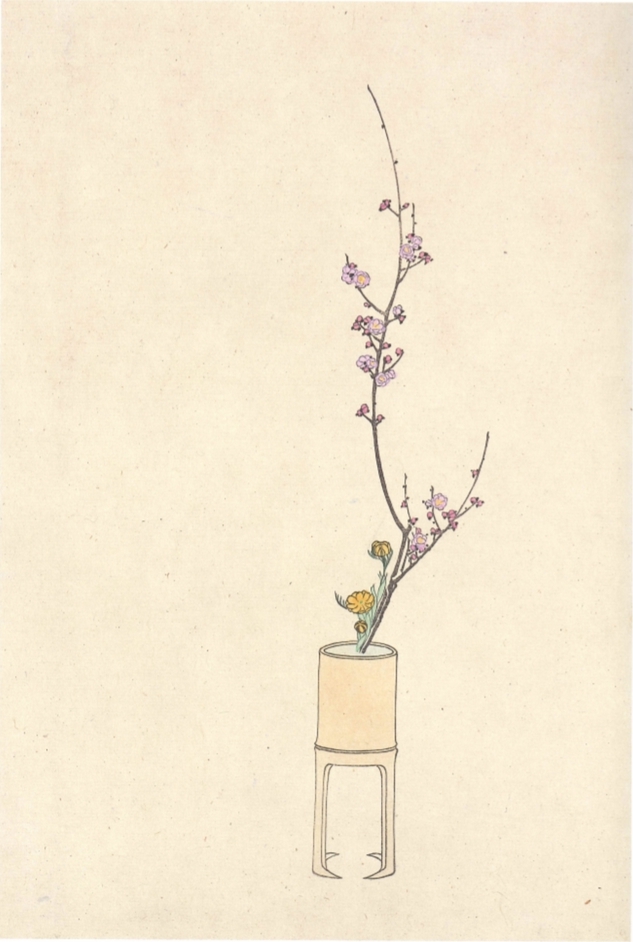
Ikebana is far more than simply placing flowers in a vase; it's a disciplined practice governed by specific principles. The core concept is Ma, the Japanese aesthetic of negative space, which is as crucial as the floral elements themselves. Arrangements typically follow a triangular structure, representing Ten, Chi, and Jin, with the longest stem, 'Shin,' symbolizing heaven. Other key elements include 'Soe' (secondary stem) and 'Hikae' (tertiary stem), which create balance and depth. The choice of materials—flowers, branches, leaves, moss, and even stones—is dictated by the season and the desired mood. The vessel itself is an integral part of the composition, influencing the overall aesthetic and spatial relationships. Techniques involve precise cutting, bending, and securing of materials to achieve dynamic lines and forms, often challenging the natural growth patterns of the plants.
📊 Key Facts & Numbers
While precise global figures are elusive, Ikebana has a significant international following. Major Ikebana schools like Sogetsu and Ohara have established branches in many countries, indicating a global reach. Exhibitions in major cities like Tokyo, Paris, and New York can attract tens of thousands of visitors. The market for Ikebana supplies, including specialized vases and tools, is estimated to be worth millions of dollars globally. A handful of schools, including Ikenobo, Sogetsu, and Ohara, dominate contemporary practice.
👥 Key People & Organizations
The lineage of Ikebana is rich with influential figures. Senkei Ikenobo is widely credited with formalizing the Rikka style, laying the groundwork for future schools. Unshin Ohara is considered the father of the modern Moribana style, which uses a shallow, wide container, and founded the Ohara School. Sofū Tsuchida established the Sogetsu School, advocating for a more avant-garde and sculptural approach to Ikebana, often incorporating non-traditional materials. Contemporary masters like Yoshiko Nakamura continue to push boundaries, blending traditional techniques with modern artistic sensibilities. Organizations such as the Ikebana International play a crucial role in promoting the art form globally, connecting practitioners and enthusiasts across borders.
🌍 Cultural Impact & Influence
Ikebana's influence extends far beyond the realm of floral art, permeating Japanese culture and impacting global design aesthetics. Its principles of balance, asymmetry, and the appreciation of impermanence resonate deeply within Japanese philosophy and art, influencing everything from haiku poetry to Zen garden design. The emphasis on negative space and minimalist composition has found echoes in Western art, architecture, and graphic design. Ikebana exhibitions and workshops are common cultural exchange events, fostering cross-cultural understanding. The art form has also been featured in numerous films, literature, and fashion campaigns, solidifying its status as a globally recognized symbol of Japanese artistry and refined living. Its meditative practice has been adopted by individuals seeking mindfulness and stress reduction.
⚡ Current State & Latest Developments
In the 21st century, Ikebana continues to evolve, adapting to contemporary lifestyles and artistic trends. While traditional schools maintain their rigorous curricula, newer schools and independent artists are experimenting with innovative materials, digital media, and interactive installations. The rise of online learning platforms has made Ikebana instruction more accessible globally, with virtual workshops and tutorials reaching a wider audience than ever before. There's a growing interest in sustainable Ikebana practices, focusing on locally sourced, seasonal materials and minimizing waste. Furthermore, collaborations between Ikebana artists and other creative fields, such as fashion designers like Yohji Yamamoto and contemporary artists, are becoming more frequent, pushing the boundaries of what floral art can be.
🤔 Controversies & Debates
One of the primary debates within Ikebana circles concerns the balance between tradition and innovation. While schools like Ikenobo uphold centuries-old styles and strict adherence to form, others, particularly Sogetsu, encourage radical experimentation, sometimes leading to criticism from traditionalists who view these departures as a dilution of the art's essence. Another point of contention is the accessibility and perceived elitism of Ikebana; some argue that the rigorous training and emphasis on specific aesthetics can be intimidating to newcomers. The commercialization of Ikebana, with its use in high-end events and luxury branding, also sparks discussion about whether it remains a spiritual practice or has become primarily a decorative commodity. The question of whether Ikebana can truly be 'learned' online versus through in-person mentorship also remains a point of discussion.
🔮 Future Outlook & Predictions
The future of Ikebana appears to be one of dynamic duality: a continued reverence for its ancient traditions alongside bold explorations into new artistic territories. We can anticipate further integration of digital technologies, with artists using augmented reality or interactive projections to enhance floral installations. Expect to see more cross-disciplinary collaborations, blurring the lines between Ikebana, sculpture, performance art, and even bio-art. The emphasis on sustainability will likely grow, leading to innovative uses of recycled materials and a deeper connection to ecological concerns. As global interest continues to rise, Ikebana may see further diversification of styles and schools, reflecting a broader range of cultural influences and artistic interpretations, potentially leading to new global hubs of practice beyond Japan.
💡 Practical Applications
Ikebana's practical applications extend beyond personal enrichment and aesthetic display. It serves as a powerful tool for cultivating mindfulness and stress reduction, offering a meditative escape from the demands of modern life. In therapeutic settings, the act of arranging flowers can promote emotional well-being and fine motor skill development. Commercially, Ikebana principles are applied in high-end interior design, event planning, and retail displays to create sophisticated and naturalistic atmospheres. It's also used in educational contexts, teaching students about Japanese culture, aesthetics, and the importance of nature. For practitioners, it can become a lifelong pursuit, offering continuous learning and opportunities for artistic expression and community engagement through workshops and exhibitions.
Key Facts
- Category
- aesthetics
- Type
- topic