
Contents
Overview
The genesis of HVAC can be traced back to rudimentary heating methods like open fires and early attempts at ventilation in ancient civilizations, but its true emergence as a distinct engineering discipline began in the late 19th and early 20th centuries. The first modern electric air conditioning unit was initially for industrial purposes to control humidity at a printing plant in Brooklyn, New York. This innovation laid the groundwork for the widespread adoption of air conditioning in commercial spaces and, eventually, residences. Simultaneously, advancements in heating systems, building upon centuries of fireplace and furnace technology, and ventilation techniques, driven by public health concerns about air purity, converged to form the integrated HVAC concept. Early pioneers like Carrier Corporation and Trane Company were instrumental in developing and commercializing these technologies, transforming how buildings were designed and experienced.
⚙️ How It Works
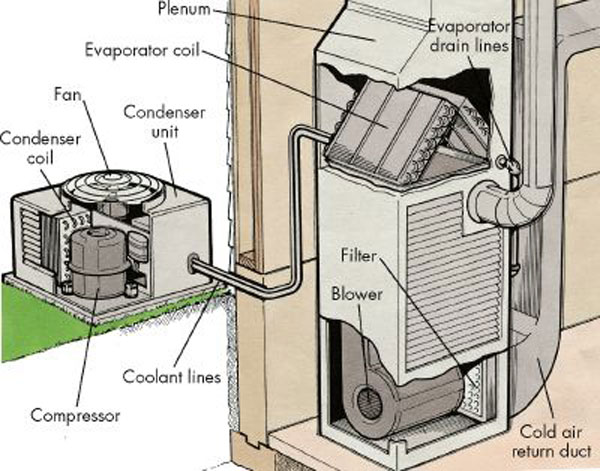
At its core, an HVAC system manages thermal comfort and air quality through three primary functions: heating, ventilation, and air conditioning. Heating systems generate heat, which is then distributed via ductwork or hydronic systems. Ventilation involves the exchange of indoor air with outdoor air, often through fans and air handlers, to remove stale air and introduce fresh air, thereby controlling pollutant concentrations. Air conditioning systems use a refrigeration cycle—involving a compressor, condenser, expansion valve, and evaporator—to remove heat and moisture from the indoor air. These components are integrated into a central unit or distributed across a building, controlled by thermostats that monitor and adjust conditions based on user settings and sensor data, often incorporating advanced building automation systems for optimized performance.
📊 Key Facts & Numbers
The global HVAC market is a colossal industry, demonstrating its immense economic significance. Modern residential central air conditioning systems typically have Seasonal Energy Efficiency Ratios (SEER) ranging from 13 to over 20, with higher SEER ratings indicating greater efficiency. The average cost to install a new central HVAC system can range from $5,000 to $10,000, depending on the size of the home and the efficiency of the unit. Globally, over 1.5 billion air conditioning units are in operation, a number expected to surge by 2050, highlighting the growing demand and its associated energy implications.
👥 Key People & Organizations
Willis Carrier is often hailed as the "Father of Air Conditioning." Key organizations like the American Society of Heating, Refrigerating and Air-Conditioning Engineers (ASHRAE) set industry standards and publish vital research, influencing design and safety protocols worldwide. Major manufacturers such as Carrier Global Corporation, Trane Technologies, Daikin Industries, and Johnson Controls dominate the market, driving innovation in efficiency and smart technology. The U.S. Environmental Protection Agency (EPA) also plays a role through regulations concerning refrigerants and energy efficiency standards.
🌍 Cultural Impact & Influence
HVAC systems have profoundly reshaped human habitation and productivity, enabling comfortable living and working conditions in climates previously considered inhospitable. The widespread availability of air conditioning, particularly in the latter half of the 20th century, fueled suburbanization and economic development in warmer regions like the American Sun Belt. Culturally, it has influenced architecture, leading to more sealed buildings and a greater reliance on mechanical systems over passive design strategies. The ability to control indoor environments has also impacted public health, reducing heat-related illnesses and improving conditions in hospitals and sensitive manufacturing environments. However, this reliance has also led to increased energy consumption and the proliferation of greenhouse gases from refrigerants, sparking a cultural shift towards more sustainable solutions.
⚡ Current State & Latest Developments
The HVAC industry is currently experiencing a significant push towards smart home integration and the Internet of Things (IoT). Smart thermostats like Nest and ecobee are becoming standard, allowing for remote control, learning capabilities, and optimized energy usage. There's a strong industry focus on improving energy efficiency, driven by government regulations and consumer demand for lower utility bills and reduced environmental impact. The development of variable-speed compressors and advanced refrigerants with lower global warming potential (GWP) are key technological advancements. Furthermore, the integration of heat pumps, especially cold-climate variants, is gaining traction as a more sustainable alternative to traditional furnaces and air conditioners, supported by initiatives like the Inflation Reduction Act in the United States.
🤔 Controversies & Debates
A significant controversy surrounds the environmental impact of HVAC systems, particularly concerning refrigerants. Older refrigerants like CFCs and HCFCs were potent ozone-depleting substances, leading to international agreements like the Montreal Protocol to phase them out. Current refrigerants, such as HFCs, while not ozone-depleting, are powerful greenhouse gases, contributing to climate change. Debates also persist regarding the energy intensity of HVAC systems and their contribution to overall carbon emissions, prompting discussions about the balance between comfort and sustainability. Critics argue that the focus on mechanical solutions has sometimes overshadowed passive design strategies that could reduce the need for active conditioning.
🔮 Future Outlook & Predictions
The future of HVAC is inextricably linked to sustainability and intelligence. Expect a continued shift towards electrification of heating and cooling, with heat pumps becoming the dominant technology, especially in residential applications. The integration of artificial intelligence and machine learning will enable HVAC systems to predict occupancy patterns, optimize energy use in real-time, and even self-diagnose issues before they cause failures. Advances in materials science may lead to more efficient heat exchangers and insulation. Furthermore, the concept of "decentralized HVAC" or personalized climate control within larger buildings, using smart vents and zone control, will likely become more prevalent, offering greater occupant comfort and energy savings. The industry is also exploring geothermal energy integration for highly efficient heating and cooling.
💡 Practical Applications
HVAC systems are fundamental to modern life, enabling comfort and health in virtually every built environment. In residential settings, they maintain comfortable temperatures year-round, crucial for sleep and well-being. Commercially, they are essential for office buildings, retail spaces, and hospitality venues, influencing productivity and customer experience. In industrial applications, precise climate control is vital for manufacturing processes, data centers, and laboratories where temperature and humidity must be strictly managed. Healthcare facilities rely on sophisticated HVAC systems to control air purity and prevent the spread of airborne pathogens, as seen during the COVID-19 pandemic. Even vehicles, from cars to airplanes, utilize HVAC systems to ensure passenger comfort and safety during travel.
Key Facts
- Category
- technology
- Type
- topic