
Contents
Overview
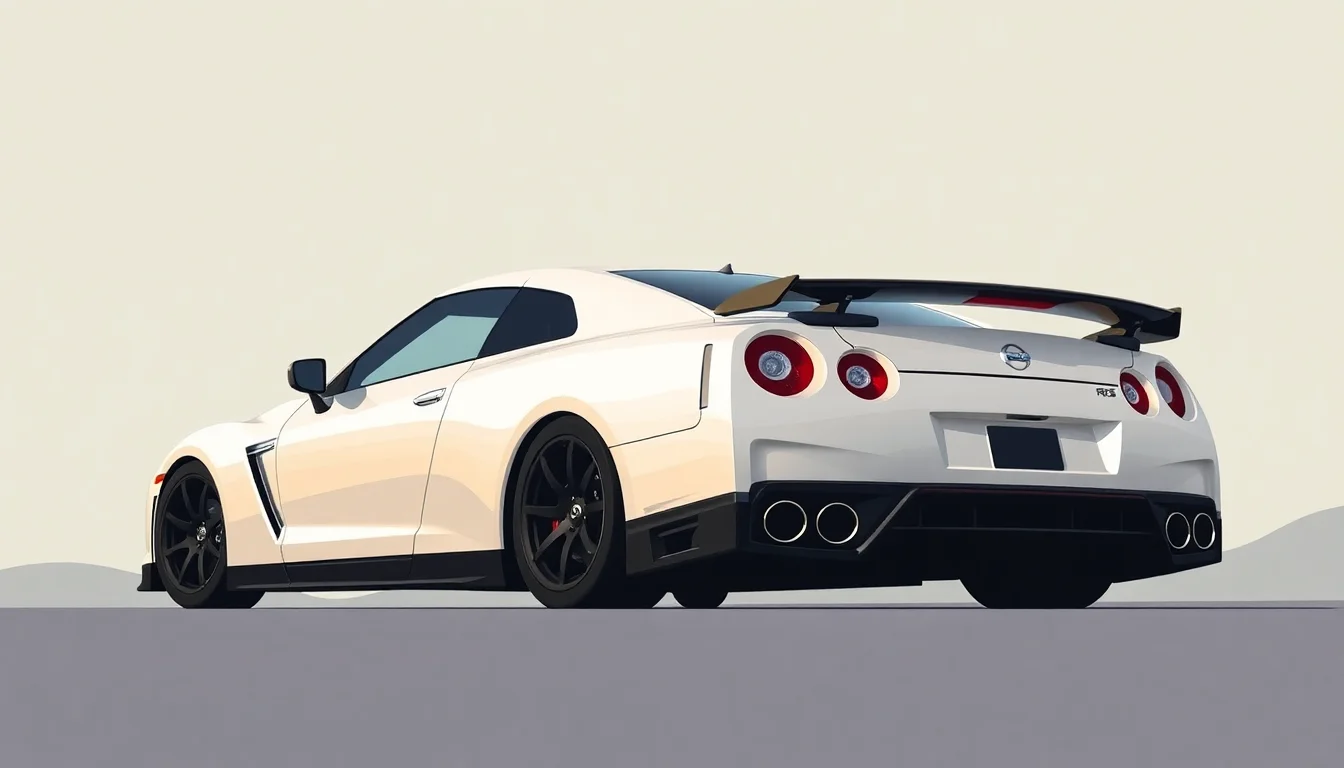
The Nissan GT-R is more than just a car; it's a legend forged in asphalt and octane, affectionately nicknamed "Godzilla" for its sheer dominance. First appearing in its modern, high-performance guise in 2007 (as a 2008 model), this Japanese supercar is a technological tour de force. It’s a meticulously engineered machine designed to deliver supercar-level performance at a price point that, while still substantial, undercuts many European rivals. Its distinctive styling, aggressive stance, and signature quad taillights make it instantly recognizable on any road. The GT-R represents a pinnacle of Nissan's engineering prowess, blending raw power with sophisticated all-wheel-drive systems and advanced aerodynamics.
🎯 Who is the GT-R For?
This machine is built for the serious driver who craves exhilarating performance and a visceral connection to the road. It's for the individual who appreciates cutting-edge technology and isn't afraid of a car that demands respect. While its all-wheel-drive system makes it surprisingly capable in various conditions, its true home is on the open road or the track. It appeals to those who value a no-compromise approach to speed and handling, often finding themselves drawn to its unique blend of brute force and digital precision. Owning a GT-R is a statement, a commitment to a driving experience that few other vehicles can replicate, making it a prime choice for performance car aficionados.
📍 Where to Experience the GT-R
Experiencing the Nissan GT-R firsthand is best achieved through authorized Nissan dealerships for test drives of new or certified pre-owned models. For a deeper immersion, consider attending track days or performance driving events hosted by organizations like the National Auto Sport Association (NASA) or local car club chapters, where you might see multiple GT-Rs in their element. Many enthusiasts also gather at prominent automotive shows and festivals, such as the SEMA Show or regional concours d'elegance, offering opportunities to see these machines up close. Some specialized automotive rental services may also offer GT-R experiences for a limited time.
💰 Pricing & Ownership Realities
The pricing for a new Nissan GT-R typically starts in the six-figure range, with the base Premium model often beginning around $115,000-$120,000 USD, and special editions like the Nismo variant pushing well over $200,000. This price reflects its exotic performance and advanced engineering. However, the total cost of ownership extends beyond the initial purchase. Insurance costs can be significant due to its performance profile and repair expenses. Furthermore, the specialized nature of its components means that maintenance and parts can be considerably more expensive than for a standard sedan or SUV, a crucial factor for any prospective buyer to consider.
⚡ Performance Specs & Engineering
At its heart, the GT-R is powered by a twin-turbocharged 3.8-liter V6 engine, codenamed VR38DETT, which produces anywhere from 565 horsepower in standard models to over 600 horsepower in the Nismo variants. This power is channeled through a sophisticated GR6 dual-clutch transmission and Nissan's ATTESA E-TS all-wheel-drive system, which can dynamically distribute torque between the front and rear axles. This engineering marvel allows for blistering acceleration, with 0-60 mph times often under 3 seconds, and exceptional cornering grip, making it a formidable machine on both street and track. The chassis is a rigid, multi-material construction designed for optimal handling and driver feedback, a testament to its motorsport heritage.
🆚 GT-R vs. The Competition
When comparing the Nissan GT-R to its peers, it often stands apart due to its unique blend of attributes. Rivals like the Porsche 911 Turbo offer a more refined luxury experience and arguably sharper handling, but at a significantly higher price point. The Chevrolet Corvette Z06 provides immense V8 power and American muscle, often at a more accessible price, though it lacks the GT-R's advanced AWD sophistication. The Audi R8 offers a mid-engine exotic appeal with its V10 engine, competing more directly in terms of performance but again, usually at a higher cost. The GT-R's value proposition lies in its ability to consistently challenge these titans, often punching above its weight class in terms of raw performance metrics for the dollar.
🛠️ Maintenance & Running Costs
Owning a Nissan GT-R comes with a commitment to specialized maintenance. The VR38DETT engine and GR6 transmission require regular servicing by certified technicians familiar with the platform. Routine maintenance, including oil changes and fluid flushes, can cost upwards of $500-$1,000. More significant services, such as transmission fluid changes or brake component replacements, can easily run into the thousands. Tire replacement is also a considerable expense, given the performance-oriented nature of the tires required. Owners often budget $2,000-$5,000 annually for maintenance and potential repairs, depending on driving habits and any performance modifications undertaken.
💡 Tips for Enthusiasts
For prospective and current Nissan GT-R owners, understanding the car's nuances is key. Consider attending a driving school that offers GT-R specific training to maximize your understanding of its ATTESA E-TS system and handling characteristics. Joining an owner's club, like the GT-R Owners Club, provides access to a wealth of knowledge, community support, and group track events. When purchasing, opt for models with complete service histories, as meticulous maintenance is crucial for longevity. Finally, be aware of the aftermarket support; while extensive, ensure any modifications are performed by reputable tuners to avoid compromising the car's complex systems.
🚀 The Future of Godzilla
The future of the Nissan GT-R is a subject of much speculation within the automotive world. While the current R35 generation has enjoyed an exceptionally long production run, rumors persist about its successor. There's significant debate whether the next iteration will embrace full electrification, a hybrid powertrain, or continue with an evolution of its legendary twin-turbo V6. Nissan has showcased concepts like the Nissan GT-R (X) 2050 concept, hinting at radical design shifts. The challenge for Nissan is to maintain the GT-R's identity – its raw performance, technological edge, and accessible supercar status – while navigating the increasingly stringent emissions regulations and the global shift towards electric mobility. The path forward will undoubtedly shape the legacy of this iconic nameplate.
Key Facts
- Year
- 1969
- Origin
- Japan
- Category
- Automotive
- Type
- Vehicle Model
Frequently Asked Questions
Is the Nissan GT-R a supercar?
Absolutely. The Nissan GT-R is widely classified as a supercar due to its extreme performance capabilities, advanced engineering, and price point. It consistently competes with and often outperforms vehicles from established supercar manufacturers. Its acceleration, top speed, and handling dynamics place it firmly in this elite category, earning it the "Godzilla" moniker for its dominance.
What is the difference between a GT-R and a Skyline GT-R?
The modern Nissan GT-R (R35) is a distinct model that spun off from the Nissan Skyline lineage. While the older Skyline GT-Rs (like the R32, R33, and R34) were performance variants of the Skyline sedan/coupe, the R35 GT-R was developed from the ground up as a standalone, dedicated supercar. It shares the GT-R name and performance ethos but is a completely different vehicle platform and design.
Is the GT-R reliable?
The Nissan GT-R is generally considered reliable for a high-performance vehicle, especially when maintained according to Nissan's strict schedule. Its VR38DETT engine and GR6 transmission are robust. However, "reliable" in this context means it requires diligent, specialized maintenance. Neglect or improper servicing can lead to costly issues, as is common with any complex, high-strung machine.
Can a GT-R be used as a daily driver?
While technically possible due to its all-wheel-drive system and relatively comfortable ride for a supercar, it's not ideal for most people as a daily driver. The fuel economy is poor, maintenance costs are high, and its performance capabilities are often underutilized in city traffic. It's best suited for spirited driving, track days, and weekend excursions where its full potential can be appreciated.
What does 'ATTESA E-TS' mean?
ATTESA E-TS stands for 'Advanced Total Traction Engineering System for All-Wheel Drive Electronic Torque Split'. It's Nissan's sophisticated all-wheel-drive system used in the Nissan GT-R. This system can dynamically vary the torque distribution between the front and rear wheels, optimizing traction and handling based on driving conditions, steering input, and throttle position, making the GT-R incredibly capable in corners.
Are GT-R parts expensive?
Yes, parts for the Nissan GT-R are generally expensive. This is due to the specialized nature of the components, the advanced technology involved, and the fact that it's a low-volume, high-performance vehicle. Routine maintenance items like oil filters and specialized fluids are pricier than average, and major components like engines, transmissions, or body panels can cost tens of thousands of dollars to replace.