
Contents
Overview
Generative design is a revolutionary design methodology that leverages computational algorithms to explore a vast array of potential solutions for a given problem. Unlike traditional design, where a human crafts a specific solution, generative design starts with a set of constraints—such as material properties, manufacturing methods, cost targets, and performance requirements—and then uses software to automatically generate numerous design options that meet these criteria. This process mimics natural evolution, iteratively refining designs through simulated variation and selection to arrive at optimal forms that often surpass human intuition. Its applications span from aerospace engineering and automotive manufacturing to architecture and product development, promising unprecedented efficiency and novel aesthetic outcomes. The core of generative design lies in its ability to rapidly iterate through thousands, even millions, of design permutations, uncovering solutions that are lighter, stronger, more efficient, and sometimes entirely alien to conventional design thinking.
🎵 Origins & History
Pioneers like George Coates and Christopher Alexander laid groundwork by exploring rule-based systems for design, though the computational power and sophisticated algorithms were not yet available. Companies like Autodesk began developing software tools that could automate design exploration, moving beyond simple modeling to true solution generation. Early adopters in fields like automotive and industrial design recognized the potential to break through conventional design limitations, paving the way for the sophisticated generative design tools we see today.
⚙️ How It Works
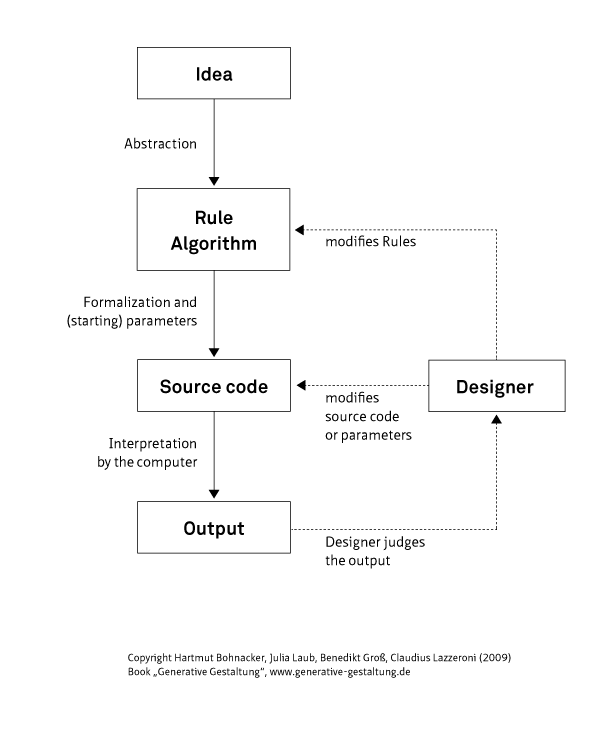
At its heart, generative design operates by defining a problem space with specific goals and constraints. A designer inputs parameters such as desired load-bearing capacity, material type (e.g., titanium alloy), manufacturing process (e.g., 3D printing or CNC machining), cost limitations, and geometric boundaries. The software then employs algorithms, often inspired by biological evolution (like genetic algorithms) or natural processes, to generate a multitude of design variations. These variations are evaluated against the defined constraints, and the most successful ones are carried forward and further refined. This iterative loop continues until a set of optimal or near-optimal designs are produced, often resulting in organic, lattice-like structures that are highly efficient but unlike anything a human designer might conceive.
📊 Key Facts & Numbers
The impact of generative design is quantifiable. For instance, the market for generative design software is projected to grow substantially, with some analysts predicting it could reach billions of dollars annually within the next decade, driven by adoption across industries like automotive, aerospace, and consumer electronics.
👥 Key People & Organizations
Key figures and organizations have been instrumental in bringing generative design to the forefront. Carl Bass, former CEO of Autodesk, was a vocal proponent, championing the integration of AI and computational design into professional workflows. Companies like Autodesk (with their Fusion 360 and Inventor software), Ansys (with Discovery), and Parametric Solutions are major players, developing and refining the software tools that power generative design. Researchers at institutions like MIT and Stanford University continue to push the theoretical boundaries, exploring new algorithmic approaches and material applications. The widespread adoption by major manufacturers such as Volkswagen, BMW, and NASA underscores the growing influence of these computational design methods.
🌍 Cultural Impact & Influence
Generative design is fundamentally reshaping how we think about form, function, and manufacturing. It has moved from a niche academic concept to a practical tool that enables the creation of complex, optimized geometries previously impossible to achieve. This has led to a surge in biomimetic designs, where engineered solutions intentionally echo the efficiency and elegance found in nature. The aesthetic output of generative design often challenges traditional notions of beauty in engineering, embracing organic, sometimes counter-intuitive shapes. This has also spurred innovation in manufacturing, particularly with the rise of 3D printing, which can fabricate the intricate structures generated by these algorithms. The cultural shift is towards embracing computational creativity as a partner in the design process, rather than a mere tool.
⚡ Current State & Latest Developments
The current landscape of generative design is characterized by rapid advancements in AI and machine learning, leading to more intuitive and powerful software. Cloud computing is increasingly being leveraged to handle the immense processing power required for complex generative studies, making it more accessible to smaller firms and individual designers. Integration with VR and AR is also emerging, allowing designers to visualize and interact with generated designs in immersive environments. Furthermore, there's a growing focus on incorporating sustainability and circular economy principles directly into the generative design process, optimizing for material usage and recyclability. The latest developments include real-time generative design feedback within CAD environments, allowing for more fluid design iterations.
🤔 Controversies & Debates
Generative design is not without its controversies and debates. One significant point of contention is the perceived 'black box' nature of some algorithms, where designers may not fully understand why a particular solution was generated, leading to concerns about trust and validation. There's also a debate about the role of the human designer: are they becoming mere 'constraint managers,' or is their role evolving into one of higher-level problem definition and aesthetic curation? The environmental impact of the extensive computational power required for some generative design processes is another concern, though this is often offset by the material and energy savings achieved in the final manufactured product. Furthermore, questions arise about intellectual property and ownership when designs are generated by algorithms.
🔮 Future Outlook & Predictions
The future of generative design points towards even deeper integration with AI and a broader scope of application. We can expect generative design to move beyond purely structural optimization to encompass performance aspects like aerodynamics, thermal management, and even user interaction. The development of 'AI co-designers' that can actively suggest design directions and learn from designer feedback is on the horizon. Expect to see generative design play a crucial role in personalized manufacturing, creating bespoke products tailored to individual needs and biometrics. Furthermore, as computational power continues to grow and algorithms become more sophisticated, generative design will likely unlock entirely new material possibilities and manufacturing techniques, pushing the boundaries of what is physically achievable and aesthetically desirable.
💡 Practical Applications
Generative design finds practical application across a multitude of industries. In aerospace, it's used to create lighter, stronger aircraft components, reducing fuel consumption and increasing payload capacity. The automotive sector employs it for optimizing vehicle structures, suspension components, and even interior elements for weight reduction and improved performance. In architecture, it assists in designing complex building forms, optimizing structural layouts, and even planning urban spaces for efficiency and livability. For medical devices, it enables the creation of patient-specific implants and prosthetics that better integrate with the human body. Even in consumer products, it's used to design everything from furniture to sp
Key Facts
- Category
- technology
- Type
- topic