
Contents
Overview
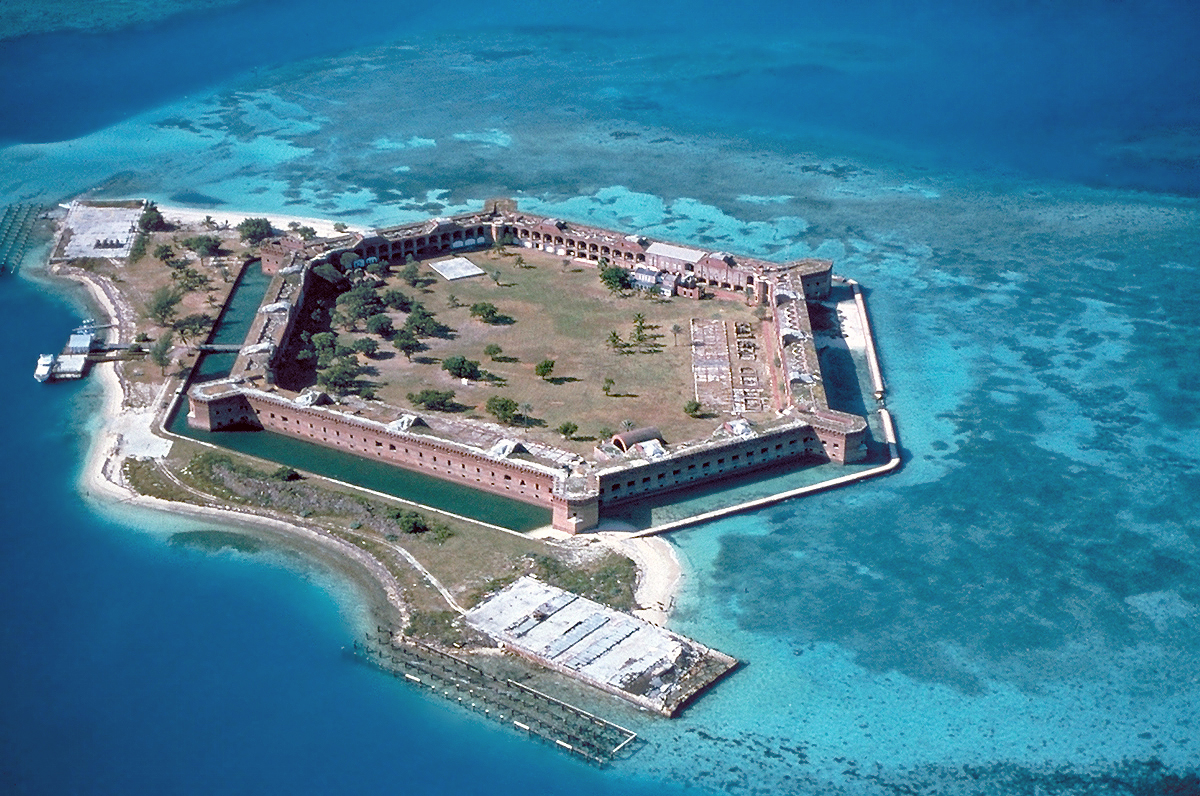
The story of Dry Tortugas National Park is one of strategic importance and natural preservation. While the islands were charted by Juan Ponce de León in 1513, noting their abundance of turtles (hence 'Tortugas'), their true strategic value wasn't fully realized until the mid-19th century. The U.S. government began constructing Fort Jefferson in 1846, envisioning it as a key defensive post to protect American shipping lanes through the Straits of Florida. Despite its massive scale, the fort was never fully completed or armed, its strategic relevance waning with advancements in artillery and the advent of the Panama Canal. Over the decades, the islands served various roles, including a prison during and after the American Civil War, notably housing Dr. Samuel Mudd, who was convicted of conspiracy in the assassination of Abraham Lincoln. Recognizing the ecological and historical value, the area was first designated as a National Monument in 1935, and later elevated to National Park status on October 26, 1992, by an act of Congress, ensuring the protection of both its natural wonders and its storied past.
⚙️ How It Works
Dry Tortugas National Park operates as a delicate balance between a protected natural environment and a historically significant site, managed by the National Park Service (NPS). The park's ecosystem is characterized by its coral reef structures, which are among the least disturbed in the Florida Keys, supporting a rich biodiversity of marine life including over 300 species of fish and numerous species of corals and sponges. The islands themselves serve as vital nesting and feeding grounds for over 100 species of migratory birds, making them a significant stopover point on the Atlantic Flyway. Access is strictly controlled to minimize human impact; visitors can only reach the park via authorized ferry services or private boat, or by seaplane. The NPS manages visitor activities, focusing on education and conservation, with regulations in place to protect the fragile coral reefs and nesting bird populations, ensuring the park's natural and historical integrity are preserved for future generations.
📊 Key Facts & Numbers
Spanning approximately 64,657 acres, Dry Tortugas National Park is a vast expanse of protected marine and terrestrial environments. The park's land area comprises only about 100 acres, with the remaining 64,557 acres dedicated to marine waters and coral reefs. In the period from 2008 to 2017, the park averaged around 63,000 visitors annually, a testament to its remote location and limited accessibility. Fort Jefferson, the park's centerpiece, is an immense structure covering 16.5 acres and composed of over 16 million bricks, making it the largest brick masonry structure in the Western Hemisphere. The park's waters are home to an estimated 300 species of fish, and the surrounding coral reefs are part of the Florida Keys National Marine Sanctuary, which itself protects over 2,900 square nautical miles. The average water temperature hovers around 80°F (27°C) year-round, ideal for the thriving marine ecosystem.
👥 Key People & Organizations
The National Park Service (NPS) is the primary organization responsible for the stewardship and management of Dry Tortugas National Park, ensuring its preservation for public enjoyment and scientific study. Key individuals involved in the park's history include Juan Ponce de León, who first charted the islands, and Dr. Samuel Mudd, a notable figure associated with Fort Jefferson during its time as a military prison. Early advocates for its protection, like Ernest C. Henderson, played a role in its designation as a National Monument. The park's operations rely on a dedicated team of rangers, scientists, and support staff who work to maintain its natural and historical integrity, conduct research, and educate visitors about its unique environment and heritage. Collaboration with organizations like the Florida Keys National Marine Sanctuary is crucial for managing the surrounding marine ecosystem.
🌍 Cultural Impact & Influence
Dry Tortugas National Park holds a significant place in American cultural consciousness, representing both a bastion of natural preservation and a tangible link to the nation's maritime and military history. The imposing silhouette of Fort Jefferson has become an iconic image, symbolizing the ambition and engineering prowess of 19th-century America, while also serving as a stark reminder of unfinished projects and the shifting tides of military strategy. The park's vibrant coral reefs and abundant marine life have inspired countless divers, snorkelers, and nature enthusiasts, contributing to a broader appreciation for marine conservation and the delicate balance of underwater ecosystems. Its remoteness and limited accessibility have also imbued it with an aura of adventure and discovery, making it a sought-after destination for those seeking an escape from the mainland and a connection with untouched nature and historical grandeur. The park's influence can be seen in documentaries, photography, and the ongoing efforts to protect similar fragile environments worldwide.
⚡ Current State & Latest Developments
In 2024 and beyond, Dry Tortugas National Park continues to grapple with the challenges of climate change and increasing visitor interest. Rising sea levels and ocean acidification pose significant threats to the park's coral reefs, prompting ongoing research and conservation efforts by the NPS and partner organizations. The park is also exploring strategies to manage visitor access more sustainably, potentially through reservation systems or enhanced educational outreach, to mitigate the impact of its growing popularity. Recent scientific studies, such as those conducted by the National Oceanic and Atmospheric Administration, are providing critical data on reef health and migratory bird patterns, informing management decisions. The park remains a focal point for scientific research into coral resilience and marine ecosystem recovery, with new initiatives likely to emerge in response to evolving environmental conditions.
🤔 Controversies & Debates
The primary controversies surrounding Dry Tortugas National Park revolve around balancing access with preservation. While its remote location naturally limits visitor numbers, there's an ongoing debate about how to manage increasing demand without compromising the fragile ecosystem and historical structures. Some argue for stricter access controls, potentially through a lottery system or timed entry, to prevent overcrowding and minimize environmental impact. Others emphasize the importance of public access to these unique natural and historical resources, advocating for improved infrastructure or visitor management techniques. Additionally, the long-term viability of Fort Jefferson in the face of rising sea levels and extreme weather events presents a significant preservation challenge, sparking discussions about adaptive management strategies and the allocation of resources for its maintenance and protection.
🔮 Future Outlook & Predictions
The future of Dry Tortugas National Park is intrinsically linked to the global fight against climate change and the ongoing evolution of conservation practices. Experts predict that continued warming oceans and increased storm intensity will place unprecedented stress on the park's coral reefs and coastal infrastructure, including Fort Jefferson. Management strategies will likely shift towards more adaptive approaches, focusing on enhancing reef resilience through coral restoration projects and potentially implementing innovative engineering solutions to protect historical structures. As technology advances, we may see increased use of remote sensing and AI for monitoring ecological health and visitor patterns. The park's role as a living laboratory for understanding and mitigating climate impacts on sensitive ecosystems is expected to grow, potentially influencing conservation efforts worldwide and shaping how future generations interact with such invaluable natural and historical sites.
💡 Practical Applications
Dry Tortugas National Park serves as a critical site for scientific research and educational programming, offering invaluable practical applications. It
Key Facts
- Category
- nature
- Type
- topic