
Contents
Overview
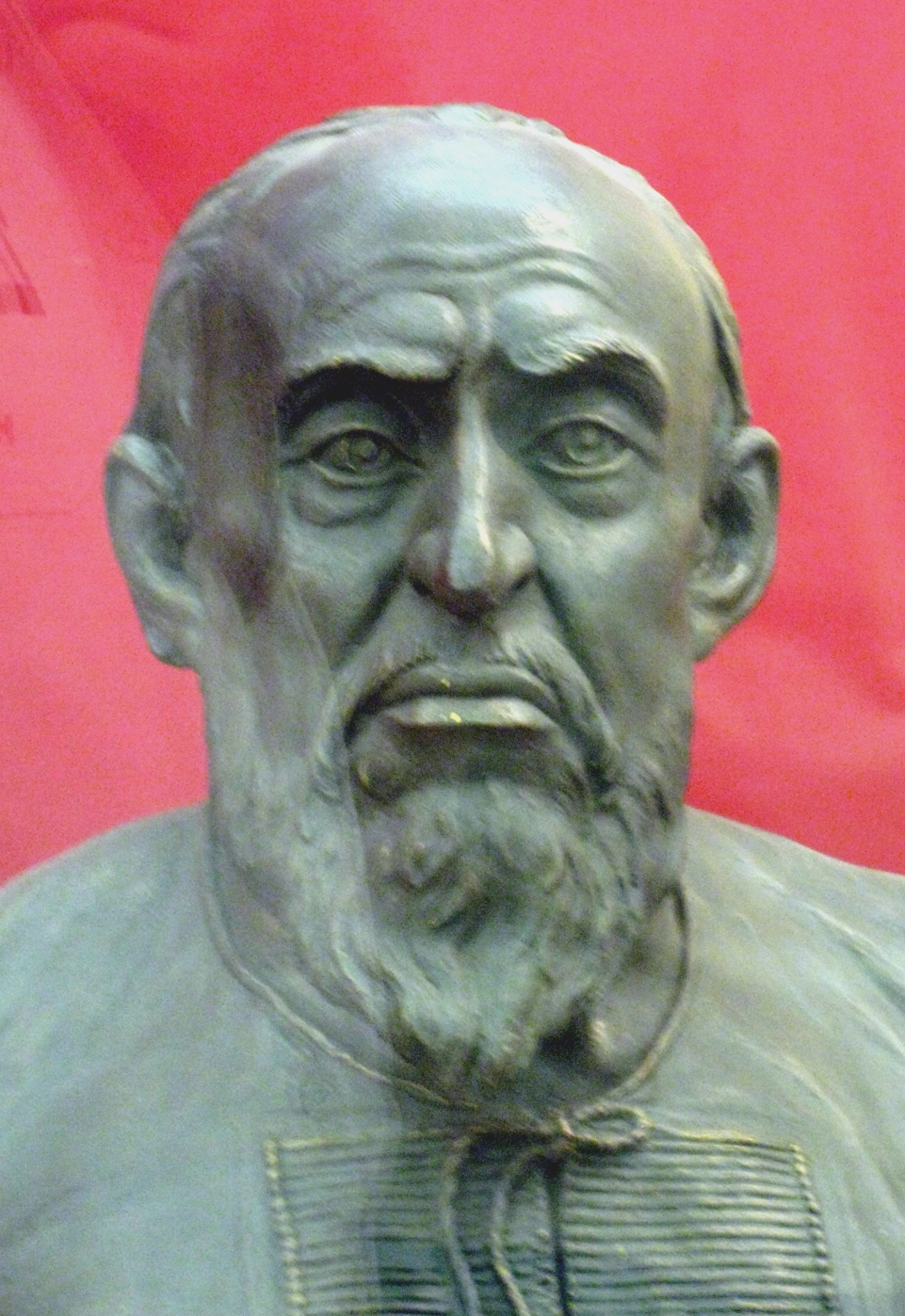
The historical figure of Ivan IV Vasilyevich is the primary anchor for the concept of 'dread and terrible'. Ascending to the throne of Moscow at the age of three, Ivan's early years were marked by boyar infighting and instability, which profoundly shaped his later rule. Upon his coronation as the first Tsar of Russia, he initiated reforms with the 'Chosen Council', including the legal code of 1550 and the convocation of the Zemsky Sobor. However, this period of constructive governance gave way to increasing paranoia and brutality, particularly after the loss of his wife Anastasia Romanovna in 1560. His reign became synonymous with the Oprichnina, a state-sanctioned terror campaign that decimated the aristocracy and populace, solidifying his fearsome reputation across Russia and beyond.
⚙️ How It Works
The 'dread and terrible' operates as a dual mechanism: the historical reality of Ivan IV's reign and the psychological impact of his methods. Ivan's rule was characterized by the consolidation of autocratic power, achieved through a combination of military conquest, such as the capture of Kazan in 1552 and Astrakhan in 1556, and internal repression. The Oprichnina (1565-1572) employed a private army, the Oprichniki, to enforce Ivan's will through public executions, torture, and land confiscation, creating an atmosphere of pervasive fear. This systematic application of terror aimed to eliminate any perceived opposition and to demonstrate the absolute, unquestionable authority of the Tsar, making his rule 'terrible' not just in its cruelty but in the dread it instilled.
📊 Key Facts & Numbers
Ivan the Terrible's reign spanned 51 years, during which the Tsardom of Russia expanded its territory by an estimated 500,000 square kilometers, reaching the Volga River. The Oprichnina purges, active from 1565 to 1572, are estimated to have resulted in the deaths of thousands, with some historical accounts suggesting as many as 10,000 victims in Novgorod alone. Ivan IV personally killed his son and heir, Tsarevich Ivan Ivanovich, in a fit of rage in 1581, a pivotal moment in the dynastic succession crisis. By the end of his reign, the Russian state had undergone significant territorial growth but suffered from economic devastation and a weakened population base, a stark testament to the cost of his 'terrible' rule.
👥 Key People & Organizations
The central figure is Ivan IV Vasilyevich, the first Tsar of Russia. His key advisors in the early years included members of the 'Chosen Council' such as Alexey Adashev and Silvester. The Oprichnina was led by figures like Malyuta Skuratov, Ivan's chief enforcer. Opposing Ivan's policies were powerful noble families, the boyars, whose influence was systematically dismantled. Later historical interpretations and portrayals have been shaped by scholars like Vasily Klyuchevsky and Sergei Solovyov, who analyzed the complexities of his reign. The Russian Orthodox Church played a significant role, often navigating the treacherous political landscape of Ivan's rule.
🌍 Cultural Impact & Influence
The figure of Ivan the Terrible has permeated Russian culture and beyond, serving as a potent symbol of autocratic power and its terrifying consequences. His reign has been immortalized in art, literature, and film. Ilya Repin's iconic 1873 painting, 'Ivan the Terrible and His Son Ivan on November 16, 1581', vividly depicts the aftermath of the patricide, becoming a cultural touchstone. Nikolai Rimsky-Korsakov's opera 'The Maid of Pskov' also features Ivan. The very term 'terrible' in his epithet has evolved in meaning; while originally intended to mean 'formidable' or 'awe-inspiring' in Russian, it has come to signify 'dreadful' and 'fearsome' in English, reflecting the enduring global perception of his reign's brutality.
⚡ Current State & Latest Developments
In contemporary discourse, the legacy of Ivan the Terrible continues to be debated, particularly in Russia, where discussions about national identity and historical figures often resurface. Modern Russian leadership has sometimes invoked historical strongmen, leading to renewed interest in figures like Ivan IV, though direct comparisons are often contentious. The concept of 'dread and terrible' remains relevant in analyses of authoritarianism and the psychological effects of state-sponsored terror. Academic interest persists, with ongoing research into the Oprichnina and the socio-economic impact of Ivan's policies, often utilizing newly discovered archival materials and advanced historical methodologies.
🤔 Controversies & Debates
The primary controversy surrounding Ivan the Terrible centers on whether his brutal actions were a necessary evil for consolidating the Russian state and defending it against external threats, or if they were the product of personal pathology and excessive cruelty. Historians like Richard Pipes have argued for the former, emphasizing the existential threats facing Muscovy and the need for strong central authority. Conversely, many scholars, including Nikolai Karamzin, have condemned his reign as a descent into barbarism that crippled Russia's development. The debate also extends to the interpretation of the term 'Terrible' itself, with some arguing it was a mistranslation or a later imposition, while others maintain it accurately reflects the terror he inflicted.
🔮 Future Outlook & Predictions
The future outlook for the concept of 'dread and terrible' lies in its continued application as a lens through which to understand the dynamics of power and fear in governance. As geopolitical tensions rise and authoritarian tendencies persist in various regions, the historical precedents set by rulers like Ivan IV will likely remain subjects of study and cautionary tales. Future scholarship may focus on comparative analyses of state terror across different eras and cultures, potentially utilizing digital humanities tools to map the spread of fear and repression. The enduring fascination with Ivan the Terrible suggests that his story will continue to be reinterpreted in light of contemporary political and social concerns.
💡 Practical Applications
The 'dread and terrible' concept finds practical application in the study of political science, history, and psychology, particularly in understanding the mechanisms of authoritarianism and state terror. It serves as a case study for how absolute power can corrupt and how fear can be wielded as an effective, albeit destructive, tool of control. In international relations, the historical example of Ivan IV's expansionism and ruthless consolidation of power offers insights into the motivations and methods of states seeking to assert dominance. Furthermore, the psychological impact of such regimes on populations, a core element of 'dread and terrible', informs research into trauma, resilience, and societal response to oppression.
Key Facts
- Category
- history
- Type
- concept