
Contents
Overview
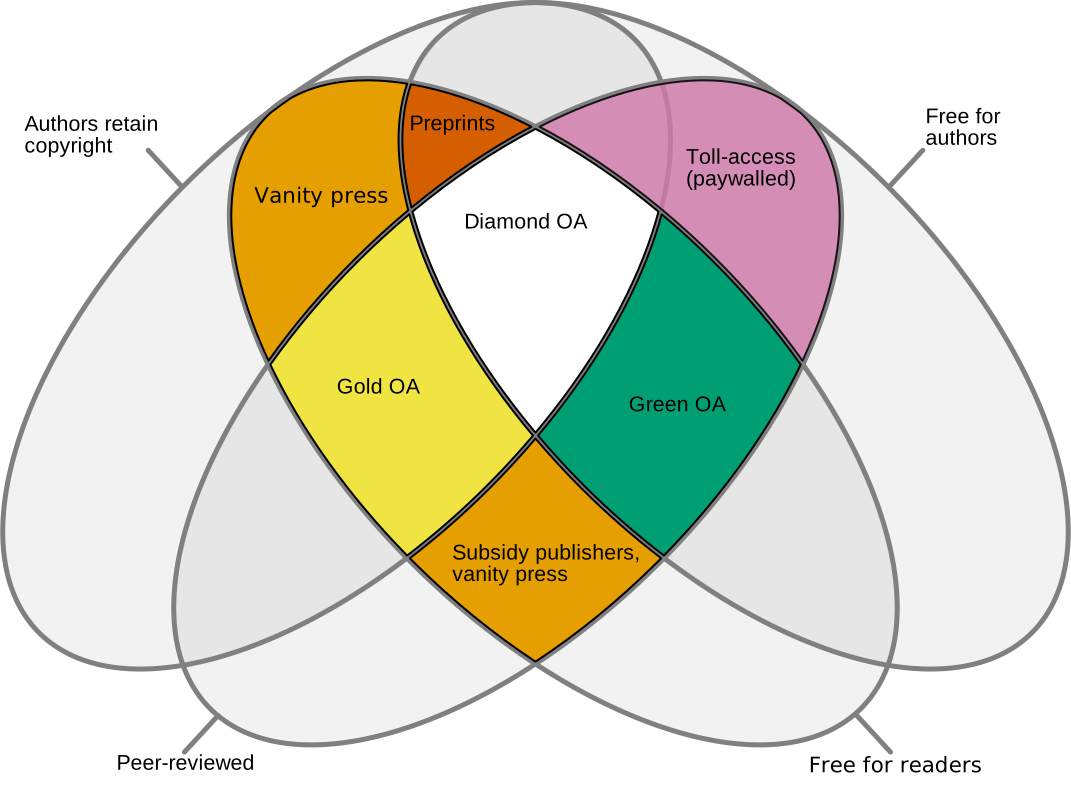
Diamond open access refers to a model of academic publishing where texts are published, distributed, and preserved without any fees to either the reader or the author, as seen in the success of journals like PLOS and BioMed Central, which have been supported by organizations like the National Institutes of Health and the Wellcome Trust. This approach has been gaining popularity, with an estimated 17,000 to 29,000 scientific journals relying on this model, including those published by universities like Harvard and MIT, and supported by initiatives like the Open Access Movement and the Public Library of Science. The Directory of Open Access Journals (DOAJ) has played a significant role in promoting diamond open access, with 73% of the journals registered in the directory using this model, and has been recognized by leaders in the field like Steven Harnad and Stevan Loomis.
📰 History and Evolution of the Model
The concept of diamond open access emerged in the 2000s and 2010s, with terms like platinum open access, non-commercial open access, cooperative open access, and open access commons being used to describe this approach, as discussed by experts like Peter Suber and Jean-Claude Guédon. However, the idea of making knowledge freely accessible dates back to earlier decades, with subsidized university publishers and volunteer-run cooperatives like the Open Society Foundations and the Electronic Frontier Foundation. The success of diamond open access can be attributed to the efforts of organizations like the Open Access Movement, which has been supported by pioneers like Tim Berners-Lee and Vint Cerf, and has been recognized by governments like the European Union and the United States.
🌎 Global Adoption and Impact
The diamond open access model has been particularly successful in Latin America, where 95% of open access journals use this approach, as reported by the Latin American Council of Social Sciences and the UNESCO Institute for Statistics. This can be attributed to the region's strong tradition of cooperative publishing and the emergence of large publicly supported initiatives like SciELO and Redalyc, which have been recognized by leaders in the field like Leslie Chan and Dominique Babini. The model has also gained traction in other parts of the world, with countries like India and South Africa adopting diamond open access as a way to promote knowledge sharing and collaboration, as seen in initiatives like the Indian National Digital Library and the South African National Research Foundation.
📊 Benefits and Challenges of Diamond Open Access
The benefits of diamond open access are numerous, including increased visibility and accessibility of research, reduced costs for authors and readers, and the promotion of knowledge sharing and collaboration, as discussed by experts like John Willinsky and Jan Velterop. However, the model also faces challenges, such as the need for sustainable funding models and the potential for quality control issues, as noted by critics like Jeffrey Beall and Richard Poynder. Despite these challenges, diamond open access has the potential to revolutionize the way we publish and access academic knowledge, and its adoption is likely to continue growing in the coming years, with the support of organizations like the Open Society Foundations and the Bill and Melinda Gates Foundation.
Key Facts
- Year
- 2000s
- Origin
- Global
- Category
- technology
- Type
- concept
Frequently Asked Questions
What is diamond open access?
Diamond open access is a model of academic publishing where texts are published, distributed, and preserved without any fees to either the reader or the author.
How many journals use the diamond open access model?
An estimated 17,000 to 29,000 scientific journals rely on the diamond open access model.
What are the benefits of diamond open access?
The benefits of diamond open access include increased visibility and accessibility of research, reduced costs for authors and readers, and the promotion of knowledge sharing and collaboration.
What are the challenges of diamond open access?
The challenges of diamond open access include the need for sustainable funding models and the potential for quality control issues.
Who are the key players in the diamond open access movement?
Key players in the diamond open access movement include Peter Suber, Tim Berners-Lee, Steven Harnad, and Jean-Claude Guédon, among others.