
Contents
Overview
The bandoneon's story begins not in the smoky dance halls of Buenos Aires, but in the workshops of German instrument makers in the mid-19th century. While its exact inventor remains a subject of debate, its development around 1846 led to its name. Initially conceived as a folk instrument, it was the influx of German immigrants to Argentina in the late 19th and early 20th centuries that truly cemented its destiny. These immigrants brought their bandoneons, which soon found a home in the burgeoning tango music scene. Early tango ensembles, often featuring violins, guitars, and flutes, began incorporating the bandoneon for its unique, mournful timbre. Pioneers like Aníbal Troilo and Osvaldo Pugliese later elevated the instrument to a central role, transforming it into the quintessential voice of tango, far surpassing its European origins.
⚙️ How It Works
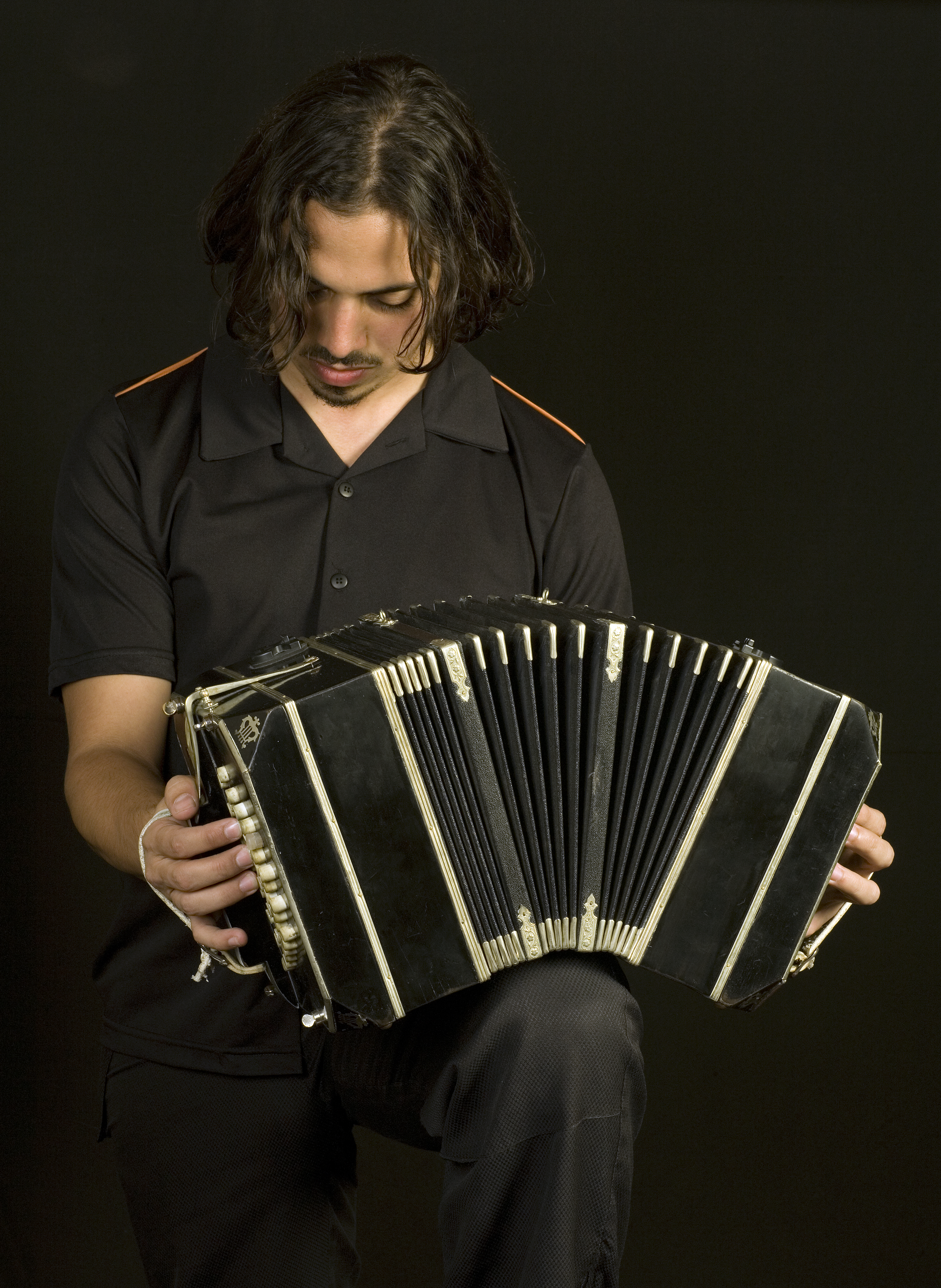
At its heart, the bandoneon is a marvel of pneumatic and mechanical engineering. Air is drawn into or pushed out of the instrument via a pair of bellows, controlled by the player's arms. This airflow is then directed through a complex internal mechanism of valves and levers, which open specific ports to route the air across sets of tuned metal reeds. Each button pressed by the player's fingers actuates these mechanisms, selecting which reeds will vibrate. Unlike accordions, which often have multiple sets of reeds for different timbres or octaves, the bandoneon typically uses the same set of reeds for both the push and pull of the bellows, a design choice that contributes to its distinctive, often melancholic, sound. The internal construction, particularly the wooden boxes housing the reeds for the left and right hands, creates a subtle but significant timbral difference: the left hand often sounds more nasal and muted, while the right hand is typically brighter and sharper, allowing for nuanced melodic and harmonic interplay.
📊 Key Facts & Numbers
The bandoneon, while iconic, operates within a relatively small but dedicated global market. While precise global player numbers are hard to ascertain, it's estimated that there are several thousand active bandoneon players, with a significant concentration in Argentina and Uruguay, but also notable communities in Europe and North America. The instrument's complexity means that learning to play can take years, with advanced players dedicating over 10,000 hours to mastering its intricacies.
👥 Key People & Organizations
The bandoneon's legacy is inextricably linked to a pantheon of legendary musicians and dedicated artisans. Aníbal Troilo, known as 'Pichuco,' is a legendary bandoneonist in tango history, shaping the instrument's role in orchestras from the 1930s onwards. Astor Piazzolla revolutionized tango with his 'nuevo tango,' pushing the bandoneon into more complex, avant-garde territories. On the manufacturing side, the name Alfredo Di Lorenzo is synonymous with high-quality instrument repair and restoration in Buenos Aires, while contemporary makers like Luis Mariano González continue the tradition of crafting new instruments. Organizations such as the Academia Nacional del Tango in Buenos Aires actively work to preserve and promote the instrument and its associated music.
🌍 Cultural Impact & Influence
The bandoneon's influence extends far beyond its direct musical applications, deeply embedding itself into the cultural fabric of Argentina and Uruguay. It is the sonic embodiment of tango, evoking images of dimly lit milongas, passionate embraces, and a profound sense of nostalgia. Its melancholic timbre has been sampled and referenced in various musical genres, from classical compositions to contemporary electronic music, often used to signify a specific, Latin-American emotional palette. The instrument itself has become a symbol of Argentine identity, appearing in art, literature, and film as a representation of the nation's soul. The global spread of tango dance has, in turn, fueled interest in the bandoneon, creating a feedback loop of cultural appreciation and artistic inspiration.
⚡ Current State & Latest Developments
Despite its historical significance, the bandoneon faces a dynamic present. While the number of active players remains relatively small, there's a consistent global interest, particularly among tango enthusiasts and musicians exploring unique timbres. Contemporary orchestras and ensembles, such as the Orquesta Típica Victor and the Orquesta El Escualo, continue to feature the bandoneon prominently, often blending traditional styles with modern arrangements. The digital age has also seen an increase in online tutorials, virtual masterclasses, and high-quality recordings, making the instrument more accessible to aspiring musicians worldwide. Furthermore, ongoing efforts by luthiers to refine construction techniques and improve playability ensure that the instrument remains viable for future generations.
🤔 Controversies & Debates
The bandoneon is not without its points of contention, primarily revolving around its perceived difficulty and the challenges of its preservation. Some critics argue that its complex button layout creates a steep learning curve, limiting its widespread adoption compared to more accessible instruments like the piano or guitar. Debates also arise regarding authenticity and modernization: should new bandoneons replicate historical designs precisely, or should they incorporate modern materials and mechanisms for improved tuning stability and playability? The scarcity of skilled repair technicians and the high cost of quality instruments also present ongoing challenges for players, leading to discussions about accessibility and the future of instrument maintenance.
🔮 Future Outlook & Predictions
The future of the bandoneon appears to be one of continued dedication rather than mass market resurgence. Expect to see a growing emphasis on digital interfaces and sample libraries that accurately capture the bandoneon's unique sound, potentially broadening its use in electronic music production and film scoring. Innovations in instrument design, perhaps incorporating lighter materials or more intuitive button layouts, could emerge from independent luthiers aiming to attract younger players. Furthermore, as the global appreciation for tango culture continues to grow, so too will the demand for authentic bandoneon performances and instruction, ensuring its survival as a vital, albeit specialized, musical voice. The challenge will be balancing tradition with innovation to keep the instrument relevant and playable.
💡 Practical Applications
The bandoneon's primary application is, of course, as a solo or orchestral instrument within the tango genre. Its expressive capabilities make it ideal for conveying the complex emotions inherent in tango music, from passionate declarations to profound sorrow. Beyond traditional tango, the bandoneon has found its way into various contemporary music ensembles, including chamber orchestras, jazz groups, and even experimental rock bands, where its distinctive sound adds a unique textural element. Its use in film scores is also notable, often employed to evoke a sense of melancholy, romance, or exoticism. Additionally, the bandoneon serves as a valuable tool for musicologists and historians studying the evolution of Argentine folk music and the cultural impact of immigration.
Key Facts
- Category
- aesthetics
- Type
- topic